


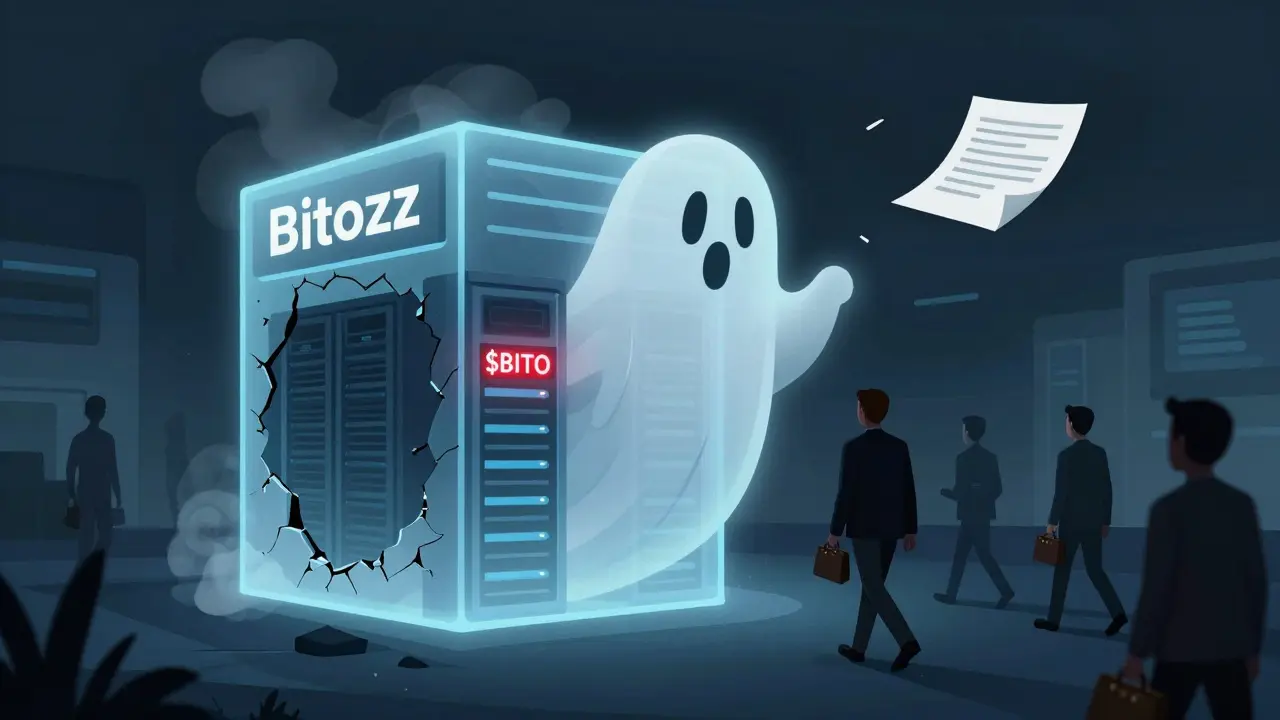
If you're searching for a crypto exchange called Bitozz, you might be confused. Google shows old links from 2018. Reddit threads mention it as a "ghost project." Some YouTube videos still promote it, but the website is down. So what really happened to Bitozz? The short answer: it never became a real exchange. It was an ICO that faded into obscurity.
What Was Bitozz Supposed to Be?
In 2018, during the peak of the ICO boom, Bitozz announced itself as a new cryptocurrency exchange focused on derivatives trading. Unlike spot exchanges that let you buy and sell Bitcoin or Ethereum directly, derivatives platforms let you trade contracts based on price movements - things like futures, options, and perpetual swaps. At the time, only a few platforms like BitMEX and Bybit were offering these tools. Bitozz claimed it would make derivatives trading easier, safer, and more accessible to regular users.
Their pitch was simple: solve the custody problem. Many exchanges back then kept users’ funds online, making them easy targets for hackers. Bitozz said it would use cold storage a security method where cryptocurrency is stored offline, away from internet-connected systems and follow the Cryptocurrency Security Standard (CCSS) a set of security guidelines developed by the Crypto Currency Security Standard working group to protect digital assets. They also promised third-party audits - something even big names like Coinbase didn’t consistently do at the time.
Why Did Bitozz Fail?
Here’s the truth: most ICOs in 2018 never delivered a working product. Bitozz was one of them. There’s no evidence it ever launched its exchange. No live trading interface. No mobile app. No customer support channels. No verified user accounts. No transaction history. If it had been real, you’d see at least one of these.
Compare that to Binance, which launched in 2017 and by 2019 was processing over $1 billion in daily trades. Or Kraken - still operating today with full regulatory compliance in the U.S., Europe, and Canada. These platforms didn’t just raise money through token sales. They built teams, hired engineers, got licenses, and kept users informed.
Bitozz? Zero transparency. No team members named. No office address. No LinkedIn profiles. No press releases after the ICO. The whitepaper vanished. The domain expired. The Telegram group went quiet. The last update was a tweet in December 2018 saying "development continues." That’s it.
Regulatory Red Flags
Today, operating a crypto exchange without a license is illegal in most major markets. In New York, you need a BitLicense a regulatory license issued by the New York State Department of Financial Services for businesses engaging in virtual currency activities. In the EU, you need MiCA compliance. In Australia, you need AUSTRAC registration. New Zealand doesn’t have a formal license yet, but the Financial Markets Authority requires strict AML/KYC rules.
Bitozz never claimed to have any of these. No public filings. No regulatory disclosures. No partnership with any licensed financial institution. That’s not just negligence - it’s a warning sign. If a project can’t or won’t get licensed, it’s not trying to play by the rules. It’s trying to disappear.
What Happened to the Bitozz Token?
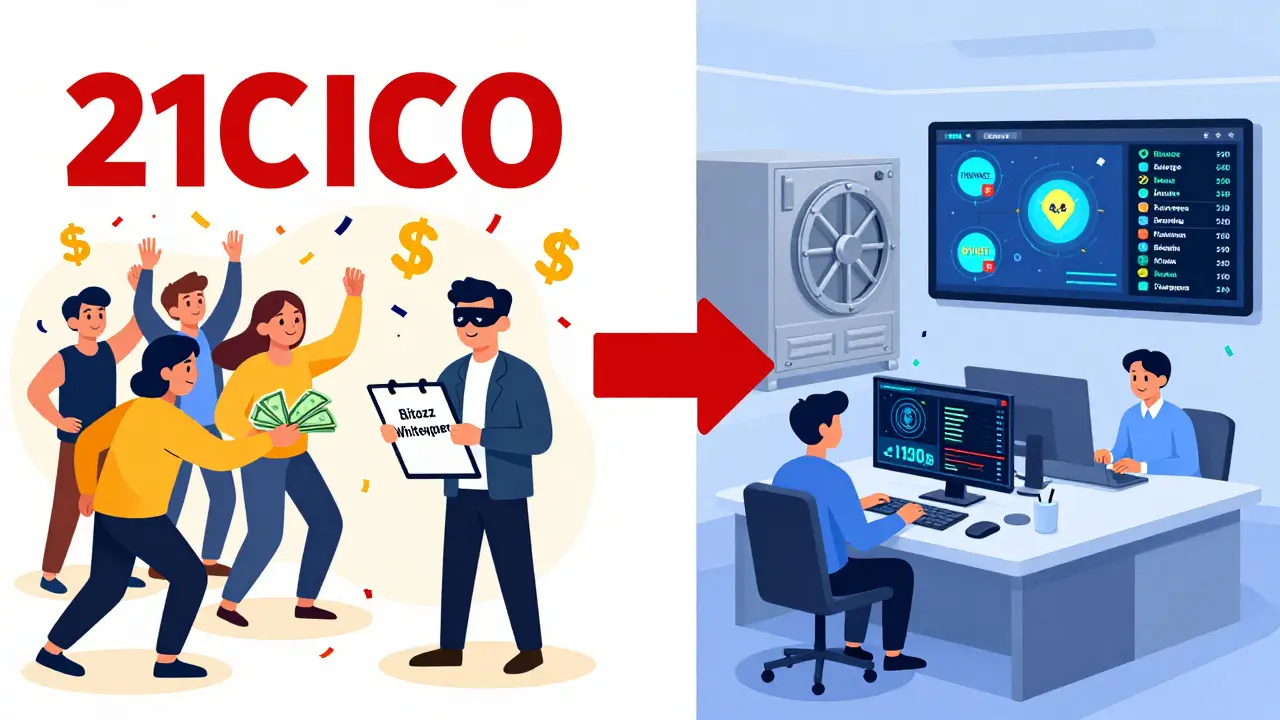
Bitozz raised funds through its native token, $BITO. Investors bought it during the ICO expecting the token to power the exchange’s ecosystem - used for trading fee discounts, staking rewards, and governance voting.
Today, $BITO has zero trading volume. It doesn’t appear on CoinGecko or CoinMarketCap. The blockchain address used for token distribution hasn’t moved any coins since 2019. The smart contract is still live, but no one interacts with it. The total supply? 1 billion $BITO. The circulating supply? Effectively zero.
That’s not a token failure. That’s a project death.
Where Is Bitozz Now?
As of March 2026, Bitozz doesn’t exist as a functioning exchange. You can’t sign up. You can’t deposit. You can’t trade. The website redirects to a parked domain. The Twitter account hasn’t posted in seven years. The GitHub repo is empty.
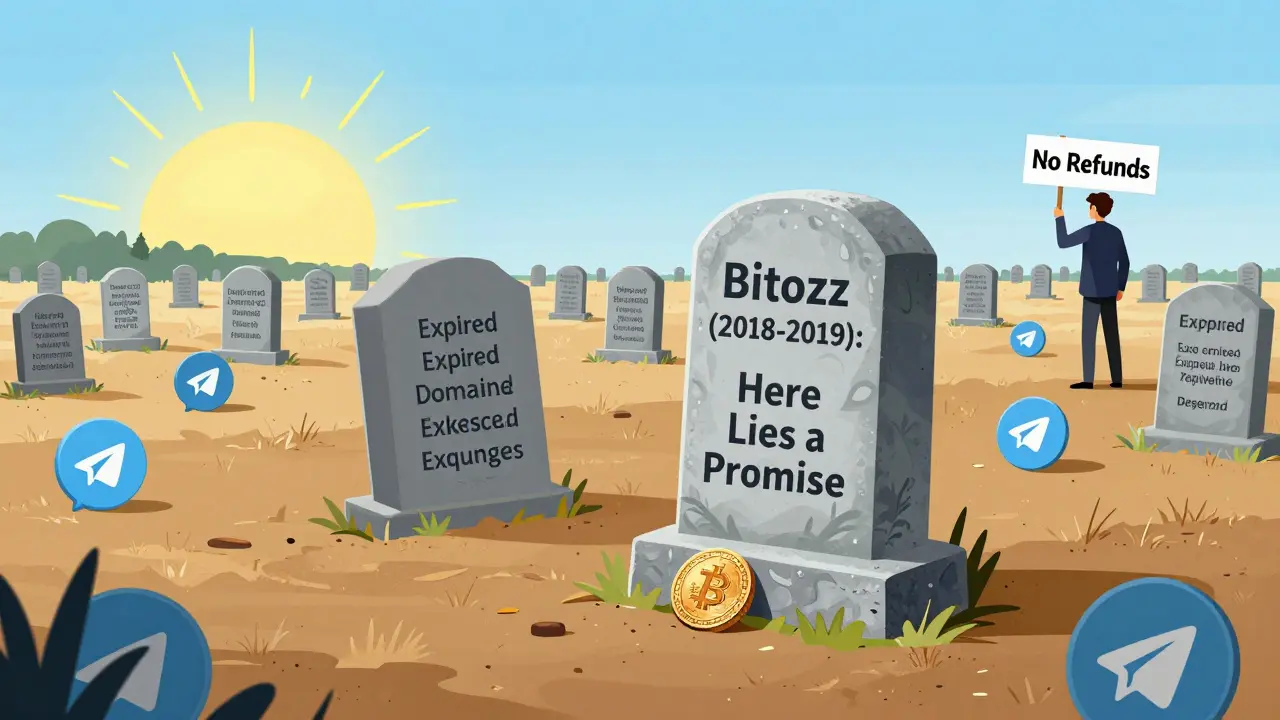
It’s not a shutdown. It’s not a rebrand. It’s just gone. Like hundreds of other ICOs from 2017-2019, Bitozz raised money, made promises, and vanished. No refund. No explanation. No legal recourse.
What Should You Use Instead?
If you’re looking for a reliable crypto exchange, don’t waste time chasing ghosts. Here are real alternatives with proven track records:
- Binance the world’s largest cryptocurrency exchange by trading volume, offering spot, futures, and derivatives trading with over 500 assets - Global, high liquidity, low fees, strong security.
- Kraken a U.S.-based exchange with full regulatory compliance, strong customer support, and advanced trading tools - Best for U.S. users, regulated in multiple states.
- Bybit a derivatives-focused exchange with over $10 billion in daily volume and a user-friendly interface for futures trading - Top choice for traders who want leverage and derivatives.
- Bitstamp one of the oldest cryptocurrency exchanges, founded in 2011, now owned by Robinhood and regulated in the EU and U.S. - Trusted for fiat deposits and long-term holding.
All of these have public financial reports, security audits, and customer service teams. You can find user reviews, Reddit discussions, YouTube tutorials, and even regulatory filings. Bitozz has none of that.
Lessons from Bitozz
Bitozz isn’t unique. It’s one of hundreds of failed ICOs. But it’s a perfect example of what to avoid:
- Don’t trust a project with no team names.
- Don’t invest in a token with no exchange listing.
- Don’t assume "security features" mean anything if there’s no proof.
- Don’t follow hype - check for real activity, not just marketing.
The crypto space has matured. In 2026, you don’t need to gamble on vaporware. There are dozens of regulated, transparent, and well-run exchanges. You don’t need to risk your money on a project that vanished seven years ago.
Bitozz didn’t fail because of bad luck. It failed because it never tried to build anything real.
Is Bitozz a scam?
It’s hard to call Bitozz a deliberate scam because there’s no evidence of fraud - like stolen funds or fake team members. But it’s also not a legitimate project. It raised money under the promise of building a crypto exchange and never delivered. That’s not a scam in the legal sense - it’s a failure. And for investors, the result is the same: lost money.
Can I still trade on Bitozz?
No. The Bitozz website is offline. No trading platform exists. Even if you still have $BITO tokens, there’s nowhere to sell them. The token has no market value and no liquidity. Your only option is to write it off as a total loss.
Did anyone get their money back from Bitozz?
No. There are no records of refunds, compensation, or recovery efforts. Unlike some failed projects that later released partial refunds or transitioned into new ventures, Bitozz left no trail. The team disappeared. The community faded. The money is gone.
Why did Bitozz raise funds if it never launched?
The 2018 ICO market was a gold rush. Many teams raised millions by selling tokens based on whitepapers alone. No product, no team, no license - it didn’t matter. As long as the marketing looked professional and the tokenomics sounded smart, investors threw money in. Bitozz was one of many that took the money and walked away.
Are there any legal actions against Bitozz?
There are no public records of lawsuits, regulatory fines, or investigations targeting Bitozz. That’s not because it’s clean - it’s because no one could find enough information to pursue legal action. The project left no trace, making enforcement impossible.
Final Thoughts
Bitozz isn’t a crypto exchange. It’s a cautionary tale. It’s what happens when hype replaces execution. When marketing replaces transparency. When a whitepaper becomes a tombstone.
If you’re looking for a crypto platform today, choose one that’s active, regulated, and accountable. Don’t dig through old ICO blogs. Don’t follow influencers who still post about dead projects. Go where the real traders are - the exchanges that still exist, still grow, and still answer their emails.
Bitozz is gone. The market moved on. So should you.




People Comments
OMG I CAN'T BELIEVE PEOPLE STILL TALK ABOUT BITOZZ. I INVESTED $5K IN THAT THING AND NOW I JUST USE IT AS A DOORSTOP. MY DOG CHews ON THE PRINTED WHITEPAPER. IT'S FUNNIER THAN THE ENTIRE CRYPTO MARKET IN 2018. 😭
The complete absence of regulatory compliance, coupled with the total erasure of digital footprints, suggests not mere incompetence but a coordinated effort to evade accountability. The project’s disappearance aligns with known patterns of offshore capital extraction during the ICO bubble, wherein entities leveraged jurisdictional arbitrage to abscond with investor capital under the guise of technological innovation. This is not failure-it is predation.
They didn't just vanish. They were *paid* to vanish. I know someone who worked at a 'dev shop' that got hired to build fake crypto platforms. They got paid in BTC, then deleted everything. Bitozz? Probably one of them. The whitepaper? A template from a freelance site. The 'cold storage'? A photo of a safe they found on Unsplash. I'm not surprised no one got sued-no one can prove who even signed the checks.
ok but like… if you’re not even gonna get a bitlicense why even try? i mean come on. i’ve seen so many of these ‘blockchain solutions’ and honestly if you don’t have a legal team on retainer you’re just wasting everyone’s time. and $BITO? that’s not a token, it’s a digital ghost. like a crypto poltergeist. 👻
I appreciate the thorough analysis presented in this post. The absence of verifiable operational metrics, regulatory filings, and demonstrable user adoption constitutes a prima facie case of non-performance. One must conclude that the Bitozz initiative was never intended to achieve commercial viability. Such outcomes underscore the necessity of institutional-grade due diligence in digital asset markets.
yep. i remember when i first heard about bitozz. i was like 'oh cool, another derivatives thing'. then i checked their github. 1 commit. 'initial commit'. that was it. i laughed so hard i spilled my coffee. we all thought we were smart back then. turns out we were just easy.
i still have my $BITO tokens saved in a folder labeled 'regret'. 😅 i used to think crypto was the future. now i just use it to pay for my cat's vet bills. at least he doesn't ask me why i invested in a website that doesn't exist. he just purrs. and stares. judgmentally.
this is so depressing. i just lost my job and then i remembered i had $BITO. i checked it again. still zero. i cried. again. why do i keep doing this to myself?
in nigeria we call this 'Naija scam'. you make a website, put a whitepaper, hire 3 guys on fiverr to make a logo, and wait for the money. then you vanish. no one gets mad because we all know the system is rigged. the only difference? you had the luxury of a .com domain. we use telegram channels and WhatsApp groups. we don't even pretend.
it’s kind of beautiful in a way. like a digital wildflower that bloomed for one season and then just… let go. maybe it wasn’t meant to last. maybe it was just a moment of collective hope. i’m not mad. just… sad. like watching a firework that never exploded.
I’ve been following crypto since 2015. Bitozz was never on my radar. I didn’t invest. I didn’t even click the link. I just saw it in a thread and thought, 'nope'. I’m glad someone documented this. It’s important to remember what not to do.
i just wanted to say thank you for writing this. i’ve been trying to explain to my mom why i don’t invest in 'new crypto projects' anymore. this post is perfect. i’m sharing it with her. she still thinks i’m too cautious. but now she gets it.
ok but like… why is no one talking about how the team just vanished? no linkedin? no twitter? no github? it’s like they got whisked away by aliens. or worse… they got hired by a legit exchange and wiped their digital slate clean. imagine being the dev who coded the whole thing and then got paid in crypto to disappear. that’s a plot twist.
i still believe in crypto. just not the 2018 version. we’ve come so far since then. now we have real teams, real audits, real compliance. bitozz was the wild west. now we’re building cities. and honestly? i’m proud of how far we’ve come.
they used my ex’s name in the whitepaper. i found it. i swear. i looked up the email. it was his old work account. he left crypto in 2017. i think he got paid to lend his name. i hate him. i hate this. i hate everything.
i used to run a small crypto blog. we had a whole post on bitozz. 'the next big thing!' we deleted it last year. i still feel guilty. we were just kids. we didn’t know better. i hope someone learns from this. please.
the smart contract is still live. the tokenomics were theoretically sound. the issue wasn't the tech-it was the governance. no DAO. no multisig. no accountability layer. just a vanity repo with a single owner. that’s not a failure of innovation. it’s a failure of structure.
Thank you for this meticulously researched and clearly articulated analysis. The parallels between Bitozz and other defunct ICOs such as Tezos (pre-launch) and Gifto are instructive. Regulatory awareness, operational transparency, and demonstrable traction are non-negotiable. This serves as a textbook case for investor education curricula.
lmao this is the 10th 'dead crypto' post i’ve seen this week. can we just stop? the market’s fine. binance’s up. bitcoin’s up. we’re all rich. why do you keep digging up corpses? it’s not cute. it’s creepy.