
Understanding Liquidation Risk in Crypto Lending
Learn how crypto lending liquidation works, key metrics, risk‑management tips, and upcoming trends to protect your collateral.
When working with DeFi liquidation risk, the chance that a leveraged position is forced to close because collateral value slips below a required threshold. Also known as liquidation exposure, it sits at the heart of borrowing on decentralized platforms. Every time you lock crypto to borrow another asset, you accept that a sudden market swing could trigger an automatic sell‑off. This risk isn’t just a theoretical danger; real users have seen multi‑digit losses when price drops hit liquidation thresholds. Understanding how it works, which parts of the ecosystem amplify it, and what tools exist to soften the blow is essential for anyone who wants to stay in DeFi for the long run.
DeFi lending, protocols that let users borrow assets against crypto collateral provides the playground where liquidation risk lives. These platforms usually require over‑collateralization—often 150 % or more—to give lenders a cushion against price drops. When the value of the locked collateral falls below the required liquidation threshold, the system automatically sells enough assets to bring the loan back into safety. This mechanism creates a direct relationship: DeFi liquidation risk is a function of collateral volatility, threshold settings, and the speed of price oracle updates. For example, a 10 % dip in ETH price can instantly push a highly leveraged loan into the liquidation zone, causing a cascade of forced sales across the market.
Two of the biggest names shaping this landscape are Aave, a leading lending protocol with variable and stable interest rates and Compound, an algorithmic money market that pioneered collateral factor models. Aave’s risk parameters—such as health factor and liquidation bonus—directly influence how quickly a user’s position gets liquidated. Compound, on the other hand, relies on price oracles that feed data every block; any lag or manipulation can accelerate liquidation events. Both platforms illustrate the semantic triple: “Aave influences DeFi liquidation risk” and “Compound’s oracle design impacts liquidation timing.” Knowing the nuances of each protocol helps borrowers tune their risk exposure, choose safer collateral types, and set appropriate safety buffers.
The ecosystem wouldn’t be complete without MakerDAO, the governance and stability engine behind the DAI stablecoin. MakerDAO introduced a multi‑collateral system where users lock assets like ETH, BAT, or real‑world tokens to generate DAI. Because DAI aims to stay pegged to the US $, any breach in collateral value forces the system to liquidate positions to protect the peg. This creates a layered risk: not only do individual borrowers face liquidation, but the overall stablecoin stability can be jeopardized. The platform’s stability fee, debt ceiling, and liquidation penalty are all levers that affect the broader DeFi liquidation risk picture. When MakerDAO tightens its parameters, the whole market feels a ripple, often prompting other protocols to adjust their own thresholds.
So how do you keep liquidation risk from wiping out your portfolio? First, monitor price feeds with real‑time dashboards—many DeFi wallets now embed alerts that warn you when your health factor approaches the danger zone. Second, diversify collateral; using a basket of assets reduces the impact of any single price crash. Third, consider using insurance products like Nexus Mutual or Euler’s cover pools that reimburse part of the loss if a liquidation occurs due to an oracle glitch. Fourth, set conservative safety buffers; instead of the minimum 150 % collateral, aim for 200 % or higher on volatile tokens. Finally, stay aware of liquidation bots that compete to buy discounted collateral; they can accelerate price drops but also offer opportunities to buy assets at a discount if you have enough capital. Combining these techniques turns a passive exposure into an actively managed position.
Below you’ll find in‑depth reviews, step‑by‑step guides, and real‑world case studies that walk you through specific platforms, recent market events, and advanced strategies for taming DeFi liquidation risk. Dive in to see how the concepts we just covered play out across exchanges, lending protocols, and emerging insurance solutions.
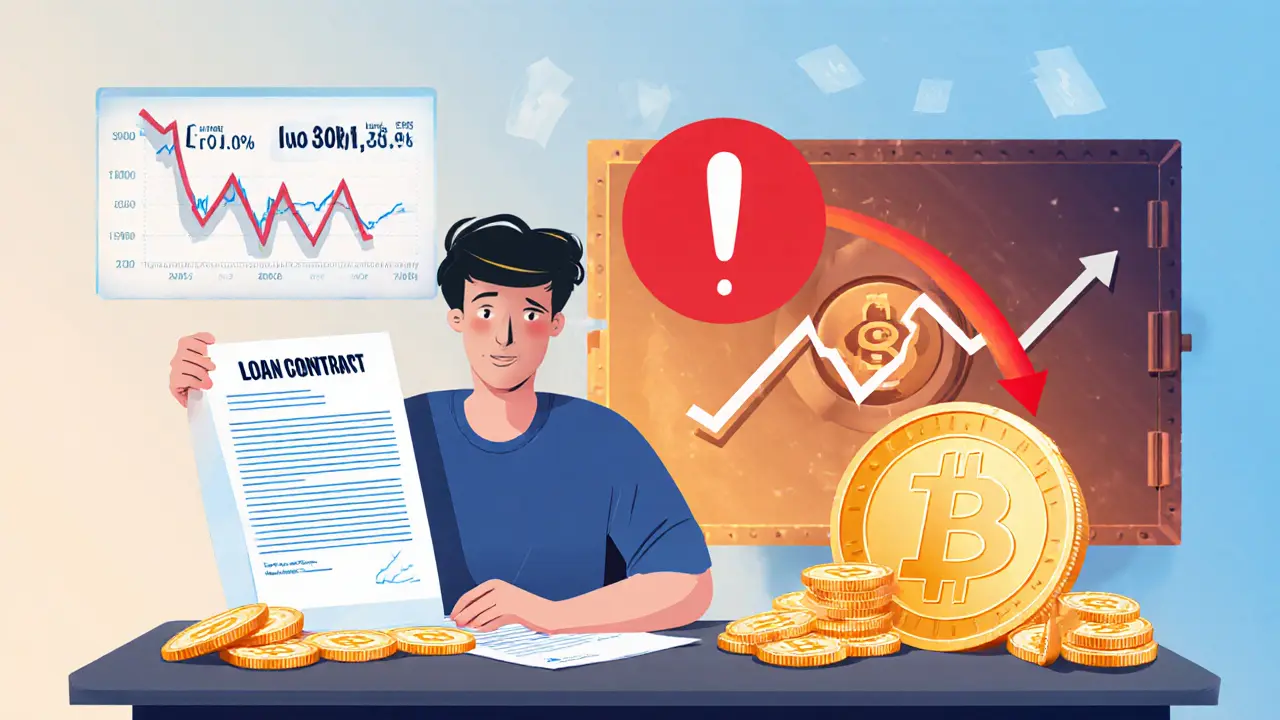
Learn how crypto lending liquidation works, key metrics, risk‑management tips, and upcoming trends to protect your collateral.