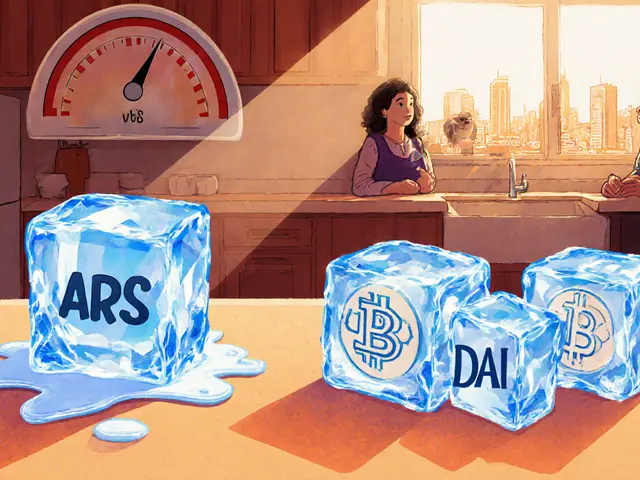



Imagine paying 6,000% more for electricity overnight. That is not a hypothetical scenario; it is exactly what happened to cryptocurrency miners in Sweden. For years, the Nordic nation was considered a haven for digital asset operations, thanks to cheap hydroelectric power and generous tax breaks. But in a dramatic policy reversal that took effect in July 2023, the Swedish government eliminated these incentives and slapped on punitive energy taxes. This move effectively killed the local mining industry, turning one of Europe's last strongholds into a hostile environment for Bitcoin and other proof-of-work cryptocurrencies.
| Metric | Pre-2023 Policy | Post-July 2023 Policy | Change Impact |
|---|---|---|---|
| Tax Reduction | 98% reduction for data centers | Incentive eliminated | Loss of primary competitive advantage |
| Energy Tax Rate | SEK 0.006 per kWh (~$0.0006) | SEK 0.36 per kWh (~$0.035) | ~6,000% increase in cost |
| Mining Viability | Highly profitable with renewable energy | Economically unviable for most ops | Mass exodus/shutdowns |
| Industry Status | Growing sector, ~150 MW capacity | Effectively extinct | Stranded assets, job losses |
The Rise and Fall of a Nordic Mining Haven
To understand why this hurts so much, you have to look back at how we got here. In 2017, Sweden introduced a massive tax incentive-a 98% reduction on energy taxes for data centers. The goal was smart: attract tech giants like Microsoft, Amazon, and Facebook by leveraging Sweden’s cool climate and abundant green energy. It worked. Tech companies flocked there, building massive infrastructure. Cryptocurrency miners saw an opportunity too. They set up shop in northern regions where hydroelectric power was cheap and reliable. At its peak, Sweden hosted about 150 megawatts of active mining capacity. It became the "last remaining stronghold" for European miners who couldn't compete elsewhere due to higher energy costs.
But the narrative shifted. Critics argued that while big tech brought jobs and stable revenue, crypto miners consumed vast amounts of energy for minimal local economic return. The government started questioning whether public subsidies should support an industry that offered few permanent jobs compared to traditional data centers. Then came the geopolitical shock. The war in Ukraine spiked energy prices across Europe. Suddenly, the already thin margins for miners evaporated. Instead of helping the struggling sector adapt, the Swedish government decided to cut it loose entirely.
The Math Behind the 6,000% Tax Hike
The numbers are staggering. Before the change, the energy tax for qualifying data centers was SEK 0.006 per kilowatt-hour. After the July 2023 implementation, that rate jumped to SEK 0.36 per kilowatt-hour. That is a roughly 6,000% increase. For context, if a miner was paying $0.0006 per kWh in taxes, they were suddenly paying $0.035. When you factor in the base cost of electricity, the total operational expense skyrocketed.
Why does this matter? Because cryptocurrency mining is incredibly sensitive to energy costs. Profitability isn't just about the price of Bitcoin; it's about the spread between the coin's value and the cost to produce it. With the new tax structure, even the most efficient ASIC hardware couldn't break even unless Bitcoin prices soared several hundred percent. Financial analysts pointed out that the math simply didn't work anymore. The tax alone often exceeded the potential revenue from mining a block. It wasn't just a penalty; it was a prohibition disguised as a tax.
Why Did Sweden Pull the Trigger?
The official rationale centered on economic efficiency and environmental concerns. The Swedish government cited the industry's "minimal contribution to economic activity, job creation, and energy infrastructure." Unlike traditional data centers that host cloud services for millions of users and employ hundreds of people locally, many mining operations were small, automated facilities with few staff. They consumed grid capacity without providing proportional social or economic benefits.
There was also bad blood from the past. During the 2018 crypto market downturn, several mining companies abandoned their Swedish sites, leaving behind unpaid energy bills and disrupted grid contracts. This created a perception among policymakers that miners were transient speculators rather than long-term partners. By eliminating the tax breaks, Sweden aimed to stop subsidizing an industry it viewed as low-value and high-consumption. It was a clear signal: if you want to mine here, pay full freight. And full freight was too expensive.

The Immediate Fallout: Shutdowns and Relocations
The reaction from the industry was swift and severe. Operators described the changes as "devastating." Many had invested heavily in purpose-built facilities in northern Sweden, assuming the favorable tax regime would remain stable. Overnight, those investments became stranded assets. You can't easily move a custom-built cooling system or negotiate away a fixed-rate energy contract when the tax law changes.
Most operators faced two choices: shut down completely or relocate. A significant portion chose relocation. Where did they go? Primarily to jurisdictions with cheaper energy and friendlier rules. Kazakhstan, Texas, and parts of Canada became popular destinations. These regions offer lower energy costs and regulatory frameworks that don't penalize mining. Some smaller operations simply liquidated their equipment locally, selling off rigs at discounted rates because no one wanted to buy them in a country where they couldn't run profitably.
The community response was equally critical. Industry publications like CoinDesk called it the "last nail in the coffin" for European mining. Reddit forums and specialized crypto groups echoed the sentiment, labeling Sweden one of the most hostile environments globally for digital asset operations. The consensus was clear: Sweden had voluntarily exited the global mining race.
How Sweden Compares to the Rest of the World
Sweden's approach is an outlier. While other countries debate regulation, few have implemented such aggressive fiscal penalties. Compare Sweden to El Salvador, which made Bitcoin legal tender and actively encourages mining using volcanic geothermal energy. Or look at the United States, where states like Texas and Wyoming compete fiercely for mining investment by offering low-cost power and flexible regulations.
Even within Europe, Sweden stands apart. Norway, despite similar concerns about energy consumption, hasn't imposed comparable tax penalties. The EU is working on broader frameworks like MiCA (Markets in Crypto-Assets), but these focus more on consumer protection and transparency than punitive taxation. Sweden's unilateral move highlights the fragmentation in European crypto policy. One member state can effectively ban an industry through tax policy, creating a patchwork of regulatory environments that complicates cross-border operations.

Lessons for Miners and Investors
What does this mean for you if you're involved in crypto? First, regulatory risk is real and immediate. Tax laws can change faster than technology. If your business model relies on specific government subsidies, you are vulnerable to political shifts. Second, geographic diversification matters. Don't put all your hashing power in one jurisdiction. As seen in Sweden, a single legislative decision can wipe out profitability.
For investors, this signals a shift in where hash rate growth will happen. Expect continued migration toward North America and Central Asia. Also, keep an eye on energy markets. Countries with surplus renewable energy and stable policies will likely become the next hubs. Sweden serves as a cautionary tale: being "green" isn't enough if the economic terms aren't sustainable.
Frequently Asked Questions
Did Sweden completely ban cryptocurrency mining?
No, Sweden did not issue a legal ban on cryptocurrency mining. Instead, it eliminated the 98% tax reduction for data centers and increased the energy tax significantly. This made mining economically unviable for almost all operators, effectively ending large-scale commercial mining without an outright prohibition.
How much did the energy tax increase for Swedish miners?
The energy tax for data centers increased from SEK 0.006 ($0.0006) per kilowatt-hour to SEK 0.36 ($0.035) per kilowatt-hour. This represents an approximate 6,000% increase, taking effect in July 2023.
Where did Swedish crypto miners go after the tax hike?
Many operators relocated to jurisdictions with lower energy costs and favorable regulations. Popular destinations included Kazakhstan, Texas (USA), and various provinces in Canada. Some smaller operations shut down entirely and sold their equipment.
Why did Sweden remove the tax incentives?
The Swedish government argued that cryptocurrency mining contributed minimally to local economic activity and job creation compared to its high energy consumption. Additionally, previous instances of miners abandoning sites with unpaid bills during market downturns influenced the decision to withdraw subsidies.
Is Sweden still attractive for data centers?
Yes, for traditional data centers hosting cloud services and enterprise applications. The tax changes specifically targeted activities deemed less economically beneficial, like cryptocurrency mining. Major tech companies like Microsoft and Amazon continue to operate in Sweden, benefiting from the country's green energy and cool climate.