


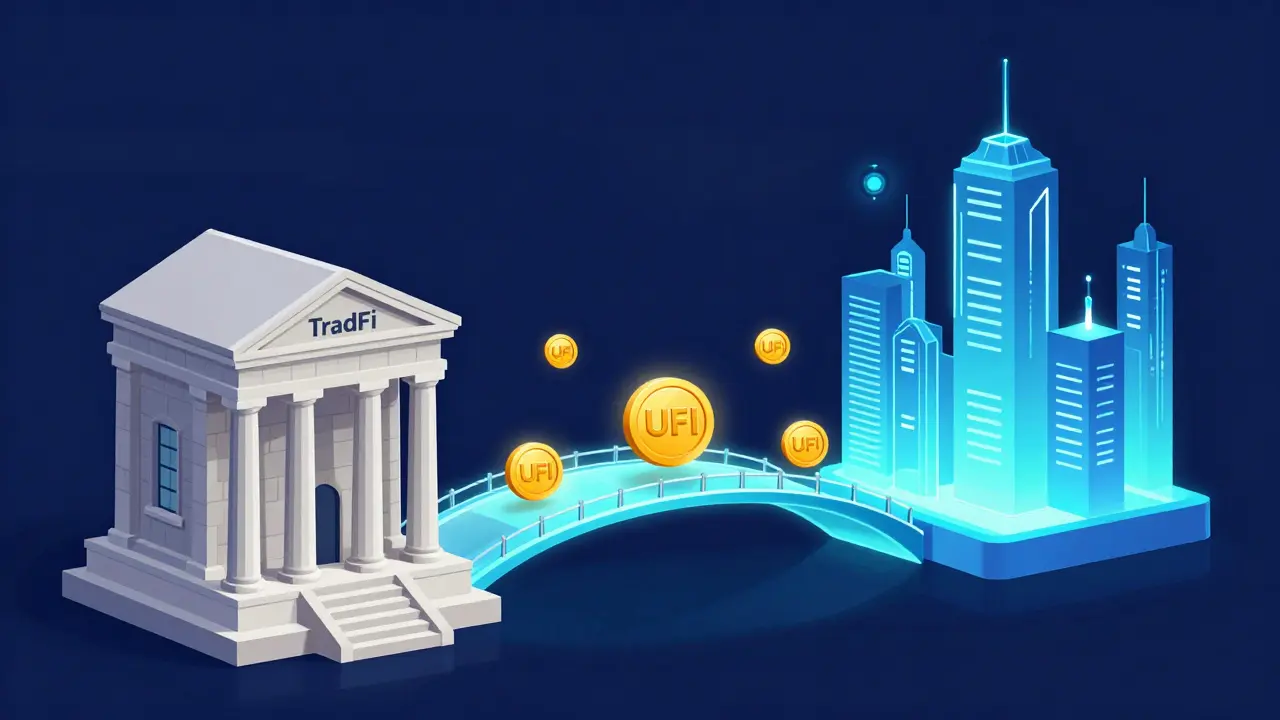
Getting free tokens through airdrops is one of the most exciting parts of the crypto world, but it can also be a minefield of confusing links and scams. If you're looking into the PureFi Protocol is a decentralized finance compliance protocol designed to bridge the gap between traditional finance (TradFi) and DeFi using verifiable credentials., you've likely noticed that their approach to rewards is a bit different from the usual "connect wallet and claim" model. Unlike most projects, PureFi focuses heavily on regulation, which means their PureFi Protocol airdrop processes often require more than just a lucky wallet address.
What is the PureFi Protocol (UFI) Airdrop?
At its core, the UFI token serves as the utility engine for the PureFi ecosystem. The protocol's airdrop program is designed to distribute these tokens to users who help grow the network or meet specific compliance criteria. Because PureFi is built for institutional use, they don't just throw tokens at everyone. Instead, they use a targeted approach where rewards are often tied to "challenges" or identity verification.
Historically, the project has used a mix of social media quests and technical milestones to reward users. For instance, early participants in 2021 and 2022 reported receiving between 25 and 100 UFI for completing Telegram quizzes and referral tasks. However, the project has shifted toward a more structured, compliance-heavy model where you might need to prove who you are before you can claim your rewards.
How to Participate in PureFi Airdrops
If you're hunting for UFI tokens today, you need to be more strategic than usual. Because the protocol is deeply integrated with Self Sovereign Identity (SSI) systems, the path to a reward usually follows these steps:
- Follow Official Channels: Start with their official X (formerly Twitter) account @Purefi_Protocol. This is where they announce "community rewards" and new challenges.
- Complete Social Quests: In the past, this included following accounts, joining Telegram groups, and taking quizzes. While some older links may be broken, new campaigns usually start here.
- Undergo KYC Verification: This is the big differentiator. To prevent botting and meet regulatory standards, PureFi may require you to use their compliance tools. You'll likely need to provide identity documentation to receive a Verifiable Credential.
- Wait for Vesting: Don't expect all your tokens at once. PureFi often uses vesting schedules-meaning your tokens unlock slowly over several months-to prevent a massive price crash immediately after a distribution.
UFI Tokenomics and Distribution
To understand if an airdrop is worth your time, you have to look at the math. The UFI token has a complex distribution structure. A significant portion of the supply is dedicated to ecosystem development (33%) and strategic partnerships (25%), both of which are primary sources for airdrop funding.
| Allocation Category | Percentage of Supply | Typical Purpose |
|---|---|---|
| Ecosystem Development | 33% | Community rewards and airdrops |
| Strategic Partnerships | 25% | Institutional onboarding |
| Team and Advisors | 20% | Core development (with vesting) |
| Public Sale | 15% | Initial liquidity |
| Marketing | 7% | User acquisition and promos |
Trading and Liquidity: What Happens After the Airdrop?
Once you have UFI tokens in your wallet, you'll want to know how to use or trade them. Currently, UFI doesn't have a presence on massive centralized exchanges like Binance or Coinbase. Instead, it lives on Decentralized Exchanges (DEXs). You'll primarily find trading pairs on Uniswap (for Ethereum) and PancakeSwap (for Binance Smart Chain).
Be aware that liquidity can be quite low. In late 2023, trading volumes were often under $5,000 per day. This means if you receive a large amount of tokens via airdrop, selling them all at once could cause a significant price drop (slippage). It's usually smarter to sell in smaller batches or hold if you believe in the protocol's compliance mission.

The Risks: Scams and Market Volatility
The "free money" allure of airdrops attracts scammers. There have been numerous reports on Reddit of fake PureFi airdrop links that lead to phishing sites. If a link asks for your seed phrase or a "gas fee" to unlock your tokens, it's a scam. Real airdrops will never ask for your private keys.
There's also the market risk. UFI has seen significant price swings, dropping from highs around $0.045 to under $0.01 in some periods. This volatility means the value of your airdrop can change drastically between the time you earn it and the time it actually hits your wallet.
Institutional vs. Retail Airdrops
PureFi is pivoting. While they started with retail-friendly quizzes, they are increasingly looking at institutional-focused distributions. Through partnerships with firms like RegTech Solutions, they are targeting regulated entities. This means future airdrops might not be open to the general public but instead targeted at verified businesses or professional traders who meet strict AML (Anti-Money Laundering) and KYC (Know Your Customer) standards.
This shift is a double-edged sword. For the average user, it makes getting tokens harder. For the project, it makes the token more attractive to big banks and hedge funds who cannot legally touch "anonymous" DeFi tokens.
How do I know if a PureFi airdrop is legitimate?
Always verify the announcement through the official PureFi Protocol X account (@Purefi_Protocol) or their official website purefi.io. Never provide your seed phrase or private keys to any site promising free tokens.
Do I need to provide my ID to get UFI tokens?
Likely, yes. Unlike most DeFi projects, PureFi focuses on compliance. Many of their reward programs require KYC verification through their Self-Sovereign Identity system to ensure participants are legitimate and meet regulatory requirements.
Where can I trade my airdropped UFI tokens?
UFI is primarily traded on decentralized exchanges. You can find UFI/WETH pairs on Uniswap and UFI/BNB pairs on PancakeSwap. Be mindful of low liquidity, which can affect your trade price.
Why haven't I received my tokens after completing a quest?
PureFi often uses vesting schedules and delayed distributions. Some users have reported waiting several weeks for tokens to arrive. Check the specific terms of the challenge to see if there is a "cliff" period before tokens are released.
Is the PureFi Protocol still active?
While developer activity on GitHub has slowed down compared to 2021, the project continues to announce partnerships and updates to its compliance verification systems, indicating it is still operating, albeit at a slower pace than during its launch.


People Comments
Everyone knows that KYC in DeFi is basically a contradiction in terms. Like, if you're bringing in TradFi compliance, you're just building another centralized database that will eventually get leaked. I've seen this movie before with a dozen other projects that claimed to bridge the gap and ended up just being glorified spreadsheets with a token attached.
There is something profoundly ironic about the quest for financial liberation through blockchain technology only to end up submitting government ID to a protocol just to receive a few tokens, which makes me wonder if we are actually evolving the system or simply dressing up the old regime in a digital skin. If the goal of DeFi was truly decentralization, then the requirement for verifiable credentials feels like a step backward into a world where our identity is once again the price of admission to the economy, though perhaps the necessity of institutional capital is the only way these systems actually scale in the real world, despite the philosophical cost we pay in the process.
Exactly. It's basically just a slow-motion car crash of ideals.
Actually, the institutional pivot is the only logical path for survival. Retail hype is a bubble, but if you get the hedge funds and banks on board through compliance, you have actual stability. Most people here just want a lottery ticket, but real value comes from the infrastructure that the big players are willing to use.
too much work for a few tokens honestly
Imagine actually thinking that giving your ID to a random crypto project is a good idea. You people are absolutely clueless about basic security. If you're this desperate for a few cents of UFI, you deserve to get phished.
I know a lot about this and the liquidity is just too low to even bother. You can't sell a big bag without tanking the price.
they want your id because they are working with the globalists to track every single satoshi you move. it is all a trap to see who is actually using defi before they flip the switch and freeze everything. do not trust the credentials
The correlation between the slowing GitHub activity and the pivot to "institutional distribution" is a massive red flag. It suggests the dev team has stopped innovating and is now just trying to find a corporate exit strategy before the token hits zero. This is a textbook example of a project shifting goalposts to hide a lack of actual product growth.
It's a trap. They just want your personal info to sell it to the highest bidder. Simple as that.
Quite a niche approach.
The sheer effort required to participate in this is almost comical. I can't imagine spending my afternoon filling out KYC forms for a token that trades on PancakeSwap with zero volume. It's simply beneath any serious investor.
The focus on compliance is a very professional way to handle the bridge between finance systems. It shows a level of maturity that many other projects lack in the current market.
It's a wild ride! Who knew airdrops could be like applying for a mortgage? Let's see if the corporate overlords actually bring some juice to the price action.
the tokenomics are a joke honestly. 33% for ecosystem is just a fancy way of saying the team will dump on us whenever they feel like it. classic venture capital play where retail gets the scraps and the founders get the yacht.
I truly believe that if we all work together to understand these complex systems, we can all benefit! It is truly a marveleous time to be in crypto, though the KYC part is a bit tediuous!
I can see both sides. While the privacy loss is real, the potential for institutional adoption could provide the liquidity and stability that DeFi desperately needs to move beyond the gambling phase.
I'm curious about the SSI part. If the credentials are truly self-sovereign, maybe we don't have to give up as much privacy as we think?
It is important to be cautious with your private keys. 🛡️ Always use official links to avoid the phishing scams mentioned in the post.
STOP WAITING AND JUST DO IT! If you want the tokens, get your ID ready and stop complaining about the rules! Winners adapt, losers moan!
typical 🙄 another project claiming to be the savior of finance while just asking for your papers... just typical of this space
The shift toward institutional focus is an interesting cultural pivot for a DeFi project. It marks a transition from the anarchist roots of crypto to something more like a digital version of the Swiss banking system.
Stay safe everyone! Just take it slow and double check everything before you click those links!
India will lead the way in these compliance standards! Our tech talent is far superior to anyone else and we will dominate the PureFi ecosystem with such passion and energy!