


Remember the hype around cryptocurrency airdrops in late 2021? If you were active on social media or crypto forums back then, you likely saw promotions for OKFLY, also known as Okex Fly. It was marketed as a high-reward opportunity where participants could receive up to 30 million tokens. The campaign promised easy money through simple tasks like sharing links or joining Telegram groups. But now, nearly five years later, the reality is starkly different from those initial promises.
If you are holding OKFLY tokens in your wallet wondering what they are worth, or if you are researching whether this project is legitimate, you need the unvarnished truth. This isn't just another shiny new coin; it's a case study in how many airdrop projects fade into obscurity. Let’s look at the actual data, the token mechanics, and why this token has effectively disappeared from the market.
The 2021 Airdrop Campaign Explained
To understand where OKFLY stands today, we have to look at its origin story. In October 2021, the project launched a significant marketing push. They hosted an airdrop campaign on CoinMarketCap, a major platform for tracking cryptocurrency data. The campaign had a budget of $21,000, which was used to incentivize participation.
The structure was typical for that era of crypto growth. Users were asked to perform specific actions to qualify for the token distribution. These actions usually included:
- Creating an account on CoinMarketCap
- Following the project on social media platforms like Twitter and YouTube
- Joining their Telegram community
- Referring friends to boost engagement metrics
In exchange for these low-effort tasks, participants received a portion of the total supply. The maximum potential reward was advertised as 30,000,000 OKFLY tokens per person. At the time, with thousands of participants, this seemed like a massive giveaway. However, the sheer volume of tokens distributed created immediate pressure on the token's value.
Tokenomics: Why High Supply Matters
One of the most critical aspects of any cryptocurrency is its supply model. For OKFLY, the numbers are extreme. The token operates on the Ethereum blockchain as an ERC-20 token. Its contract address is 0x02f093513b7872cdfc518e51ed67f88f0e469592.
Here is the breakdown of the supply:
| Metric | Value |
|---|---|
| Maximum Total Supply | 1,000,000,000,000,000 (1 Quadrillion) |
| Circulating Supply | ~436,219,179,205,489 (~43.62%) |
| Blockchain Standard | ERC-20 (Ethereum) |
| Contract Address | 0x02f093513b7872cdfc518e51ed67f88f0e469592 |
A supply of one quadrillion tokens is astronomical. To put this in perspective, Bitcoin has a max supply of 21 million. Ethereum has no hard cap but currently circulates around 120 million. When a project issues quadrillions of tokens, each individual token must have an incredibly small value to maintain a reasonable market capitalization. This is why OKFLY's price is quoted with so many zeros after the decimal point.
This high-supply model is often used in airdrops to make recipients feel wealthy on paper. Receiving "30 million" tokens sounds impressive, but if each token is worth fractions of a fraction of a cent, the real-world value is negligible. This psychological trick is common in projects that prioritize distribution over utility.
Market Performance and Liquidity Crisis
If you check the price history of OKFLY, you will see a pattern familiar to many failed airdrop tokens. The all-time high price was approximately $0.00000729. While that number looks tiny, remember the context of the massive supply. Even at that peak, the market capitalization was minimal compared to established cryptocurrencies.
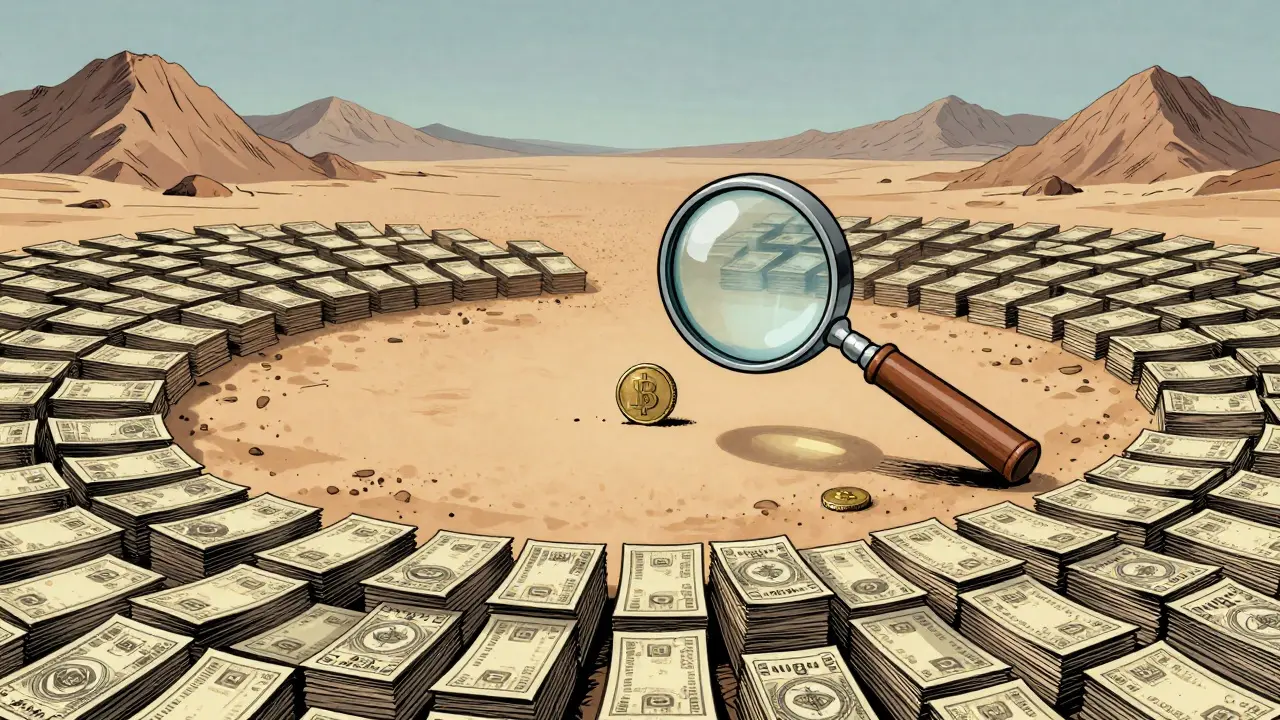
More importantly, liquidity-the ability to actually buy or sell the token-has dried up completely. According to data from LiveCoinWatch, OKFLY ranks #36,235 by market capitalization. That places it well outside the realm of actively traded assets. The last recorded trade occurred on December 9, 2023, at a price of roughly $0.0000000000613617.
Why does this matter? Because without liquidity, you cannot exit your position. You might hold millions of OKFLY tokens, but if there is no one willing to buy them at any price, those tokens are essentially digital collectibles with no financial value. The lack of trading activity suggests that the market has voted with its feet, moving away from this asset entirely.
Exchange Listings: The Missing Link
For a cryptocurrency to gain legitimacy and accessibility, it needs to be listed on exchanges. This applies to both Centralized Exchanges (CEXs) like Binance or Coinbase, and Decentralized Exchanges (DEXs) like Uniswap or PancakeSwap.
As of mid-2026, OKFLY is not listed on any major cryptocurrency exchange. CoinCarp, a data analytics platform for crypto, explicitly notes that the token has yet to secure a listing. This absence is a major red flag for several reasons:
- Lack of Demand: Exchanges list tokens based on user demand and team fees. No listing implies no significant interest from traders.
- Regulatory Compliance: Many exchanges require rigorous audits and legal checks before listing. Failure to list may indicate the project did not meet these standards.
- Project Abandonment: Maintaining listings requires ongoing effort and payment of fees. The lack of presence suggests the development team may have ceased operations or lost interest.
While Over-The-Counter (OTC) trading between individuals is theoretically possible, it carries extreme risk. Without the protection of a regulated exchange, you have no recourse if a counterparty fails to deliver tokens or funds. This makes selling your OKFLY holdings practically impossible for the average user.
Is OKFLY a Scam?
Determining if a project is a "scam" can be nuanced. Did the creators intentionally deceive users to steal funds? Or did they simply launch a poorly conceived project that failed to gain traction? With OKFLY, the evidence points toward the latter, though the outcome for holders is similarly negative.
The project followed standard airdrop protocols. Users were not asked to send ETH or other valuable tokens to claim their OKFLY. Instead, they performed marketing tasks. This means the primary loss for participants was time and attention, rather than direct financial theft during the claim process.
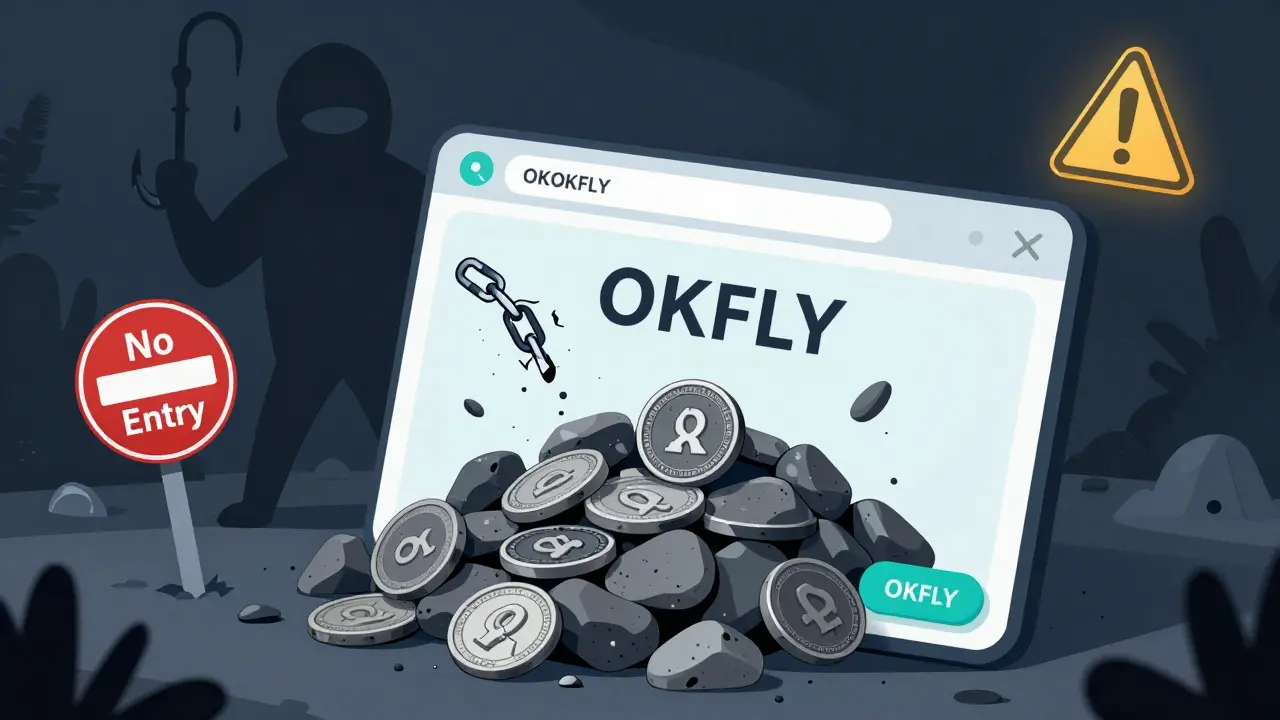
However, the failure to develop any utility, secure exchange listings, or maintain community engagement over four years raises serious questions about the project's intent. Many such projects are designed as "exit scams" where the team pumps the token via hype, sells their large allocation early, and abandons the rest. Given the lack of transparency regarding the team's identity and the complete cessation of development updates, caution is warranted.
CoinCarp advises investors to conduct thorough research, including whitepaper analysis and team verification. For OKFLY, these resources are either outdated or non-existent. The absence of a clear roadmap, active development GitHub repository, or identifiable team members further erodes trust.
Risks of Holding Obsolete Tokens
If you still hold OKFLY tokens in your wallet, consider the following risks:
- Zero Value Realization: Without liquidity, you cannot convert tokens to fiat or other cryptocurrencies.
- Wallet Clutter: Holding obsolete tokens can clutter your portfolio view and make it harder to track valuable assets.
- Security Concerns: Interacting with old, unmaintained smart contracts can sometimes pose security risks, although simply holding ERC-20 tokens is generally safe unless you approve spending permissions to malicious addresses.
- Opportunity Cost: Time spent monitoring a dead token is time not spent on productive investments or learning.
There is no technical penalty for holding these tokens, but there is also no benefit. They sit in your wallet as static data on the Ethereum blockchain, consuming minimal gas fees only if you attempt to transfer them.
Lessons from the 2021 Airdrop Era
The OKFLY case is not unique. The 2021 bull market saw a surge in airdrop campaigns, many of which followed similar patterns: high supply, aggressive social media promotion, and eventual disappearance. Projects like OKFLY highlight the importance of due diligence beyond the allure of free tokens.
When evaluating future airdrops, ask yourself:
- Does the project have a working product or clear utility?
- Is the team public and verifiable?
- Are there plans for exchange listings or ecosystem integration?
- What is the token supply, and does it align with realistic valuation models?
Projects that fail to answer these questions positively are likely to follow OKFLY's trajectory. The cryptocurrency market has matured since 2021, with greater emphasis on sustainability, regulatory compliance, and real-world application. Tokens that rely solely on speculative hype without substance rarely survive.
Conclusion: Moving Forward
OKFLY, or Okex Fly, serves as a reminder that not all airdrops lead to wealth. Despite the initial excitement and the scale of the 2021 campaign, the token has failed to establish any market presence. With no exchange listings, negligible liquidity, and a stagnant development status, OKFLY appears to be a defunct project.
For current holders, the practical advice is to accept the loss and focus on more viable opportunities. The crypto space offers numerous legitimate projects with active communities, transparent teams, and genuine utility. By understanding the signs of a failing project-like those seen with OKFLY-you can better protect your time and resources in the future.
Can I still claim OKFLY tokens?
No, the original airdrop campaign took place in October 2021. There are no active claims or distributions happening now. Any website asking you to connect your wallet to "claim" OKFLY today is likely a phishing scam attempting to steal your assets.
Where can I buy or sell OKFLY?
You cannot buy or sell OKFLY on any major centralized or decentralized exchange. The token is not listed anywhere. Attempting to trade it privately carries high risk and is not recommended due to the lack of liquidity and oversight.
Is OKFLY associated with OKX (formerly OkEx)?
Despite the name "Okex Fly," there is no official affiliation between OKFLY and the major exchange OKX (formerly OkEx). The naming similarity was likely used to attract attention, but the projects are unrelated. Always verify official partnerships through company press releases.
Why is the OKFLY price so low?
The price is extremely low because the total supply is one quadrillion tokens. Such a massive supply dilutes the value of each individual token. Additionally, the lack of demand and liquidity means there are no buyers willing to pay higher prices.
Should I delete my OKFLY tokens from my wallet?
You don't need to delete them, as they do not cost anything to hold. However, you can hide them in your wallet interface to reduce clutter. Just ensure you never sign any transactions that ask for permission to spend your OKFLY tokens, as this could compromise your wallet security.
- Poplular Tags
- OKFLY airdrop
- Okex Fly token
- OKFLY scam
- ERC-20 tokens
- crypto airdrop risks