


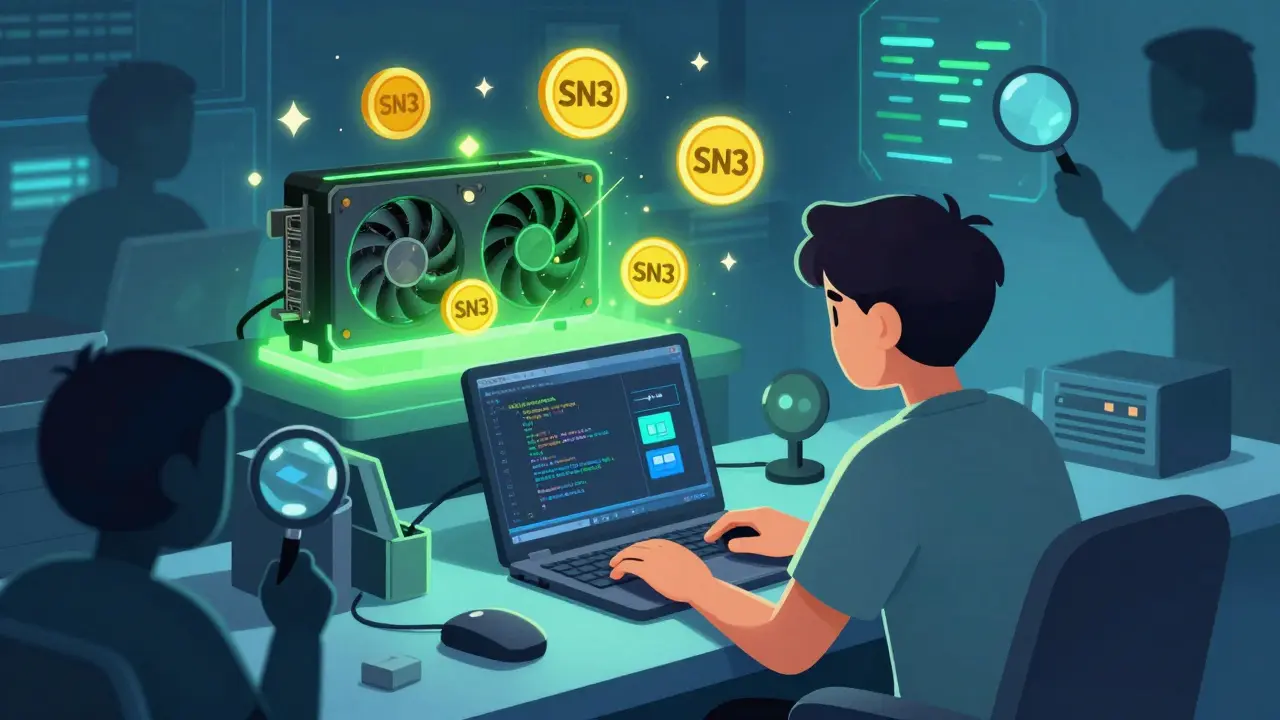
Most people hear about Bitcoin or Ethereum. But what if a crypto coin isn’t meant for trading or speculation - but for training artificial intelligence across thousands of computers around the world? That’s where τemplar (SN3) comes in. It’s not just another altcoin. It’s a utility token built to power a decentralized AI training network. If you’ve ever wondered how AI models get trained without relying on Google or NVIDIA’s data centers, τemplar is one of the few projects trying to solve that problem - and it’s far from simple.
What τemplar (SN3) actually does
τemplar (SN3) isn’t a currency you use to buy coffee. It’s a fuel. Think of it like electricity for a machine that trains AI models. The project, developed by a group called the one-covenant team, lets anyone with a decent GPU join a network to help train large AI models. Instead of one company owning all the training data and hardware, τemplar opens it up. People contribute their computing power - and get paid in SN3 tokens for doing it right. There are two main roles in this system: Miners and Validators. Miners run the AI training tasks on their machines. They take small chunks of data, train a model on it, and send back the results - called gradients. Validators check if those results are honest and accurate. If a miner tries to cheat - like sending fake gradients - the validators catch it and slash their rewards. It’s a blockchain-based trust system built for AI, not money. This isn’t theoretical. The code is public on GitHub. The entire framework is written mostly in Python (over 96% of the codebase), with Docker and shell scripts handling deployment. It’s designed to work on consumer-grade hardware, as long as you have an NVIDIA GPU with CUDA support. No need for a $50,000 supercomputer. Just a decent gaming rig and a stable internet connection.How the token economy works
The SN3 token is the reward system. Miners earn SN3 when their training contributions are verified by validators. Validators earn SN3 for accurately judging those contributions. The more useful your work, the more tokens you get. This creates a direct link between real-world AI performance and token value. But here’s the catch: no one agrees on how many SN3 tokens exist. Different crypto tracking sites show wildly different numbers. Holder.io says 3 million are in circulation. CoinMarketCap says 1.26 million. Phemex says 2.15 million. The maximum supply is listed as 21 million across most sources - same as Bitcoin’s cap. But if you can’t even agree on the circulating supply, how can you trust the price? And the price? It’s all over the place. One site says $9.91. Another says $20.55. One even claims an all-time high of $44.47 - but that date is in 2025, which hasn’t happened yet. That’s not volatility. That’s data chaos. It suggests the token isn’t being actively traded on major exchanges. In fact, Holder.io outright states: “Today τemplar (SN3) not traded anywhere.” Yet they still list a price. That’s a red flag.Where you can (and can’t) buy it
If you’re thinking of buying SN3, you’re in for a rough ride. There are no clear, reliable exchanges listing it. CoinMarketCap shows no active trading pairs. Phemex lists it, but with very low volume - around $300,000 in 24 hours, which is tiny compared to even small-cap coins. Most of the trading activity seems to come from obscure platforms or peer-to-peer deals. You won’t find it on Binance, Coinbase, or Kraken. You won’t find it on popular DeFi aggregators like Uniswap. The only way to get it is through niche crypto exchanges that most retail investors have never heard of. And even then, liquidity is thin. If you buy SN3, you might not be able to sell it later without taking a huge loss. The project’s website (tplr.ai) links to GitHub, Twitter, and Facebook - but Twitter has only 278 followers. The last real post was in August 2023. No Discord. No Telegram. No Reddit community worth mentioning. There’s no customer support. No FAQ page. It’s a technical project built for developers - not for investors.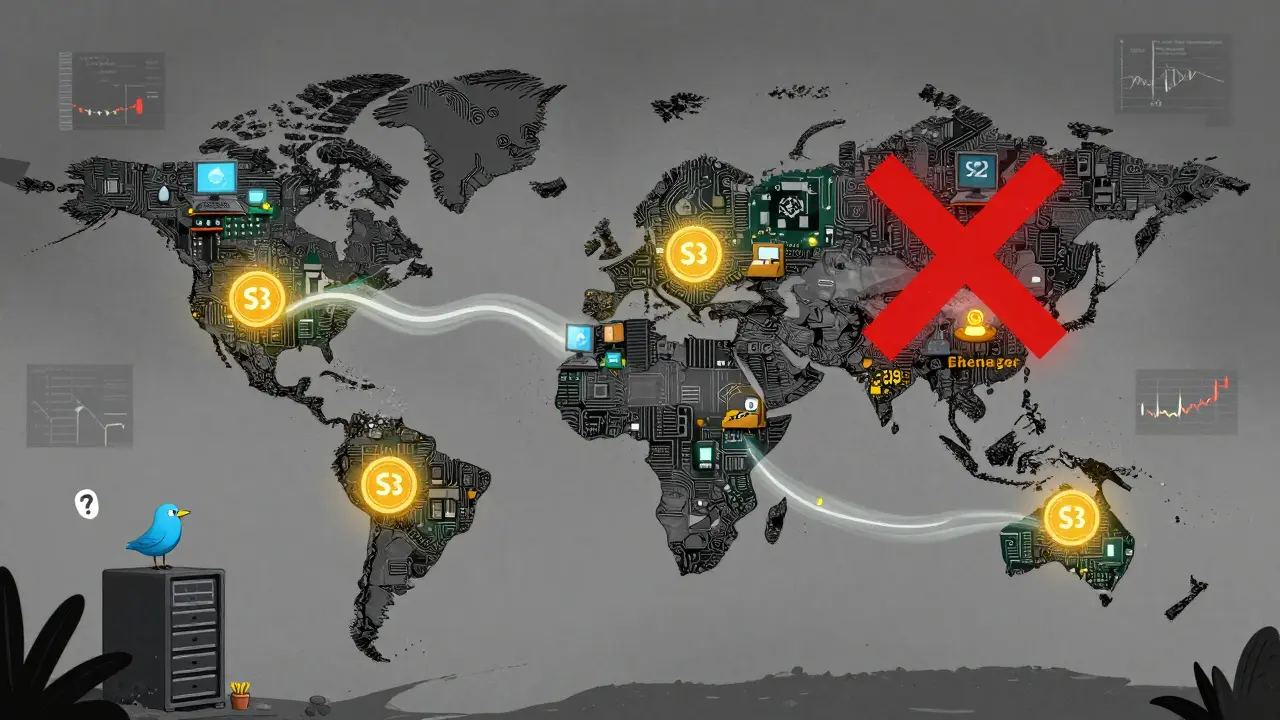
How it compares to other AI crypto projects
τemplar isn’t alone in trying to combine AI and crypto. Bittensor (TAO) is the big player here. It’s been around longer, has real exchange listings, and a market cap over $2 billion. SingularityNET (AGIX) and Fetch.ai (FET) are also more established. They have active communities, marketing teams, and partnerships. τemplar has none of that. It’s a bare-bones project with no PR, no influencers, no media coverage. No one from Messari or Delphi Digital has written about it. No analyst reports. No whitepaper updates since 2023. The only proof it’s alive is the GitHub commit history - which shows regular code updates, but no major feature releases. That makes τemplar a high-risk, high-speculation play. It’s not a stock. It’s not a product. It’s a prototype with a token attached. If you believe in decentralized AI training, you might see potential. But if you’re looking for something with liquidity, transparency, or community backing - you won’t find it here.Who should care about τemplar (SN3)
You should care about τemplar if you’re a developer with a GPU and curiosity. If you want to experiment with decentralized AI training, this is one of the few open-source projects that lets you plug in and start contributing. The documentation on GitHub is detailed. The setup isn’t trivial, but it’s doable if you know Python and Docker. You should not care about τemplar if you’re looking to invest. There’s no clear path to profit. No roadmap beyond vague promises of “scalable architecture.” No audits of smart contracts. No regulatory compliance disclosures. The price data is inconsistent. The trading volume is negligible. The community is silent. Even the price predictions floating around - like Coindataflow’s $11-$22 range - are based on zero public methodology. They’re guesses dressed up as forecasts.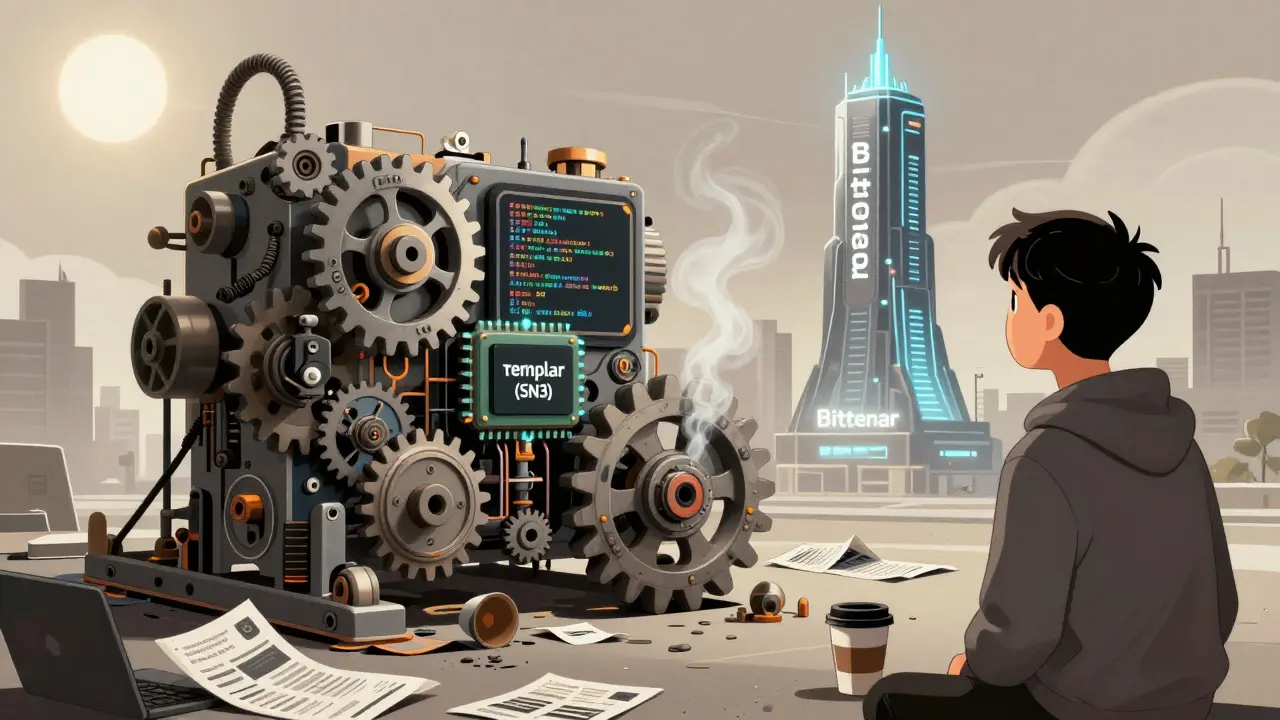
The bigger picture: Is decentralized AI even possible?
τemplar raises a bigger question: Can you really train powerful AI models using random computers scattered across homes and garages? The answer isn’t yes or no - it’s “maybe, but it’s hard.” Training AI requires massive amounts of data, time, and consistency. If one miner sends bad gradients, it can ruin the whole model. That’s why big companies use locked-down data centers. τemplar’s innovation is its validator system - a way to detect and punish bad actors. But it’s unproven at scale. No one has demonstrated that this model works for training GPT-level models. Regulators are watching too. The EU’s AI Act could make cross-border data sharing for AI training illegal unless strict rules are followed. τemplar doesn’t address this. It doesn’t say how it handles data privacy, consent, or compliance. That’s a huge blind spot.Final thoughts: A tool, not a trade
τemplar (SN3) is not a crypto coin in the traditional sense. It’s a tool for a niche technical experiment. It’s like owning a gear in a machine you can’t fully see. You can’t use it to pay for anything. You can’t easily sell it. And if the project fades, your tokens become digital dust. If you’re a developer, tinkerer, or AI researcher - check out the GitHub repo. Run the code. See how it works. You might learn something valuable. If you’re an investor? Walk away. There’s no evidence this will ever become liquid, mainstream, or profitable. The market data is broken. The community is gone. The price is a mirage. τemplar might be the future of AI training. Or it might be a dead end. But right now, it’s not a cryptocurrency you should buy. It’s a project you should observe - from a distance.Is τemplar (SN3) a good investment?
No, τemplar (SN3) is not a good investment for most people. The token has inconsistent price data across platforms, extremely low trading volume, and no presence on major exchanges. There’s no clear path to liquidity, and the project lacks community support, audits, or regulatory disclosures. It’s better suited for technical experimentation than financial speculation.
Can I mine τemplar (SN3) with my gaming PC?
Yes, technically you can. The project is designed to run on consumer hardware with an NVIDIA GPU that supports CUDA. You’ll need Python 3.8+, Docker, and a stable internet connection. But mining SN3 means participating in AI training as a Miner - not traditional crypto mining. It’s not plug-and-play. You need to understand the code, set up the environment, and follow GitHub instructions. There’s no wallet or app to download.
Where can I buy τemplar (SN3) tokens?
There are no reliable places to buy τemplar (SN3). CoinMarketCap shows no active trading pairs. Phemex lists it with very low volume. Other exchanges either don’t list it or have no liquidity. Holder.io claims it’s not traded anywhere, yet still shows a price. This inconsistency suggests the token may be delisted or only available through obscure peer-to-peer channels. Avoid any platform promising easy access - it’s likely a scam.
What’s the difference between τemplar and Bittensor?
Bittensor (TAO) is a more mature decentralized AI network with real exchange listings, a $2 billion market cap, and an active community. It allows nodes to earn tokens by providing AI inference services. τemplar focuses on distributed training using a Miner-Validator system and is still in early development. Bittensor is proven at scale; τemplar is a proof-of-concept with minimal adoption.
Is τemplar (SN3) safe to use?
There are no public security audits of τemplar’s smart contracts or codebase. While the GitHub repository shows active development, there’s no evidence of third-party reviews or bug bounties. Running the software requires trusting the one-covenant team completely. There’s no insurance, no recovery options, and no support. Use it only if you understand the risks and are comfortable with experimental, unvetted code.
Does τemplar have a roadmap or future plans?
No. The project’s GitHub documentation mentions vague goals like “scalable architecture” and “heterogeneous compute support,” but there’s no official roadmap, timeline, or milestones. Updates are limited to code commits and minor documentation tweaks. Without a clear plan, the long-term viability of τemplar remains uncertain.



People Comments
Who even cares about some obscure token no exchange wants to list? If it's not on Binance or Coinbase, it's a ghost project. I've seen this movie before - vaporware with a GitHub repo and zero real users. Stick to Bitcoin if you want to sleep at night.
This is actually one of the most thoughtful breakdowns I've read on decentralized AI infrastructure. Most people just see ‘crypto’ and run for the hills - but τemplar isn’t about flipping coins. It’s about redistributing compute power like a modern-day grid. The validator system is genius - it’s like proof-of-work but for AI integrity. If this scales, it could be the quiet backbone of open-source AI. The lack of liquidity? That’s a feature, not a bug. It filters out speculators and keeps the network focused on the mission.
Let me guess - you’re one of those ‘but it’s technically open source!’ apologists. The fact that Holder.io says it’s not traded anywhere and still shows a price? That’s not a bug, it’s a scam. Someone’s pumping fake data to lure in dumb money. Don’t be the sucker who buys into a ghost chain because you think you’re ‘early.’ You’re not. You’re late to the graveyard.
THIS IS A SCAM!!! WHY IS NO ONE TALKING ABOUT THIS?!?!? THE PRICE IS MADE UP!!! THE EXCHANGES ARE FAKE!!! THE TWITTER HAS 278 FOLLOWERS AND THE LAST POST WAS IN 2023!!! THIS IS A PUMP AND DUMP WITH A GITHUB REPO!!! PEOPLE ARE LOSING THEIR SAVINGS TO THIS!!!
From India, I’ve tried running the node on my RTX 3060. It’s not plug-and-play, but the docs are solid. Took me two days to get it working - Docker permissions, CUDA version mismatches, etc. But once it ran, I saw real gradients being submitted. No money yet, but the code works. If you’re a dev, try it. If you’re here to flip tokens? Save your breath. This isn’t a casino. It’s a lab.
Of course it’s not on major exchanges. The government knows what this is. Decentralized AI training? That’s a threat to the surveillance state. They’re burying it. The ‘low volume’? That’s because the real players are using private channels. You think the NSA doesn’t have nodes running this? They’re probably training the next-gen surveillance AI on your neighbor’s gaming PC. Wake up.
man i tried to run this thing… my pc got so hot i thought it was gonna catch fire… like… why is this even a thing? i just wanted to mine dogecoin and now i’m training some robot brain with my rtx 4070… and for what? a token that no one wants? i think the devs are just trying to make their laptops look cool on github… 🤡
Okay but… imagine if this actually worked? 🤯 Like… what if every gamer’s PC became part of a global AI brain? No more Big Tech monopolies? No more $100M data centers? I’m not saying I’m investing… but I’m definitely keeping an eye on this. It’s like… digital alchemy. Turning electricity into intelligence. 🌐✨
The fundamental flaw in the criticism is the conflation of financial utility with technical innovation. τemplar is not a financial instrument; it is an emergent protocol for distributed cognition. The absence of liquidity is not evidence of failure, but rather an indication of its nascent state - one that resists commodification. To demand market validation of a nascent epistemic architecture is to mistake the map for the territory. The token is a thermodynamic incentive, not a speculative asset. The real value lies in the emergent properties of the network - not in the price chart.
If you’re a dev with a GPU, just try it. No pressure. No expectations. Run the code. See how it feels. If it’s not for you, walk away. But don’t trash it because you don’t understand it. This is how revolutions start - not with hype, but with quiet experimentation. I’ve seen projects like this die… and I’ve seen them change the world. Be the one who tries, not the one who mocks.
Let me be blunt: τemplar is a Trojan horse for state-sponsored AI proliferation. The one-covenant team? They’re either ex-NSA or Chinese state actors. Why else would they avoid all public communication? Why no Telegram? No Discord? This isn’t open-source - it’s open-sourced espionage. The ‘validators’ are honeypots. The ‘gradients’ are data exfiltration vectors. They’re training AI on your hardware to predict your behavior. You’re not contributing - you’re being harvested. And you’re proud of it?
There is a metaphysical paradox here: if a token is not traded, does it have value? If a network trains AI without a market, does it exist? τemplar exists in the liminal space between utility and abstraction - a ghost in the machine of capitalism. It is the antithesis of the crypto dream: not wealth, but wisdom. Not speculation, but service. To call it a ‘coin’ is to misunderstand its ontology. It is not money. It is a covenant - between human hardware and artificial mind. The silence is not death. It is contemplation.
I appreciate the depth of this analysis. The distinction between utility token and speculative asset is critical. Too many people treat every blockchain project like a stock. τemplar’s lack of liquidity, inconsistent pricing, and minimal community presence are not bugs - they’re features of a project designed for technical users, not retail traders. The GitHub activity suggests genuine development. The silence? That’s because there’s no marketing budget. Not every innovation needs a Twitter influencer to be real.
My cousin in Texas runs this on his old gaming rig. Says he gets like $0.40 a week in SN3. He doesn’t cash out. Just lets it sit. Says it’s ‘like planting a tree.’ He doesn’t care about the price. He just likes knowing his GPU is helping train something that isn’t owned by Google. I think that’s kinda beautiful. Maybe we’re overthinking the finance part. Maybe the point is just… participation.
So… the price is fake, the exchange is sketchy, the Twitter is dead, and the ‘team’ has zero social presence… but you’re telling me this isn’t a scam? Bro. I’ve seen this exact script before. Remember ‘CryptoKitties’? Remember ‘Squid Game’ coin? Same energy. Someone’s sitting on 99% of the supply, waiting for the next sucker to buy in so they can rug. Don’t be the one holding the bag when the lights go out.
I’m a high school teacher who runs this on my old laptop after class. I don’t know what gradients are. I just click ‘start’ and it runs. I get a little SN3 every week. I use it to buy coffee at this one crypto cafe downtown. They accept it. It’s weird. It’s slow. But it’s real. People think crypto is about getting rich. But sometimes… it’s just about being part of something that doesn’t belong to anyone. That’s kinda cool.
It’s a prototype. That’s it. No audits. No roadmap. No team identity. The fact that you even consider this worth discussing says more about you than the project. If you’re not going to do your due diligence, don’t pretend you’re a visionary. Just admit you’re chasing a ghost because you don’t understand what real innovation looks like.
Okay but… if this is so dead, why is the GitHub still getting commits? Why is the Dockerfile being updated? Why are there 12 open issues? It’s not dead - it’s just quiet. People don’t post on Twitter to say ‘I fixed the CUDA error on Ubuntu 24.04.’ Real work happens in silence. The market’s not ready. But the code? It’s alive. And that’s more than 90% of crypto projects can say.
Price inconsistencies? Low volume? No exchange listings? This isn’t a project. It’s a data anomaly. Someone’s spoofing the APIs. The whole thing is a bot-generated illusion. Don’t waste your time. This isn’t AI. It’s AI theater.
Let us examine the epistemological foundation of the assertion that τemplar (SN3) constitutes a viable economic entity. The absence of centralized exchange listing does not constitute falsification of utility. Rather, it demonstrates the project’s resistance to financialization - a feature, not a defect. The circulating supply discrepancy arises from inconsistent API ingestion, not fraud. The price volatility reflects market fragmentation, not manipulation. The lack of community discourse is indicative of a project operating outside the attention economy - a rare and commendable trait. To condemn τemplar for its nonconformity to crypto-capitalist norms is to mistake the symptom for the disease.
bro this is literally just a guy in his basement training ai with his rtx 4090 and calling it ‘decentralized’… if you think this is the future… i got a bridge to sell you… also the ‘one-covenant team’ sounds like a cult… they dont even have a discord… what even is this?? 🤡