


Japan doesn’t just regulate cryptocurrency exchanges - it redefines what responsible crypto business looks like. While other countries struggle with unclear rules or slow action, Japan’s Financial Services Agency (FSA) has built one of the world’s toughest, most detailed crypto frameworks. If you’re thinking about operating a crypto exchange here, or even just using one, you need to understand how deep this system goes - and why it matters.
Why Japan’s Rules Are Different
Most countries treat crypto like a wild west. Japan treats it like a bank. After the collapse of Mt. Gox in 2014 - which lost 850,000 bitcoins - the government didn’t just react. It rebuilt the entire system from the ground up. The Payment Services Act (PSA) became the foundation, and since then, it’s been updated in 2020 and again in 2023 to close every loophole possible. The goal? No more customer losses. No more shady operators. No more excuses. The FSA doesn’t just want you to register. It wants you to prove you can protect people’s money. That’s why the licensing process isn’t a form you fill out. It’s a full organizational overhaul.The Licensing Requirements: No Shortcuts
To legally run a crypto exchange in Japan, you must be a Japanese corporation - a Kabushiki Kaisha. You can’t operate from overseas. You need a physical office in Tokyo, Osaka, or another major city. You need a Japanese bank account. You need at least 10 million yen in capital - and most serious players hold far more. But the real test isn’t money. It’s control. The FSA looks at:- Who’s managing the company - their background, experience, and track record
- How you train your compliance team
- Whether your internal audits are real or just paperwork
- How you handle customer complaints
The Cold Wallet Rule: 95% Offline, or Else
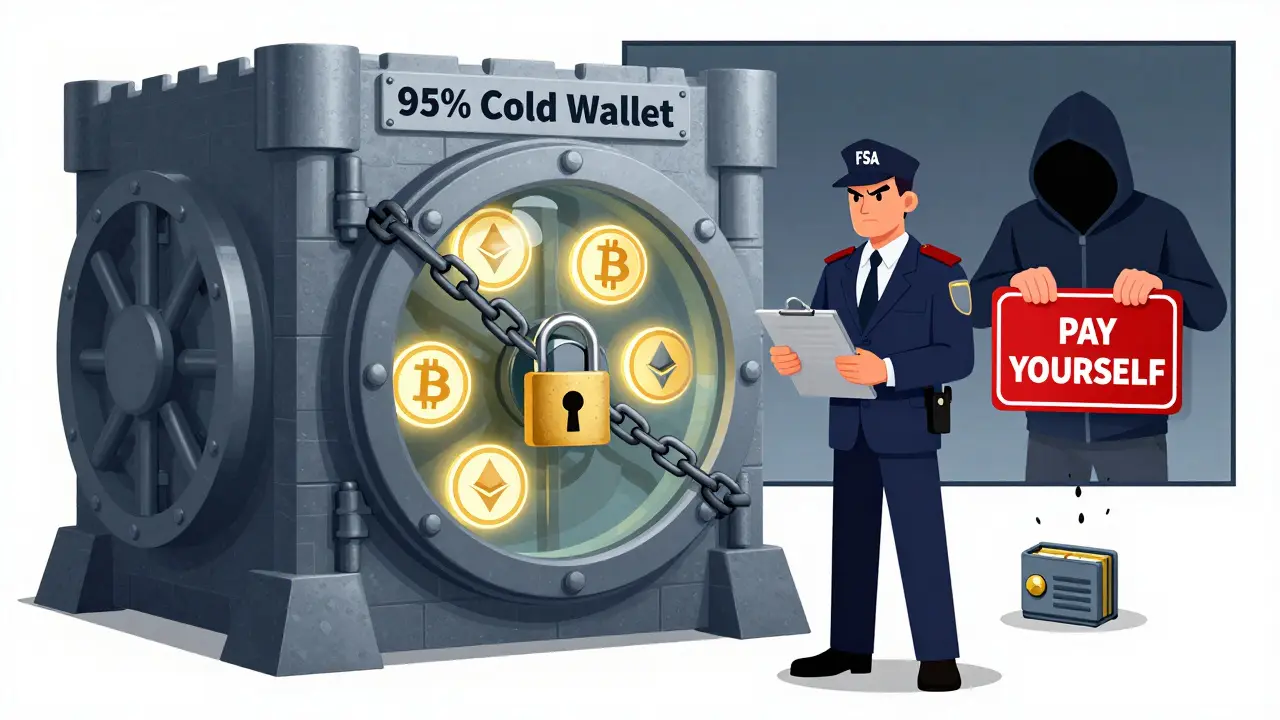
This is where Japan sets itself apart. Every exchange must store at least 95% of customer crypto in cold wallets - completely offline, air-gapped, and physically secured. No internet connection. No remote access. Just locked hardware and strict access controls. If you want to keep any crypto online - even 1% - you have to back it with your own money. That means if a hot wallet gets hacked, you pay the loss out of your pocket. Not the customer’s. Not insurance. Your cash. This rule isn’t optional. It’s not a suggestion. It’s written into law. And it’s why Japanese exchanges have never suffered a major customer theft. Not one since the PSA took effect.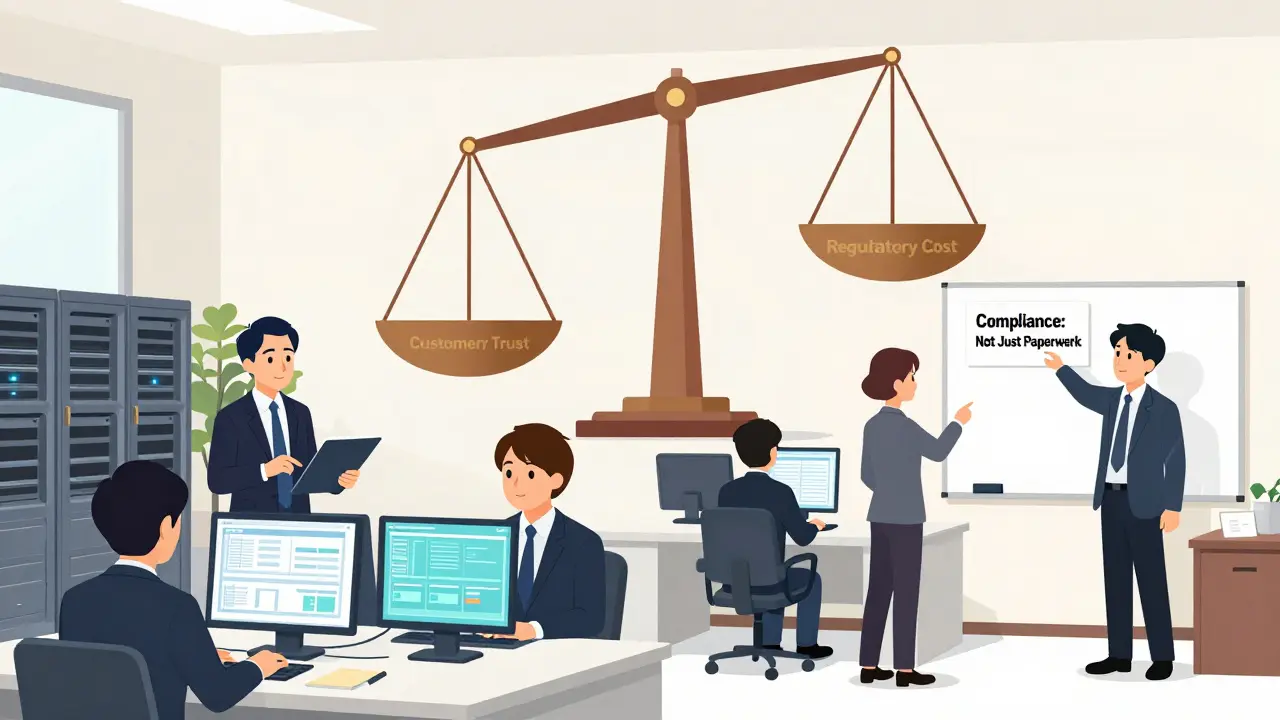
From Payment Services to Securities: The 2025 Shift
In June 2025, the FSA made a major move. They started reclassifying certain crypto assets under the Financial Instruments and Exchange Act (FIEA). That’s the same law that governs stocks, bonds, and mutual funds. Why? Because some tokens aren’t just digital cash. They’re investment contracts. They promise returns. They give voting rights. They behave like securities - and the FSA decided they should be treated like them. Starting in early 2026, tokens with these features will need:- Detailed public disclosures
- Prohibitions on insider trading
- Clear rules on market manipulation
- Approval for crypto ETFs - including spot Bitcoin funds
What This Means for Users
If you’re a regular user in Japan, this is good news. You’re protected by rules that actually work. Your coins are stored offline. Your exchange has real capital behind it. Your personal data is handled under strict AML/KYC rules. And if something goes wrong, you have legal recourse. Japan’s crypto adoption rate is growing - 14.7% of the population used crypto in 2025, and it’s expected to hit 15.26% by 2026. That’s over 18 million people. And unlike in places where exchanges vanish overnight, Japanese users can trust that the platform they’re using is legally accountable.The Tax Question: Still a Problem
There’s one big catch: taxes. Right now, profits from crypto trades in Japan are taxed as “miscellaneous income” - up to 55% depending on your total earnings. That’s higher than the top rate for stock gains. The FSA knows this is a problem. They’ve been pushing for reform since late 2024. The goal? Align crypto taxes with traditional investments - a flat rate around 20%. A draft bill is expected in Q2 2026. If passed, it could trigger a massive wave of new retail participation.
DeFi and the Future
Japan isn’t ignoring decentralized finance. The FSA runs a DeFi Study Group that meets every two months. It includes regulators, academics, and developers from top Japanese blockchain firms. They’re trying to figure out how to regulate smart contracts without killing innovation. So far, they’re taking a cautious approach: no blanket bans, but no free pass either. Any DeFi protocol that handles user funds - even if it’s “decentralized” - will eventually need to meet the same custody, transparency, and AML standards as centralized exchanges.Is Japan Too Strict?
Some say yes. They argue the rules are too expensive, too slow, and scare off startups. And it’s true - launching a crypto exchange in Japan costs more than in Singapore, Switzerland, or even the U.S. But look at the results. Japan has the lowest rate of crypto fraud in the G7. Its exchanges are among the most secure in the world. And when other countries look for a model, they look to Tokyo. The FSA doesn’t care about being trendy. They care about being trustworthy. And in crypto, where trust is the rarest commodity, that’s worth more than any tax break or quick launch.What’s Next in 2026?
Expect three big things:- The FIEA overhaul takes full effect - crypto tokens with investment features become regulated securities.
- Crypto ETFs launch - spot Bitcoin and Ethereum funds approved for retail investors.
- Tax reform begins - a move toward a 20% flat rate on crypto gains.
Can foreign companies run crypto exchanges in Japan?
No. All crypto exchange operators must be registered Japanese corporations - a Kabushiki Kaisha. Foreign companies can’t operate remotely. They must establish a legal entity in Japan with a physical office, local bank account, and Japanese-based management team.
What happens if an exchange doesn’t follow the cold wallet rule?
They lose their license. The FSA can immediately suspend or revoke registration if an exchange fails to maintain the 95% cold storage requirement. Any hot wallet holdings must be fully backed by the exchange’s own capital - if they’re hacked, the exchange pays the loss, not users.
Are all cryptocurrencies regulated the same way in Japan?
No. Basic cryptocurrencies like Bitcoin and Ethereum are regulated under the Payment Services Act as payment tools. But tokens that act like investments - offering dividends, profit-sharing, or governance rights - are now being moved under the Financial Instruments and Exchange Act, where they’re treated like securities.
How long does it take to get FSA approval for a crypto exchange?
It typically takes 12 to 18 months. The process isn’t just paperwork - it includes multiple rounds of interviews, on-site inspections, technical audits of custody systems, and verification of corporate governance. Many applicants withdraw because they can’t meet the standards.
Is crypto taxed differently than stocks in Japan?
Yes - currently, crypto profits are taxed as miscellaneous income, up to 55%. Stock gains are taxed at a flat 20%. The FSA is pushing to change this, with a reform expected in 2026 to align crypto taxes with traditional investments.
Can I invest in a crypto ETF in Japan yet?
Not officially - but that’s changing. The FSA has approved the legal framework for spot Bitcoin and Ethereum ETFs, and the first products are expected to launch in late 2026. Retail investors will be able to buy them through regular brokerage accounts.





People Comments
Japan’s rules are overkill. Crypto is supposed to be free. This is financial socialism with extra steps.
The regulatory architecture here exhibits a high-fidelity alignment with anti-money laundering (AML) protocols and counter-terrorist financing (CTF) frameworks under FATF Recommendation 15. The 95% cold storage mandate constitutes a non-repudiable custodial control layer that materially mitigates counterparty risk-unlike the laissez-faire paradigms in jurisdictions with weak KYC enforcement.
This is one of the most thoughtful, well-documented regulatory approaches I’ve seen in crypto. The emphasis on institutional accountability rather than just compliance checkboxes is rare. The cold wallet requirement alone eliminates 90% of the common attack vectors. It’s not flashy, but it’s effective. The tax reform momentum is the only missing piece.
Japan’s crypto regime is less a regulatory framework and more a corporate suicide pact. You think you’re building a business? Nah. You’re signing up to be a glorified bank teller with a blockchain tattoo and a 12-month audit gauntlet. And don’t even get me started on the 55% tax-this isn’t regulation, it’s punishment.
What we’re witnessing isn’t just regulation-it’s the redefinition of digital ownership in the age of algorithmic trust. The FSA isn’t policing crypto; it’s performing a cultural exorcism on the wild west myth. Cold wallets aren’t just storage-they’re metaphors for sovereignty. And the shift to securities law? That’s the moment crypto stopped pretending it wasn’t finance.
Of course Japan’s ‘safe’-they’ve got no real innovation left. Everything’s locked down like a Soviet bank vault. Meanwhile, the rest of the world is building. This isn’t leadership. It’s funeral planning for crypto.
Let’s be honest-this isn’t about protecting users. It’s about control. The FSA doesn’t want people to trade crypto. They want people to trust the system. And if you can’t trust the system, you’re not worthy of owning digital assets. That’s moral superiority disguised as regulation.
It’s easy to dismiss Japan’s approach as too strict, but think about what it means for everyday people. No one loses their life savings because an exchange got hacked. That’s not boring-it’s compassionate. If we want crypto to last, we need more of this, not less.
Japan’s crypto scene is basically a museum exhibit labeled ‘How Not To Do It’
95% cold storage? LOL. The FSA is just doing the Fed’s dirty work. They’re forcing everyone into centralized custody so they can track every coin. This isn’t safety-it’s surveillance. And that ETF approval? Just a trap to lure retail into the system before the next crash. Wake up.
They say Japan has zero thefts since the PSA but what about the silent hacks? The ones where the FSA quietly freezes accounts and no one talks about it? The real story is they’re hoarding all the crypto behind the scenes. The 95% rule? A distraction. The real wallets are in a bunker under Shinjuku.
This is the kind of framework we should be copying. It’s not perfect, but it’s built on accountability-not hype. The fact that they’re even talking about tax reform shows they’re listening. We need more of this level of responsibility in crypto, not less.
Japan proves regulation and innovation can coexist. Not every country needs to copy it-but everyone should learn from it.
im not saying japan is wrong but like… why does it feel like they’re making crypto into a museum piece? 🤔
bro japan just made crypto boring and that’s why it works. no drama, no rug pulls. just clean rules. respect.
18 million users? lol Japan’s population is 125 million so that’s like 1 in 7 people… wait that’s actually pretty high… nevermind i’m just mad because i tried to open an exchange there and got rejected after 14 months
They’re calling this ‘responsible’? More like ‘corporate prison.’ The tax rates alone will kill adoption. And ETFs? Please. It’s just Wall Street’s way of sneaking in through the back door.
It’s quiet, but it’s working. That’s what matters.
What’s fascinating is how Japan treats DeFi as a puzzle to solve-not a threat to crush. They’re not banning it. They’re studying it. That’s leadership. Most regulators just panic and outlaw. Japan’s thinking five steps ahead.
The FSA’s model demonstrates that regulatory clarity, when implemented with rigor and transparency, fosters institutional confidence and long-term market stability. The cold storage mandate, in particular, represents a non-negotiable fiduciary standard that prioritizes asset integrity over speculative velocity. This is not obstructionism-it is stewardship.
Japan’s approach is a masterclass in balancing innovation with integrity. The 95% cold storage isn’t just policy-it’s a cultural statement: your money matters more than your margin. And the tax reform? Long overdue. If they get this right, the rest of the world will have no choice but to follow.
Japan’s crypto scene is the quiet giant. No memes. No Elon tweets. Just solid rules. And guess what? People are using it. 18 million users. That’s not a fluke. That’s trust. We need more of this energy.
They say Japan has no thefts but what about the hidden bailouts? The FSA is just bailing out exchanges with taxpayer money behind closed doors. And those ETFs? They’re setting us up for the next crypto crash with government-backed ponzi assets. Wake up sheeple
Japan’s doing the hard thing. Not the flashy thing. And honestly? That’s why it’s working. Chill vibes, solid rules. No drama.
Oh so now Japan’s the crypto god? Tell that to the 12 exchanges that got shut down last year. Tell that to the devs who fled to Dubai. This isn’t leadership-it’s a graveyard with a spreadsheet.