


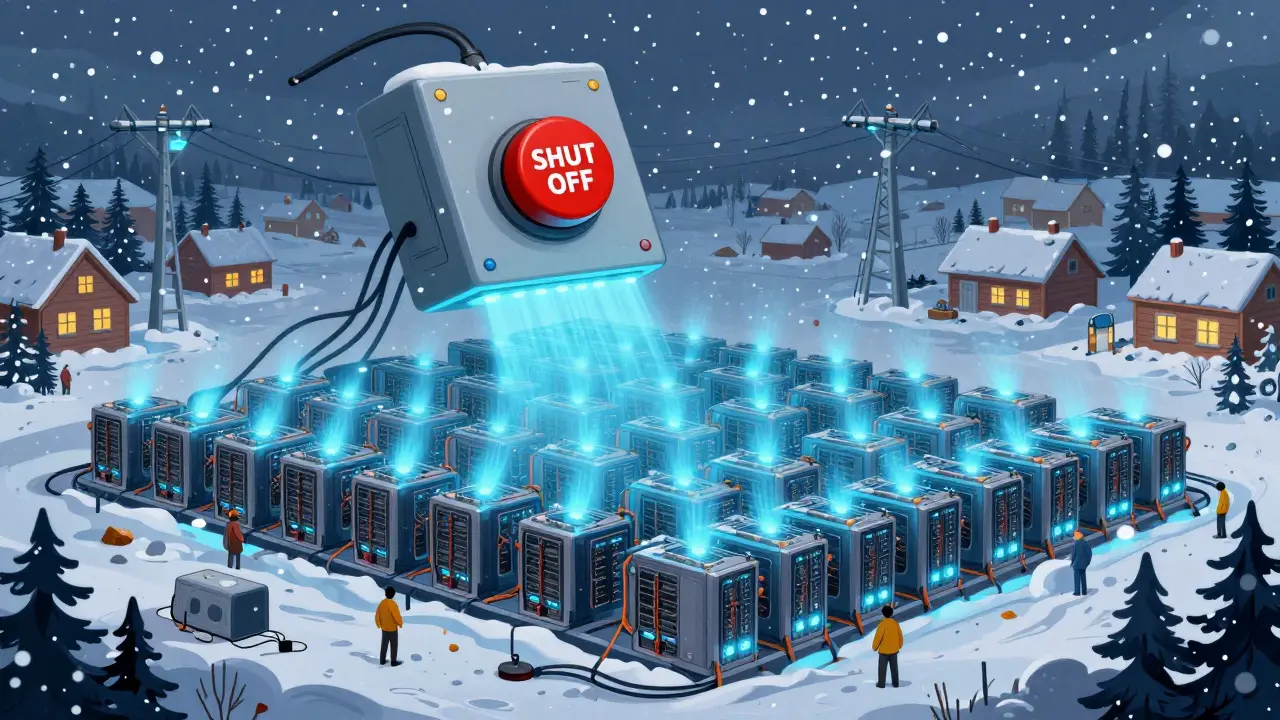
Bitcoin mining in Russia isn't banned anymore-but it’s far from free. Since January 1, 2025, the country has enforced one of the strictest, most detailed mining frameworks in the world. You can legally mine crypto here, but only if you jump through a maze of rules, register your gear, pay taxes, and accept that the government can flip your power switch off at any moment. This isn’t about stopping mining. It’s about controlling it.
What’s Legal? What’s Not?
Here’s the simple version: owning Bitcoin or mining it isn’t illegal in Russia. Trading crypto for rubles? Fine. Using Bitcoin to buy a car or pay rent? That’s a crime. The ruble is the only legal tender, and the government won’t let digital assets replace it.
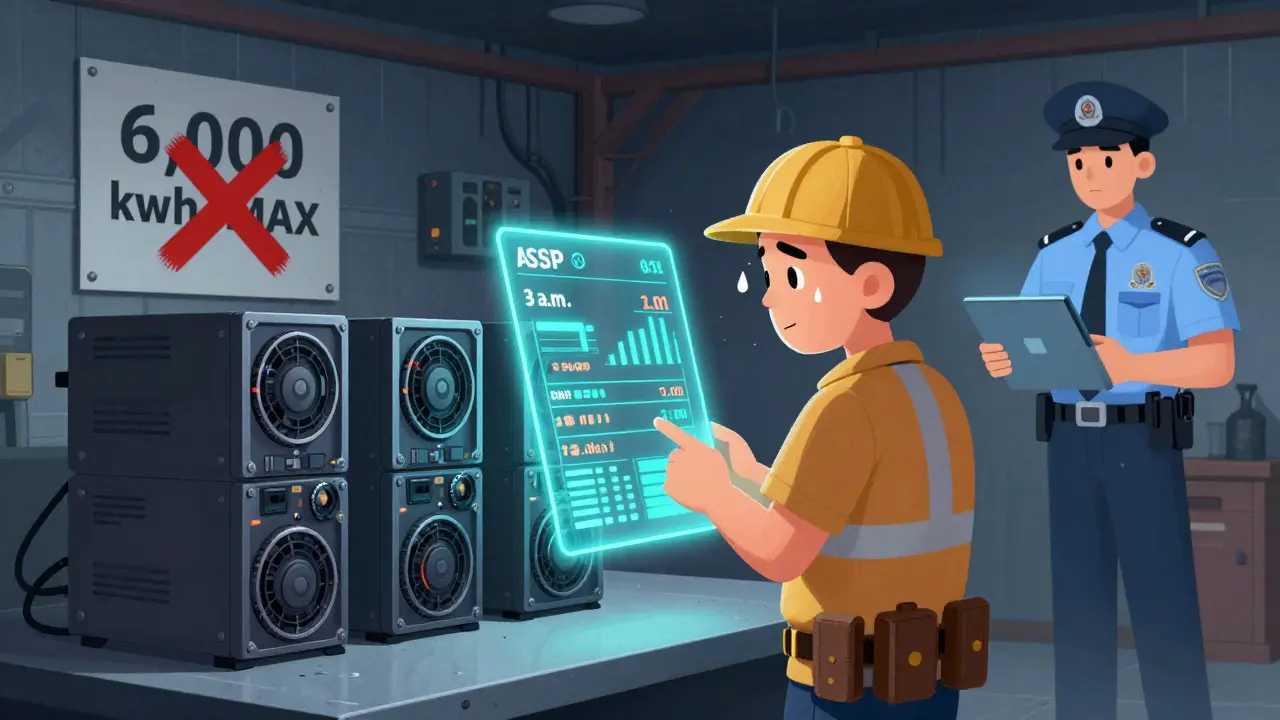
But mining? That’s a different story. Since August 2024, mining became legal-if you register. If you’re a hobbyist running a few rigs in your garage and using less than 6,000 kWh per month, you don’t need to register. Most people don’t. But if you’re running more than that, or you’re a business? You’re legally required to join the national miners’ registry. No registration? You’re operating illegally. And the penalties are steep: fines from 200,000 to 2 million rubles ($2,500-$25,500). That’s not a slap on the wrist-it’s a business-ending hit.
The Power Grid Has First Rights
Electricity in Russia isn’t just a utility. It’s a weapon. The government has built a system that lets them remotely shut off mining rigs the moment demand spikes. Think hospitals, schools, or heating systems in Siberia during winter. Those get priority. Miners? They’re labeled as "fourth category" consumers-the lowest rung on the power ladder.
How does it work? Every mining rig imported into Russia must be labeled and registered in a national database. Authorities track how much power each unit draws. When the grid gets overloaded-say, during a cold snap in January-they don’t cut whole neighborhoods. They cut mining farms. One click, and your ASICs go dark. No warning. No grace period. Just silence.
This isn’t theoretical. In January 2025, over 800 mining facilities in Siberia lost power for three days straight. No one was notified in advance. The government didn’t apologize. They said it was "necessary to protect citizens."
Where You Can’t Mine (And When)
Not all of Russia is open for business. Ten regions have a complete ban on crypto mining-no exceptions. These include Dagestan, Chechnya, Kabardino-Balkaria, and the occupied Ukrainian territories of Donetsk, Luhansk, Zaporizhzhia, and Kherson. The bans last until at least March 15, 2031.
Three other regions-Irkutsk, Buryatia, and Zabaikalsky-face seasonal bans. From November 15 to March 15 every year, mining is outlawed. Why? Those areas are already on the edge of energy collapse during winter. Heating homes takes precedence over hashing Bitcoin. The government says this restriction will stay in place for at least six years. And they’re not bluffing.
That means if you’re thinking of setting up a mining farm, geography matters more than electricity rates. You can’t mine in the North Caucasus. You can’t mine in parts of Siberia for half the year. And if you ignore this? You’re not just breaking rules-you’re risking arrest.
Taxes Are Real-and Being Enforced
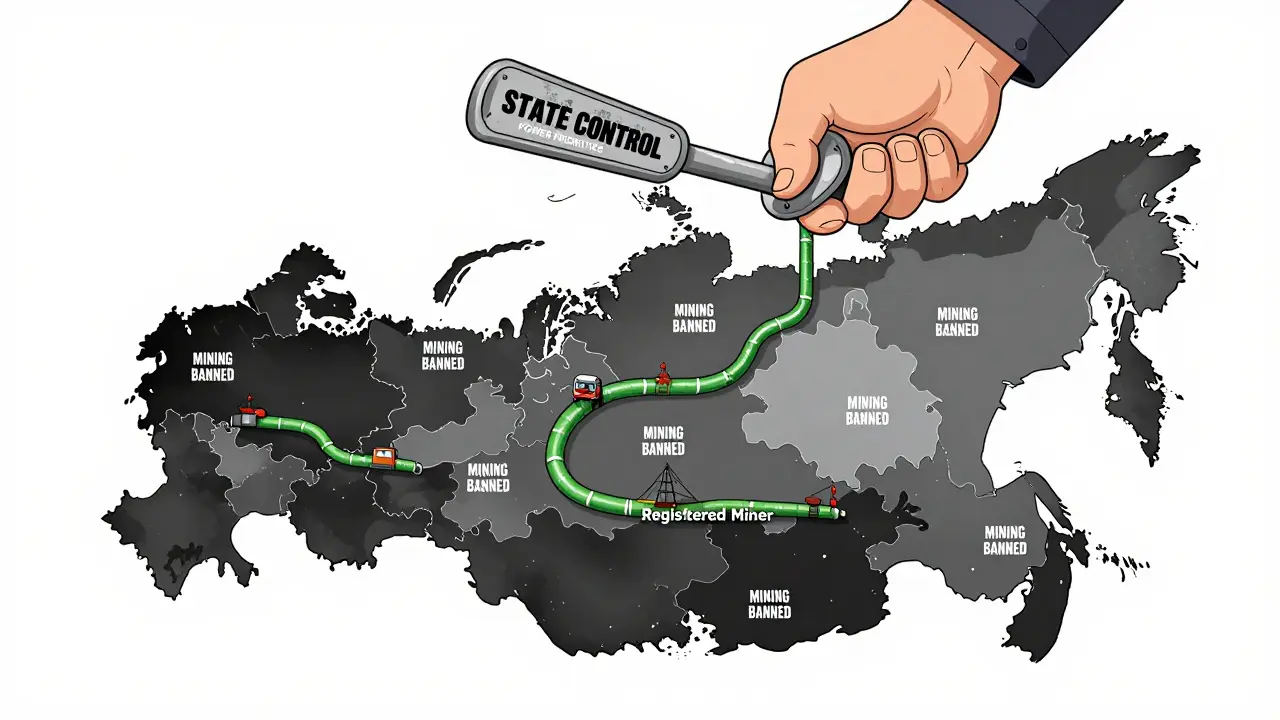
Russia slapped a 15% tax on Bitcoin mining profits in November 2024. It’s not optional. If you’re registered, you must report your earnings. The Federal Tax Service now has direct access to energy consumption data from the national registry. They cross-reference your power usage with your declared income. If you’re mining 100 kW constantly but claiming zero profit? They’ll find you.
Here’s the kicker: as of mid-2025, only 30% of miners had registered. That means 7 out of 10 operations are still underground. The government isn’t happy. Deputy Finance Minister Ivan Chebeskov said at the St. Petersburg Economic Forum: "Another 2/3 need to be cleaned up and entered into the register."
They’re ramping up enforcement. Fines are rising. Inspections are increasing. And in 2026, they’re rolling out AI-powered monitoring systems that can detect mining activity based on electricity patterns alone-no physical inspection needed.
The Bigger Picture: Why Russia Did This
Russia didn’t ban mining. It didn’t embrace it. It weaponized it.
Before 2024, Russia had one of the largest crypto mining footprints in the world-second only to the U.S. But miners were using subsidized power. They were draining grids. They were hiding profits. The state lost billions in tax revenue.
So they changed the game. Now, mining is allowed-but only if it serves the state’s goals. They control the power. They track the gear. They tax the profits. They ban it where it’s inconvenient. And they’re slowly turning it into a regulated industry, not a wild frontier.
It’s a model other countries are watching. Not because it’s fair. But because it’s effective. Russia doesn’t want to be a crypto hub. It wants to be a power broker. And mining? It’s just a tool to manage energy, extract revenue, and keep control.
What Happens If You Ignore the Rules?
Let’s say you’re an individual miner with three ASICs in your basement. You’re not registered. You’re not paying taxes. You think you’re invisible.
You’re not.
Authorities now have access to real-time power grid data. If your household spikes energy use at 3 a.m. every day-consistent with mining activity-they flag it. If your name isn’t in the registry? They send an inspector. First offense? A fine. Second? Equipment seizure. Third? Criminal charges.
Businesses face even harsher consequences. Unregistered mining operations can be shut down permanently. Equipment gets confiscated. Owners can be barred from future business licenses.
There’s no gray area. If you’re mining above 6,000 kWh/month and not registered? You’re breaking the law. Period.
Is It Still Worth It?
Some miners say yes. The cost of electricity in Russia is still among the lowest in the world-especially in regions with hydro or nuclear power. Even with the 15% tax, some operations still break even.
But the risks are real. You can lose power at any moment. You can get fined. You can lose your gear. You can get blacklisted.
The smartest miners now operate in two ways: either stay under the 6,000 kWh threshold and stay off the radar, or go all-in, register everything, pay taxes, and accept the government’s control. There’s no middle ground.
And if you’re thinking of investing? Industry analysts say crypto mining in Russia can still be viable-but only if you treat it like a regulated utility, not a gamble. Allocate no more than 5% of your portfolio to it. And always assume the power will go out.
What’s Next?
Russia isn’t done. In 2026, they’re rolling out mandatory blockchain-based reporting for all registered miners. Every hash rate, every kWh used, every profit earned will be logged on a state-controlled ledger. No edits. No deletions.
They’re also testing a new system that links mining permits to energy contracts. If you want to mine, you need to sign a contract with the grid operator-and agree to automatic shutdowns during peak demand. No negotiation.
The message is clear: mining isn’t a right. It’s a privilege. And Russia holds all the cards.
Can I mine Bitcoin legally in Russia in 2026?
Yes, but only if you register with the national miners’ registry and stay under 6,000 kWh per month. If you’re a business or exceed that limit, registration is mandatory. Failure to register is illegal and can lead to fines up to 2 million rubles.
Which regions in Russia ban crypto mining completely?
Ten regions have total bans until at least March 15, 2031: Dagestan, Ingushetia, Kabardino-Balkaria, Karachay-Cherkessia, North Ossetia, Chechnya, Donetsk People’s Republic, Luhansk People’s Republic, Zaporizhzhia, and Kherson. These bans apply regardless of season or energy conditions.
Can the government turn off my mining equipment?
Yes. All registered mining equipment is monitored via the national registry. During periods of high electricity demand, authorities can remotely disconnect mining rigs without notice. Miners are classified as "fourth category" consumers, meaning they have the lowest priority after homes, hospitals, and critical infrastructure.
Do I have to pay tax on crypto mining profits in Russia?
Yes. Since November 2024, Russia imposes a 15% tax on profits from cryptocurrency mining. Registered miners must report earnings to the Federal Tax Service. Unregistered miners are still liable, and authorities use energy consumption data to detect undeclared activity.
What happens if I’m caught mining without registration?
You’ll face fines between 200,000 and 2 million rubles ($2,500-$25,500). Equipment may be seized. Repeat offenses can lead to criminal charges and business license revocation. The government uses AI and grid data to identify unregistered operations without needing physical inspections.
Can I use cryptocurrency to pay for goods in Russia?
No. While owning and mining Bitcoin is legal, using cryptocurrency to pay for goods or services remains illegal. The ruble is the only legal tender. Violations can lead to fines and legal action under Russia’s monetary laws.
Are seasonal mining bans real, and how long do they last?
Yes. Three Siberian regions-Irkutsk, Buryatia, and Zabaikalsky-ban mining from November 15 to March 15 each year. These restrictions began in 2025 and are set to continue for at least six years. The bans exist to prevent energy shortages during peak winter heating demand.


People Comments
This is one of the most balanced takes I've seen on Russia's crypto mining policy. It's not about banning crypto-it's about energy sovereignty. The fact they prioritize homes and hospitals over ASICs makes perfect sense when you live through a Siberian winter. I'm not surprised other nations are watching. This isn't authoritarian overreach; it's pragmatic resource management.
I love how they turned mining into a regulated utility instead of letting it become a free-for-all. It’s actually kind of brilliant. You still get the economic benefits, but now the state isn’t getting drained. And the seasonal bans? Genius. I wish more countries had this kind of foresight. Maybe we’ll see something similar in Canada or Scandinavia soon.
so like... russia just made mining legal but also made it impossible to do without being a corporate puppet? like... what even is the point anymore? i mean sure you can mine if you have a team of lawyers and a government contact but... isn't that just crypto in a cage? 🤷♀️
I'm honestly impressed by how structured this is. Most countries either ban it outright or ignore it completely. Russia took the messy middle ground and actually built something functional. The AI monitoring? Kinda scary but also kinda necessary. If you're gonna use grid power for this, you gotta be accountable. And 6,000 kWh as the threshold? That's smart-lets hobbyists breathe while catching big ops.
This is just another example of state control masquerading as regulation. They don't care about energy-they care about power. They want to own every transaction, every hash, every dollar. This isn't policy. It's surveillance with a power bill. And let's be real-no one in Moscow is going to lose power because some guy in Omsk was mining. This is about control, not conservation.
They call it regulation but its just confiscation with paperwork. You mine you pay you get watched you get shut off. Thats not freedom thats servitude. And the fact theyre linking permits to energy contracts? Thats not innovation thats slavery. You think the state would do this for oil? No. Only for crypto because they fear losing control over money itself
I think both sides have a point. The regulators are trying to prevent grid collapse and tax evasion. The miners are just trying to make a living. But the real issue is the lack of transparency. If the government published real-time grid data and allowed miners to bid for surplus power during off-peak hours, this could be a win-win. Instead, it feels like they're playing hardball. Maybe a third way exists.
Okay but imagine this: you're chilling in your basement with your 3 ASICs, music on, coffee brewing... and suddenly-BAM-your lights go out. No warning. No text. Just dead rigs. And then a week later, the tax man shows up with a spreadsheet showing you used 7,200 kWh last month. You didn't even know you were over. That's not justice. That's a trap. I'd move to Georgia if I were you.
This entire framework is a calculated maneuver in the global financial war. Russia is not trying to become a crypto hub-they are weaponizing its infrastructure to undermine Western monetary systems. By controlling mining, they control data flows, energy exports, and digital traceability. The blockchain reporting system? That's not for taxation-it's for surveillance. The West is blind to this. They think it's about energy. It's about hegemony.
The AI monitoring? That’s not tech-it’s a digital leash. They’re tracking your electricity like a GPS tracker on a parolee. And the 15% tax? That’s just the tip. Wait till they start charging you for "grid stability fees" or "anti-chaos surcharges." Next thing you know, they’ll require you to donate 5% of your hash rate to state-run nodes. This isn’t regulation. It’s digital feudalism. And they’re calling it progress.
The 6,000 kWh threshold is a masterstroke. It filters out the hobbyists while funneling the big players into the state’s ecosystem. Once you’re registered, you’re not a miner-you’re a node in their energy grid infrastructure. And the regional bans? Pure geopolitical chess. They’re using crypto as leverage against separatist regions. Dagestan? Chechnya? Those bans aren’t about energy-they’re about silencing dissent through economic isolation.
It is imperative to recognize that Russia's approach constitutes a paradigmatic shift in the governance of decentralized technologies. By institutionalizing mining within a state-regulated framework, they have effectively neutralized its disruptive potential. This is not merely taxation-it is the co-optation of peer-to-peer infrastructure into a centralized, top-down administrative apparatus. The implications for global financial architecture are profound and warrant immediate academic scrutiny.
I’ve been mining in Siberia for 3 years. The power cuts suck, but honestly? The grid’s been more stable since they started regulating. I registered, paid my tax, got a new meter. Now I get alerts before shutdowns. It’s not perfect, but it’s better than the wild west. And yeah, I lost 3 days last winter. But my heater didn’t die. That’s worth it.
I just want to say... I’m so proud of Russia for doing this right. 🙌 Like... imagine if the U.S. did this? No more power grid meltdowns during crypto spikes. No more 100kWh bills from your neighbor’s rig. This is the future. The tech is cool, but the *responsibility*? That’s what matters. I’m crying. 🥹
I just... I can't believe this is real. My friend lost everything. Three months of mining, gone. One click. No warning. No appeal. No mercy. And now she's got a 1.2 million ruble fine she can't pay. She's working two jobs just to cover it. This isn't policy. It's cruelty disguised as bureaucracy.
The deeper issue here is the erosion of economic autonomy. When a state can remotely disable your productive assets based on grid load, you no longer own your equipment-you lease it. This isn’t mining regulation. It’s the creation of a new class of digital serfs. The blockchain ledger isn’t transparent-it’s a ledger of submission. And the fact that people call this "smart governance" is the most terrifying part of all.
You guys are missing the real story. The AI monitoring isn’t just for detection-it’s for predictive suppression. They’re building behavioral profiles of miners based on power curves. Once they have enough data, they’ll start denying permits preemptively to anyone who shows "high-risk usage patterns." That’s not regulation. That’s algorithmic discrimination. And it’s already happening in test zones. The 2026 rollout? It’s Phase 2 of total control.