

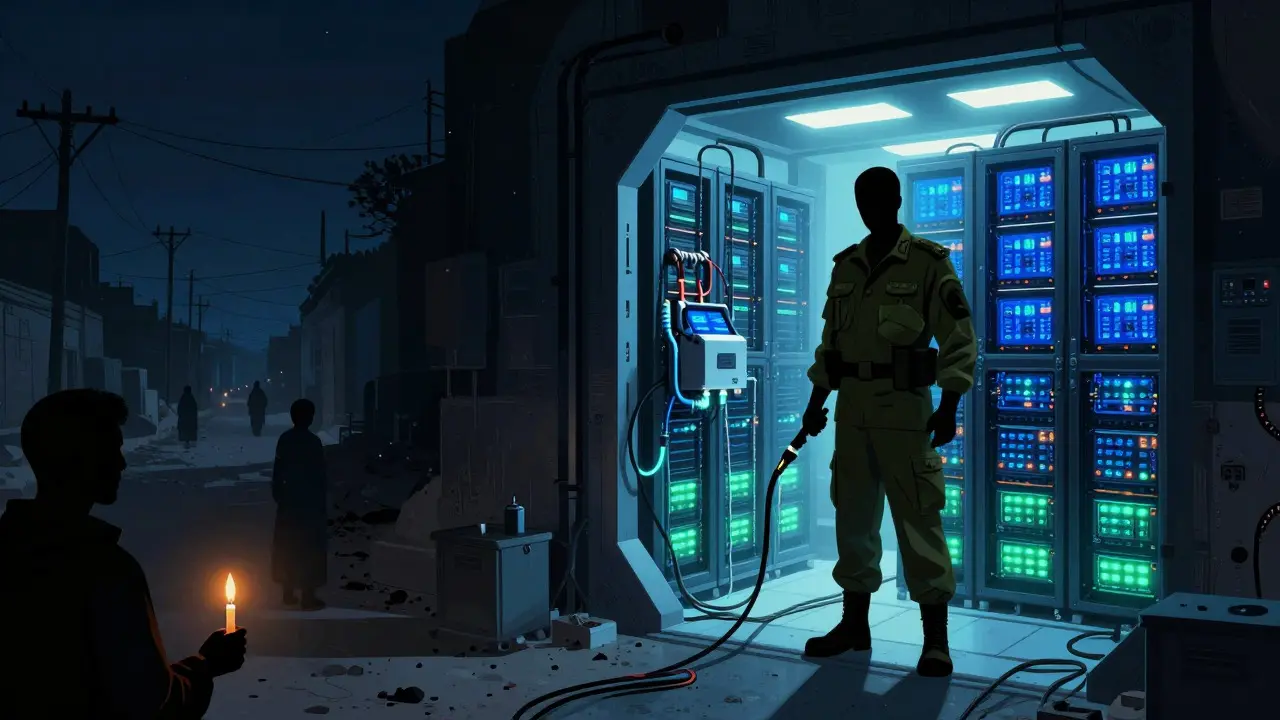
Imagine a country where half the population faces daily blackouts, yet massive server farms hum with uninterrupted power. This is the reality in Iran, driven by a secret economy fueled by unlicensed crypto mining. At the heart of this paradox lies the Islamic Revolutionary Guard Corps (IRGC), a military organization that has transformed Bitcoin mining into a strategic tool for bypassing international sanctions and consolidating political power.
The story isn't just about digital currency; it's about energy theft, state control, and how a military elite exploits national resources while ordinary citizens suffer. By August 2026, the IRGC’s dominance over Iran’s mining sector has become undeniable, creating a two-tiered system where the regime profits from the very infrastructure failing its people.
The Rise of the Crypto Cartel
The IRGC didn’t stumble into cryptocurrency by accident. Their entry was a calculated response to intensifying global sanctions that choked off Iran’s access to traditional dollar channels. Starting around 2019, under direct orders from Supreme Leader Ali Khamenei, the IRGC began systematically infiltrating the mining industry. They viewed Bitcoin not as an investment, but as a lifeline-a way to generate hard currency without triggering the alarm bells of the SWIFT banking system.
This wasn't a small-scale operation. The IRGC collaborated with foreign partners, particularly Chinese technology firms, to build industrial-scale mining facilities. A prime example is the 175-megawatt Bitcoin farm in Rafsanjan, Kerman Province. Nominally structured as a joint venture, this facility operates within special economic zones or military bases controlled by the IRGC. Here, they enjoy exclusive electricity supplies and operate with minimal oversight from civilian authorities. These locations are chosen specifically because they are off-limits to independent inspectors and journalists.
Energy Theft and the Civilian Cost
The most damaging aspect of the IRGC’s mining empire is its impact on Iran’s already strained energy grid. Industrial Bitcoin mining requires immense amounts of electricity. ASIC miners-specialized computer servers designed solely for hashing algorithms-consume power at rates comparable to small towns. Yet, the IRGC accesses this power effectively for free.
In 2022, the Iranian parliament passed legislation allowing the military to establish private power plants and transmission lines. This legal loophole enabled the IRGC to redirect public electricity resources originally intended for cities and industries toward their secret mining farms. The result? Debilitating power outages across Iranian provinces. While factories shut down and homes sit in darkness during summer heatwaves, IRGC-affiliated mines run 24/7.
Ali Abadi, Iran’s Energy Minister and a former IRGC commander, acknowledged the severity of the issue. He likened unauthorized crypto mining to “putting a hand in others' pockets,” calling it “an ugly and unpleasant theft.” His background raises uncomfortable questions: how committed is the government to cracking down on operations run by his own former organization? The answer suggests little change. The IRGC remains immune to the financial constraints that affect private miners, often refusing to pay utility bills entirely due to their political connections and armed protection.

Licensing vs. Reality: A Two-Tiered System
On paper, Iran legalized cryptocurrency mining in 2019. The Ministry of Industry, Mines, and Trade issued licenses, ostensibly to regulate the industry. In practice, this regulatory framework serves one purpose: to consolidate control for regime-affiliated entities while squeezing out legitimate private operators.
Licensed miners face high energy tariffs and strict requirements to sell their digital assets directly to the Central Bank of Iran (CBI). These conditions make mining financially unsustainable for many independent businesses. Consequently, a significant portion of Iran’s mining activities have gone underground. But here’s the twist: the biggest players-the IRGC and associated religious foundations like Astan Quds Razavi-operate in a gray area between legal authorization and unlicensed exploitation. They benefit from state subsidies while avoiding the harsh penalties imposed on smaller competitors.
| Feature | Licensed Private Miners | IRGC-Affiliated Operations |
|---|---|---|
| Electricity Cost | High tariffs, market rate | Subsidized or free |
| Regulatory Oversight | Strict monitoring by CBI | Minimal civilian oversight |
| Revenue Control | Mandatory sale to Central Bank | Retained for military/proxy funding |
| Location | Industrial zones | Military bases/Special Economic Zones |
Bypassing Sanctions Through Blockchain
Cryptocurrency offers two key advantages for a sanctioned nation: anonymity and intermediary-free transactions. Traditional bank transfers require multiple verifications and leave clear audit trails. Crypto exchanges occur directly between digital wallets, shielded by two-way encryption. For the IRGC, this is a game-changer.
Blockchain analytics firms have identified Iran as one of the world’s major Bitcoin producers in recent years. The U.S. Treasury Department and Israeli intelligence have specifically targeted Bitcoin wallets tied to IRGC operations. Why? Because these funds reportedly finance proxy groups involved in regional conflicts. By converting mined Bitcoin into fiat currency through offshore exchanges or peer-to-peer networks, the IRGC creates a shadow economy that operates outside the reach of Western sanctions.
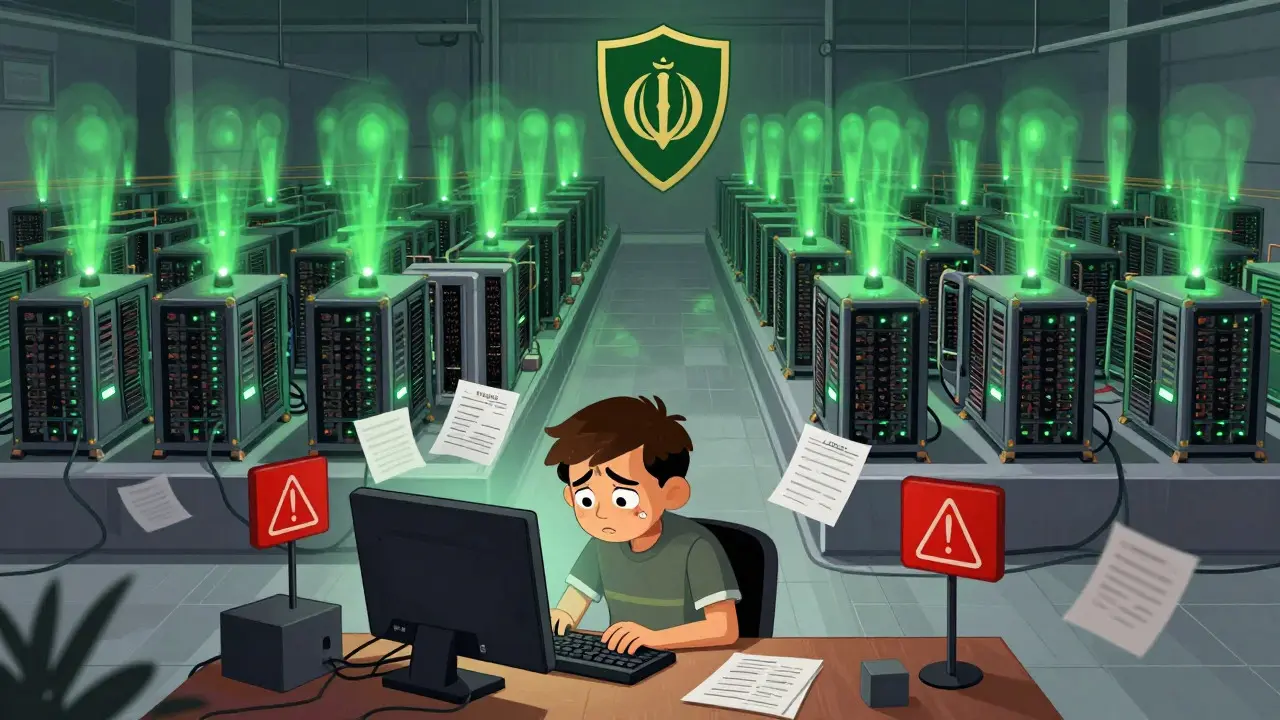
This capability transforms mining from a commercial activity into a geopolitical weapon. It allows the regime to maintain military expenditures and fund ideological projects despite being cut off from the global financial system. The sheer scale of hardware under state control-potentially up to 100,000 units-ensures a steady stream of revenue that doesn’t appear on official balance sheets.
State Control and Citizen Circumvention
The Iranian government’s relationship with cryptocurrency is contradictory. On one hand, they want to monopolize mining for state gain. On the other, they fear citizens using crypto to escape capital controls. In December 2024, the Central Bank implemented programs blocking all Iranian cryptocurrency-to-rial payments through internet websites within Iran. However, by January 2025, they selectively unblocked certain exchanges using a government API system that provides full access to user data.
This cat-and-mouse dynamic continues. Many Iranians use virtual private networks (VPNs) to access foreign exchanges like Nobitex, avoiding local scrutiny. The central bank prohibits the use of foreign-mined cryptocurrencies for domestic transactions, yet the demand remains high. Ordinary citizens seek crypto as a hedge against inflation and currency devaluation, mirroring the same motivations that drive the IRGC’s larger operations.
The difference is scale and consequence. When a family sells a few dollars worth of Bitcoin to buy groceries, it’s survival. When the IRGC mines millions of dollars’ worth to fund regional militias, it’s strategy. Both rely on the same decentralized technology, but only one enjoys the protection of the state.
The Future of Mining in Iran
As of mid-2026, the IRGC’s grip on Iran’s crypto mining sector shows no signs of loosening. International pressure has led to occasional rhetoric about cracking down on unauthorized mining, but enforcement remains selective. The combination of political protection, armed enforcement, and direct access to subsidized electricity ensures that IRGC operations remain largely immune to regulatory pressures.
For the average Iranian, the outlook is grim. The energy crisis persists, exacerbated by the insatiable power demands of state-backed mining farms. Unless there is a fundamental shift in governance or international policy, the “crypto cartel” will continue to plunder national resources. The lesson from Iran is stark: when military elites control both the gun and the grid, democracy-and fair markets-suffer first.
Why does the IRGC mine cryptocurrency?
The IRGC mines cryptocurrency primarily to bypass international sanctions that restrict Iran's access to global financial markets. Bitcoin provides a way to generate hard currency without using the SWIFT banking system, allowing the regime to fund military operations and proxy groups anonymously.
How much of Iran's mining is controlled by the state?
Estimates suggest that well over half of all mining hardware in Iran is operated by state-related entities. Out of approximately 180,000 active mining devices, around 80,000 are in private hands, leaving potentially up to 100,000 units under direct control of the IRGC or affiliated organizations.
Is cryptocurrency mining legal in Iran?
Yes, mining was officially recognized as a legal industry in 2019. However, the licensing framework imposes high energy tariffs and mandatory sales to the Central Bank, making it difficult for private miners to profit. State-affiliated entities often operate in a gray area, benefiting from subsidies while avoiding strict regulations.
How does IRGC mining affect ordinary Iranians?
IRGC mining operations consume vast amounts of subsidized electricity, contributing to severe power outages across the country. While military-linked farms run continuously, civilians and industries face frequent blackouts, exacerbating the national energy crisis and reducing quality of life.
What role do Chinese companies play in Iran's mining sector?
Chinese technology firms collaborate with the IRGC to provide specialized mining hardware and technical expertise. Joint ventures, such as the large facility in Rafsanjan, leverage China's manufacturing capabilities and Iran's cheap energy to create profitable, sanction-resistant mining operations.