

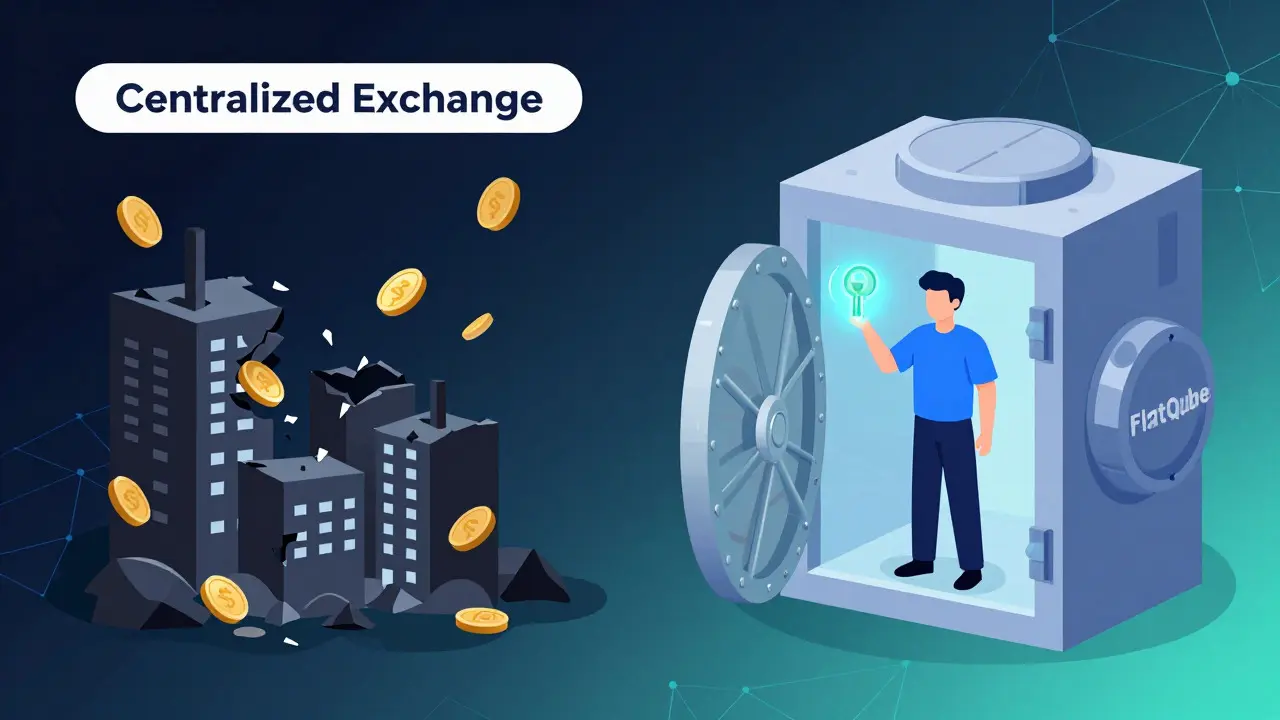
Remember the anxiety of watching your crypto portfolio vanish overnight because a centralized exchange went bankrupt? That fear drove many of us into the arms of decentralized finance, but not all Decentralized Exchanges (DEXs) are created equal. Some offer security but punish you with low yields; others promise moonshot returns but hide dangerous smart contract risks. Enter FlatQube Exchange, a platform that has been quietly turning heads since its launch in 2022.
FlatQube isn't just another copy-paste Uniswap clone. Built by the Broxus development team on the Everscale blockchain, it positions itself as a high-performance Automated Market Maker (AMM) designed for users who want serious passive income without surrendering custody of their assets. But does it live up to the hype, or is it too niche for the average trader? Let’s break down what FlatQube actually offers in the current 2026 market landscape.
What Is FlatQube Exchange?
FlatQube Exchange is a non-custodial decentralized cryptocurrency exchange and automated liquidity protocol built on the Everscale network. Launched in 2022, it allows users to swap digital assets, provide liquidity, and earn rewards through farming and staking.
Unlike centralized exchanges like Binance or Coinbase, where you send your coins to a company’s wallet, FlatQube operates directly from your personal wallet. This means you maintain full control over your private keys at all times. The platform uses an Automated Market Maker (AMM) model, which relies on mathematical formulas rather than traditional order books to determine prices. Specifically, it utilizes a constant product formula-a standard approach in DeFi that ensures liquidity is always available for trading pairs.
The core value proposition here is twofold: speed and yield. By leveraging the Everscale blockchain, FlatQube aims to solve the congestion and high gas fees that plague networks like Ethereum. Meanwhile, its native token, QUBE, serves as the governance and utility token for the ecosystem, with a fixed maximum supply of 2 million tokens.
Core Features and User Experience
If you’ve used other DEXs, navigating FlatQube will feel familiar, but there are distinct differences in how it handles asset management. Here is what you need to know before connecting your wallet:
- Non-Custodial Trading: Your assets never leave your wallet during swaps or farming. This eliminates counterparty risk-the danger that the exchange itself might get hacked or go insolvent. For those who lost funds in the 2022-2023 centralized exchange collapses, this feature is a major selling point.
- High-Yield Farming Pools: FlatQube is known for offering some of the highest Annual Percentage Rates (APR) in the industry. Users can lock their assets in specific pools to earn rewards. Crucially, you decide the duration of the lock-up period, giving you flexibility over your capital.
- Limited Asset Selection: As of mid-2026, FlatQube supports only 5 coins and 17 trading pairs. While this might seem restrictive compared to giants listing thousands of tokens, it allows for deeper liquidity within those specific pairs, potentially reducing slippage for larger trades.
- Governance Rights: Holding QUBE tokens gives you a voice in the platform’s future. You can vote on proposals regarding fee structures, new pool additions, and protocol upgrades.
The interface is clean and straightforward. However, if you are completely new to DeFi, there is a learning curve. You’ll need to understand concepts like liquidity provision, impermanent loss, and how to connect an Everscale-compatible wallet (such as Tonkeeper or specialized Everscale wallets). It’s not a plug-and-play experience for absolute beginners, but seasoned crypto users will find it intuitive.
Why Everscale Matters for FlatQube
You cannot evaluate FlatQube without understanding the foundation it sits on: Everscale. Many DEXs suffer from the same problem-when the underlying blockchain gets busy, transaction fees skyrocket, and transactions slow down. Everscale was designed specifically to avoid this.
Everscale is often described as one of Asia’s premier blockchains due to its unique sharding technology. Sharding allows the network to process multiple transactions simultaneously across different "shards" or partitions. This means that as user activity grows, the network scales horizontally rather than congesting. For FlatQube, this translates to:
- Low Transaction Fees: Swapping tokens or entering a farming pool costs fractions of a cent, making small-scale trading viable.
- Fast Finality: Transactions confirm quickly, allowing traders to react to market movements without waiting minutes for confirmation.
- Scalability: The network can handle massive loads, ensuring that FlatQube remains operational even during periods of high market volatility.
This technical advantage is why the Broxus team chose Everscale. It aligns with the goal of providing a seamless, high-speed trading environment that doesn’t eat into profits with exorbitant gas fees.
| Feature | FlatQube (DEX) | Typical CEX (e.g., Binance, Kraken) |
|---|---|---|
| Custody | Non-custodial (You hold keys) | Custodial (Exchange holds keys) |
| Yield Opportunities | High APR via farming/staking | Low interest on idle balances |
| Asset Variety | Limited (5 coins, 17 pairs) | Extensive (Hundreds of coins) |
| Counterparty Risk | None (Smart contract only) | High (Bankruptcy/Hack risk) |
| Underlying Tech | Everscale Blockchain | Centralized Servers |

The QUBE Token: Utility and Scarcity
Every successful DeFi protocol needs a native token to incentivize participation and govern the ecosystem. FlatQube’s token is QUBE. What makes QUBE interesting is its strict scarcity. The total supply is capped at exactly 2 million tokens. There are no hidden reserves, no inflationary minting mechanisms, and no venture capitalist allocations diluting early users.
In the world of crypto, supply constraints often drive value. With such a limited supply, demand for QUBE is likely to be influenced by two main factors: governance power and fee discounts. If the platform grows and more users want to participate in governance or reduce their trading fees, the pressure on the available QUBE supply increases. However, investors should always remember that token price is speculative. The utility is clear, but the market value depends on adoption rates within the Everscale ecosystem.
Risks and Limitations to Consider
No investment is without risk, and FlatQube is no exception. Before allocating significant capital, consider these critical factors:
- Limited Liquidity Depth: With only 17 trading pairs, large orders can cause significant slippage. If you try to trade a large volume of a less popular pair, you might not get the expected price. It is best suited for smaller to medium-sized trades.
- Smart Contract Risk: While FlatQube is non-custodial, it still relies on smart contracts. If there is a bug in the code, funds could be vulnerable. The Broxus team has a strong reputation in the Everscale space, but auditing status should always be verified by the user.
- Ecosystem Dependency: FlatQube’s success is tied to the broader adoption of Everscale. If Everscale fails to attract developers or users outside of its current Asian-centric base, FlatQube may struggle to grow its user base globally.
- Impermanent Loss: Like all AMMs, providing liquidity carries the risk of impermanent loss. If the price of one token in your pool changes drastically compared to the other, you might end up with less value than if you had simply held the tokens in your wallet.

Who Is FlatQube Best For?
FlatQube isn’t trying to be everything to everyone. It is a specialized tool for a specific type of crypto user. Here is who will benefit most:
- DeFi Enthusiasts Seeking Yield: If you are tired of earning 1-2% APY on centralized platforms and want higher returns through farming, FlatQube’s APR offerings are among the most competitive in the market.
- Everscale Ecosystem Participants: If you already hold EVER or other Everscale-based assets, FlatQube provides a native, efficient way to swap and stake them without bridging to other chains.
- Security-Conscious Traders: Users who prioritize self-custody and want to eliminate the risk of exchange insolvency will appreciate the non-custodial nature of the platform.
Conversely, if you are a day trader looking to speculate on hundreds of meme coins or altcoins, FlatQube’s limited selection will frustrate you. Stick to centralized exchanges or larger DEX aggregators for broad market access.
How to Get Started with FlatQube
Getting started is relatively simple if you have the right tools. Here is a step-by-step guide:
- Set Up an Everscale Wallet: Download a compatible wallet like Tonkeeper or the official Everscale wallet. Secure your seed phrase offline.
- Fund Your Wallet: Buy EVER or supported tokens on a centralized exchange and withdraw them to your Everscale wallet address.
- Connect to FlatQube: Visit the official FlatQube website and connect your wallet using the browser extension or mobile app integration.
- Explore Pools: Navigate to the “Farming” or “Liquidity” section to view available pools and their current APR rates.
- Add Liquidity or Swap: Choose a pair, input the amount, and approve the transaction in your wallet. Confirm the details carefully before signing.
Always double-check URLs to avoid phishing sites. Bookmark the official link and verify it through trusted community channels like the official Everscale Discord or Twitter account.
Final Verdict
FlatQube Exchange represents a compelling option for those deeply embedded in the Everscale ecosystem or seeking high-yield opportunities in a secure, non-custodial environment. Its strengths lie in its technical foundation on a scalable blockchain, exceptional APR rates, and commitment to user sovereignty. However, its limited asset selection means it is not a replacement for your primary trading hub.
Think of FlatQube as a specialized tool in your DeFi toolkit. Use it for farming stable yields, swapping within the Everscale network, and participating in governance. Just ensure you understand the risks associated with smart contracts and impermanent loss before diving in. In a market increasingly skeptical of centralized intermediaries, FlatQube offers a transparent, user-controlled alternative that deserves attention.
Is FlatQube Exchange safe to use?
FlatQube is considered safer than centralized exchanges because it is non-custodial, meaning you retain control of your private keys. However, it carries smart contract risk inherent to all DeFi protocols. Always verify audits and start with small amounts to test the interface.
What is the minimum deposit for FlatQube farming?
There is typically no strict minimum deposit enforced by the protocol itself, but practical minimums depend on the liquidity pool's depth and transaction fees. To make earnings meaningful against gas costs, users often recommend starting with amounts that generate at least $1-$5 in daily rewards.
Can I use FlatQube on mobile devices?
Yes, FlatQube is optimized for mobile browsers. You can connect mobile wallets like Tonkeeper directly to the web interface, allowing you to manage farms and swaps on the go.
How does FlatQube compare to Uniswap?
Uniswap operates on Ethereum and other EVM chains, offering vast liquidity and thousands of tokens but often higher fees. FlatQube runs on Everscale, offering lower fees, faster transactions, and higher APRs but with a much smaller selection of assets (currently 5 coins).
What happens if I exit a farming pool early?
FlatQube allows users to choose lock-up durations. Exiting early may result in forfeiting some accrued rewards or penalties depending on the specific pool terms. Always check the pool details before committing funds to understand the exit conditions.