


Did you miss the massive Biconomy Exchange Token (BIT) airdrop? If you are reading this in 2026, the main distribution event is long over. However, understanding how that campaign worked, where the tokens went, and what utility remains today is crucial for anyone holding these assets or looking at similar exchange-backed tokens. The Biconomy Exchange Token was designed to be more than just a speculative asset; it was built as a utility tool within the Biconomy ecosystem.
The original launch generated significant buzz through strategic partnerships with major platforms like MEXC. But beyond the hype of free tokens, there were strict mechanics, staking requirements, and specific utility functions that defined the project's trajectory. Let’s break down exactly how the airdrop worked, what happened to the token since then, and whether it still holds value for traders today.
How the Main BIT Airdrop Campaign Worked
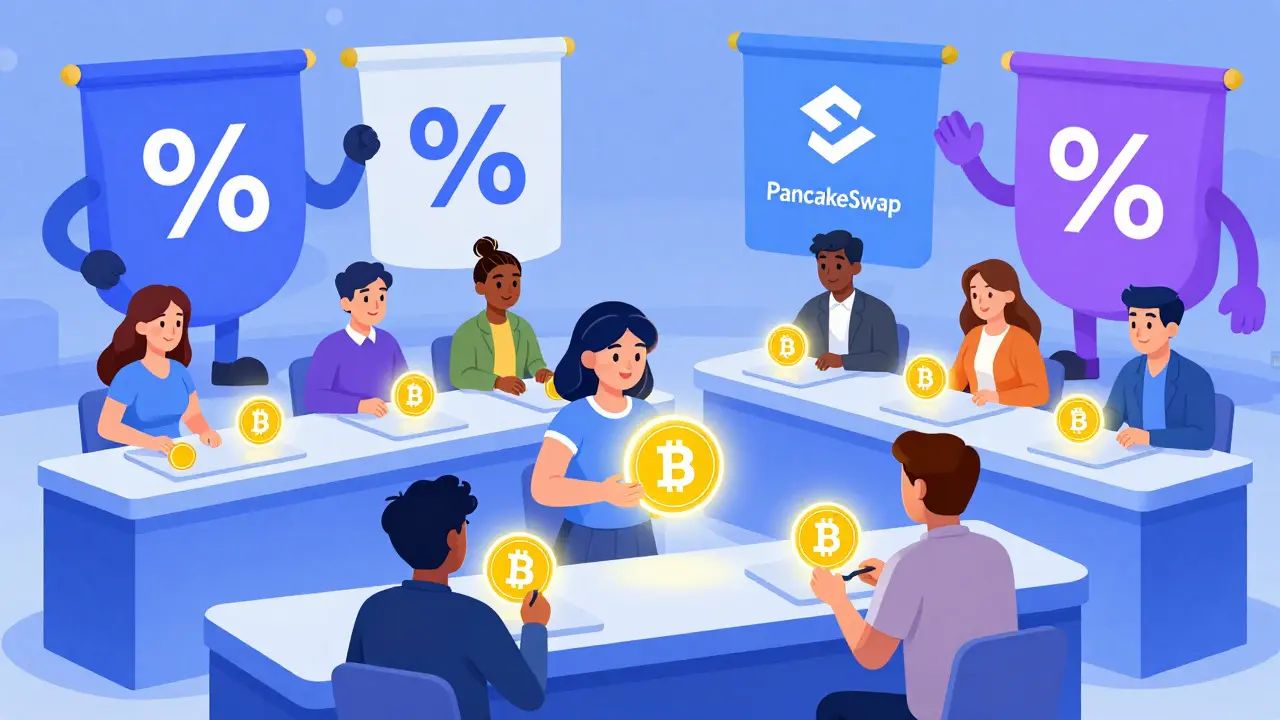
The most significant distribution of the BIT token didn’t happen on a random website. It took place through the MEXC Kickstarter, a platform designed to help new tokens gain initial liquidity and community support. This wasn’t a simple "connect wallet and claim" scenario. It required active participation and capital commitment from users.
Here is how the mechanics unfolded during the April 2022 campaign:
- Voting Period: The window was tight, running from April 9, 2022, at 02:00 UTC to 10:50 UTC on the same day.
- Staking Requirement: To participate, you had to stake MX tokens. The minimum entry was 10 MX, while the maximum allowed was 500,000 MX. Your stake was temporarily locked during the voting period but unlocked within an hour after the event concluded.
- Reward Pool: A total of 1,600,000,000 BIT tokens were allocated for general participants. Additionally, 800,000,000 BIT tokens were reserved exclusively for the top 500 affiliates.
- Distribution Logic: Rewards were not equal. They were distributed proportionally based on the total votes cast by each participant. More votes meant a larger share of the pool.
This structure ensured that only serious users with existing exposure to the MEXC ecosystem participated. It prevented bot-driven claiming attacks common in simpler airdrops. The reference price set at the time was $0.00001355 USDT, which served as the baseline for valuation during the initial trading hours starting at 13:00 UTC on April 9.
Secondary Distribution: The PancakeSwap Connection
Biconomy didn’t stop at centralized exchanges. Recognizing the power of decentralized finance (DeFi), they launched a secondary initiative tied to their listing on PancakeSwap. This campaign involved a separate $50,000 BIT token distribution.
Why did this matter? By integrating with PancakeSwap, Biconomy signaled its intent to reach DeFi natives who prefer non-custodial trading. This dual approach-using MEXC for broad retail access and PancakeSwap for DeFi integration-was a smart move to diversify their holder base. It also provided immediate liquidity options for those who wanted to trade their airdropped tokens immediately rather than holding them.
| Feature | MEXC Kickstarter | PancakeSwap Campaign |
|---|---|---|
| Platform Type | Centralized (CEX) | Decentralized (DEX) |
| Entry Requirement | Stake MX Tokens | Liquidity Provision/Trading Volume |
| Token Allocation | 2.4 Billion Total | $50,000 Value Pool |
| Target Audience | Active Traders | DeFi Users |

Utility: What Can You Actually Do With BIT?
Airdropped tokens often become worthless if they lack real-world use cases. Biconomy attempted to solve this by embedding the BIT token directly into the exchange’s operational framework. Holding BIT isn’t just about hoping the price goes up; it offers tangible benefits within the Biconomy platform.
Key utilities include:
- Fee Discounts: The primary driver for many holders. Using BIT to pay for trading fees reduces the commission rate. This creates a natural demand loop: traders buy BIT to save money on trades.
- VIP Status: Holders can purchase monthly VIP plans using BIT. These plans offer higher tiers of fee reductions and potentially faster withdrawal speeds.
- Governance Voting: BIT holders have a voice. They can vote on exchange decisions, influencing features, listings, and operational changes. This aligns with the broader trend of decentralized governance in crypto.
- Buyback Rewards: The project implemented seasonal buyback programs. A portion of exchange revenue is used to buy back BIT tokens from the market, which are then burned or redistributed to holders, theoretically supporting the price floor.
This utility model positions BIT as an "enterprise currency" for the Biconomy ecosystem. Unlike meme coins that rely solely on social media hype, BIT has a functional role in reducing costs for active traders.
Market Performance and Current Status (2026)
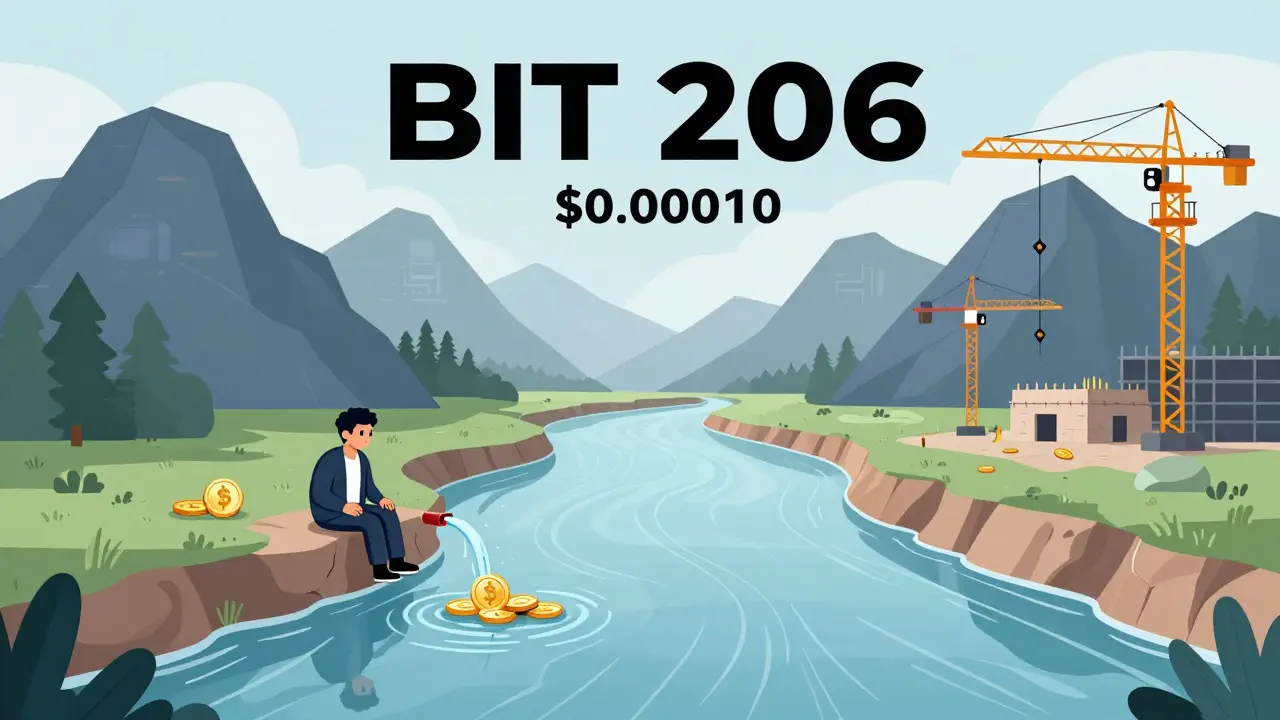
Fast forward to mid-2026. How has the token performed since its 2022 debut? The data shows a story of stability rather than explosive growth. As of recent tracking, the BIT token trades around $0.000010 USD. This is slightly below the initial reference price of $0.00001355 set during the MEXC launch.
Despite the low unit price, the token maintains a consistent 24-hour trading volume of approximately $655,000 USD. This indicates that while the price hasn’t skyrocketed, there is steady activity. The token is listed on three major exchanges with five distinct trading pairs, providing adequate liquidity for average-sized trades.
However, development momentum appears to have slowed. Public codebase updates and roadmap announcements have been sparse since late 2025. The CMC AI analysis from August 2025 noted limited recent news, suggesting the project may be in a maintenance phase. For investors, this raises questions about future innovation. Is the exchange focusing on core operations rather than new features? Or is interest waning?
The correlation between BIT’s value and Biconomy Exchange’s reputation is strong. If the exchange gains more users and volume, BIT becomes more valuable due to increased demand for fee discounts. Conversely, if user adoption stagnates, the token’s utility diminishes. This dependency is typical for exchange-native tokens but requires careful monitoring by holders.
Should You Still Care About BIT in 2026?
If you held onto your airdropped tokens, you likely face a decision: hold, sell, or use. Given the current price stability and ongoing utility, selling might lock in small losses compared to the launch price. However, using the tokens for fee discounts could provide indirect value if you are an active trader on Biconomy.
For those looking to enter now, the barrier to entry is low due to the sub-cent price. But remember, low price does not mean cheap. Market cap and utility matter more. With limited recent development news, new buyers should proceed with caution, treating BIT as a utility play rather than a high-growth investment.
The success of the original airdrop demonstrated Biconomy’s ability to engage a community. Whether that engagement translates into long-term value depends on the exchange’s ability to innovate and retain users in a competitive market. Keep an eye on official channels for any renewed roadmap updates or partnership announcements that could shift the narrative.
Is the Biconomy BIT airdrop still open?
No, the main airdrop campaigns via MEXC Kickstarter and PancakeSwap occurred in 2022. Those distribution events are closed. Any current availability of BIT tokens must be purchased on supported exchanges.
What is the current price of the BIT token?
As of mid-2026, the BIT token trades at approximately $0.000010 USD. Prices fluctuate based on market conditions and exchange volumes.
How do I use BIT tokens on Biconomy Exchange?
You can use BIT tokens to pay for trading fees at a discounted rate, purchase VIP status plans, vote on governance proposals, and participate in seasonal buyback reward programs.
Which blockchain is the BIT token built on?
The BIT token is a BEP20-compliant digital asset built on the Binance Smart Chain (now known as BNB Chain). This allows for fast transactions and low fees compatible with wallets like MetaMask and Trust Wallet.
Where can I buy BIT tokens today?
BIT tokens are traded on several exchanges including MEXC and PancakeSwap. You can check CoinGecko or CoinMarketCap for the most up-to-date list of supported trading pairs and liquidity pools.



People Comments
typical scam. they give you a few cents worth of tokens and expect you to trade on their exchange. absolute garbage project :)
Oh, look at Mr. Righteous over here judging a token that hasn't moved in four years. Maybe if you actually read the utility section instead of just throwing shade, you'd realize it's not a 'scam' but rather a failed experiment in CEX-DEX hybrid models. But sure, keep your opinions loud and empty.
i mean its kinda sad how much hype this got back in 2022 for basically nothing now. people are still holding these like its gonna moon or something lol
It is precisely this lack of strategic vision that leads to such outcomes. The market corrects inefficiencies quickly. Those who held expecting exponential growth without fundamental development were simply gambling. I suggest reviewing basic economic principles before commenting further.
While the price action has been stagnant, one must consider the broader context of the crypto winter that followed 2022. Many projects faced similar headwinds. The utility regarding fee discounts remains valid for active traders on Biconomy. It serves as a functional tool within its specific ecosystem, even if it lacks speculative appeal. The integration with PancakeSwap was a forward-thinking move at the time, aiming to bridge CEX liquidity with DeFi accessibility. Perhaps we should evaluate its success based on retention of user base rather than just token appreciation. The buyback mechanism, though slow, does provide a floor. It is interesting to observe how exchange-native tokens evolve when the initial hype dies down. They often settle into steady-state utility roles. This might be less exciting for investors, but it provides stability for the platform operators. We should perhaps view BIT as a case study in sustainable tokenomics rather than a high-yield asset. The data shows consistent volume, which indicates ongoing usage. This is more than many other airdrop tokens can claim. It survives because it works, not because it pumps. That is a different kind of value proposition entirely.
The author presents a sanitized view of what is essentially a zombie project. The 'stability' mentioned is merely stagnation disguised as maturity. The lack of codebase updates since late 2025 is a red flag that cannot be ignored by serious analysts. The reliance on MEXC for distribution creates a single point of failure and centralization risk that contradicts the decentralized ethos the project claims to embrace. The utility is minimal because the exchange itself is not a top-tier player. Fee discounts are irrelevant if the trading volume on the platform is negligible compared to competitors like Binance or Coinbase. The governance voting is likely manipulated by whale wallets controlling large portions of the supply. This is a classic example of vaporware utility. The buyback program is too small to impact the circulating supply meaningfully. Investors should treat this as dead money unless there is a significant pivot or acquisition event. The correlation with Biconomy's reputation is weak because the reputation itself is fading. Do not fall for the narrative of 'steady activity.' Low volume in a low-priced token is often just wash trading or bot activity. A true utility token would see increased demand during bull markets, which did not happen. This token failed to capture market share despite the airdrop incentives. It is a cautionary tale for anyone looking at exchange-backed assets today.
hey man i think ur being a bit harsh here. maybe its just finding its footing? lots of good projects take time to grow. dont give up on it yet!
Let's analyze the on-chain metrics objectively 📊. The liquidity depth on PancakeSwap has remained relatively constant, suggesting no major dumps from early adopters. However, the smart contract activity is indeed low. The BEP20 standard ensures compatibility, which is a plus for usability. But without new features, the alpha is gone. It's a hold-and-hope scenario at best. The VIP status utility is niche but valuable for high-frequency traders on that specific platform. Don't ignore the fee discount math; it adds up over time 💸. Just manage expectations accordingly. It's not a moonshot, it's a utility play. Period.
I actually used my leftover BIT for fees last year and saved a decent amount. It wasn't life-changing, but it felt good to put those free tokens to use instead of letting them sit in a wallet gathering dust. If you're an active trader on Biconomy, it definitely makes sense to hold some. For everyone else, yeah, probably not worth the mental energy. But hey, every little bit helps in this market. Just don't expect it to make you rich overnight. Use it or lose it, basically.
What Fede said is spot on. Utility is king. I see so many people chasing green candles while ignoring the actual mechanics of how these tokens function. Biconomy tried to build a closed-loop economy. Whether it succeeded fully is debatable, but the attempt to integrate DEX and CEX liquidity was innovative for 2022. Today, the lesson is clear: airdrops are marketing tools, not investment strategies. If you have the tokens, use them. If you don't, don't chase the bag. Focus on projects with active development teams and clear roadmaps. BIT is a relic of a past cycle. Respect the history, but look forward to newer opportunities. Education is key here. Understand the difference between speculation and utility. One brings volatility, the other brings consistency. Choose wisely based on your own risk tolerance and trading habits.
The silence from the dev team is deafening. Four years and barely a whisper. It feels like they abandoned ship once the initial liquidity was secured. Traders deserve better than this ghost town. I'm dumping whatever I have left just to get rid of the clutter in my portfolio. Good riddance.
From a cross-cultural perspective, the approach to community engagement in Western exchanges differs significantly from Asian counterparts. The expectation of constant communication is high in US markets. In contrast, some Asian platforms operate with a 'build in silence' mentality. However, the lack of transparency here crosses the line from cultural difference to negligence. The jargon-heavy nature of crypto updates often alienates retail users, but complete silence is worse. It erodes trust rapidly. The global crypto community demands accountability. Without regular AMAs or roadmap updates, the project loses its social capital. This is a critical failure in stakeholder management. The token's performance reflects this disconnect. Users feel unheard and undervalued. To recover, Biconomy needs a radical shift in communication strategy. Not just tweets, but substantive reports. Until then, the skepticism is justified.
It is truly unfortunate to see such potential go to waste. The initial enthusiasm surrounding the Biconomy Exchange Token airdrop was palpable, reflecting a genuine interest in decentralized finance innovations. However, the subsequent lack of progress has dampened spirits considerably. We must remember that resilience is key in the cryptocurrency space. While BIT may not be the star performer it was promised to be, the lessons learned from its lifecycle are invaluable. Let us remain optimistic about future endeavors that prioritize transparency and continuous development. There are always new horizons to explore, and our collective knowledge grows with each experience. Do not let this discourage your journey in crypto. Stay informed, stay engaged, and keep pushing forward towards financial empowerment. The market is cyclical, and opportunities will arise again. Keep your passion alive!