



Opening a bank account in Cyprus used to be the standard first step for any serious crypto project. Today, it is often the biggest hurdle. While the island markets itself as a crypto-friendly hub within the EU, the gap between regulatory permission and actual banking access remains wide. If you are moving funds, launching an exchange, or just holding assets in a Cypriot account, you need to understand how the Cyprus banking restrictions actually work in practice, not just what the law says on paper.
The landscape shifted dramatically with the full implementation of the EU's Markets in Crypto-Assets (MiCA) regulation and the national amendments passed in mid-2025. The Central Bank of Cyprus (CBC) and the Cyprus Securities and Exchange Commission (CySEC) have tightened their grip. The result? A system that is compliant with Brussels but still cautious in London-style execution. Here is what you need to know to navigate this without getting stuck.
Who Watches What: The Dual Regulatory Structure
You cannot understand the restrictions if you don't know who is enforcing them. Cyprus uses a split model that can confuse newcomers. It isn't one single agency; it's two, and they have distinct territories.
- CySEC is the primary regulator for Crypto-Asset Service Providers (CASPs). As of Q2 2025, they oversee over 87 registered CASPs. If you run an exchange or custody service, you answer to them.
- Central Bank of Cyprus (CBC) is the authority for Electronic Money Tokens (EMTs) and traditional banking oversight. They hold the power to dictate how banks treat your crypto transactions.
This dual structure means your compliance strategy has two fronts. You need CySEC authorization to operate legally, but you need CBC-approved procedures to keep your bank account open. Many businesses fail because they focus only on the license and ignore the banking side.
The €1,000 Threshold and the Travel Rule
The most immediate restriction you will feel is the Travel Rule, which mandates that transaction data must 'travel' alongside the funds for transfers above €1,000. This isn't just a suggestion; it's a hard legal requirement under the Prevention and Suppression of Money Laundering Law, amended in June 2025.
Here is how it hits your wallet:
- Identity Verification: Before any transfer over €1,000, both sender and receiver must undergo KYC checks. No exceptions for small personal transfers if they cross this line.
- Data Transmission: Your bank or exchange must send specific data points (originator, beneficiary, amount, date) to the receiving institution.
- Self-Custody Friction: Moving funds to a self-hosted wallet triggers enhanced due diligence. Banks must verify who owns that wallet, a process that often leads to frozen accounts if documentation is incomplete.
According to AGP Law’s analysis, verifying parties involved in transfers to self-hosted wallets is currently the most significant friction point. If you use cold storage, expect extra paperwork. Banks view unregulated wallets as high-risk black boxes.

Bank De-Risking: The Real Barrier
Laws say one thing; bankers do another. Despite the clear regulatory framework, approximately 68% of crypto businesses in Cyprus reported difficulties establishing traditional banking relationships in a Q2 2025 survey by the Cyprus Blockchain Association. Why? Because banks fear fines more than they value fees.
The penalty for non-compliance with the Transfer of Funds Regulation is steep: up to 10% of annual turnover or €5 million. For a mid-sized bank, that is an existential threat. So, many institutions adopt a 'de-risking' approach, quietly closing accounts or adding layers of approval for crypto-related clients.
Real-time beneficiary verification, mandated by recent updates, adds another layer of complexity. Early trials show this increases processing times by 15-20 seconds per transaction. It sounds minor, but at scale, it clogs up systems. More importantly, it gives compliance officers more time to flag transactions as 'suspicious.'
Compliance Checklist for Businesses
If you are operating in Cyprus, here is what you need to have ready before you talk to a banker. Don't go in empty-handed.
| Requirement | Specific Detail | Authority |
|---|---|---|
| KYC Threshold | Mandatory for all transactions > €1,000 | AML/CFT Law |
| Sanctions Screening | Check against EU and UN lists in real-time | National Sanctions Unit |
| Audit Trails | Detailed logs of all crypto-related movements | CBC Guidelines |
| Correspondent Due Diligence | Verify licenses of partner CASPs | Harneys Analysis / MiCA |
| Staff Training | Regular AML/CFT training records | EBA Guidelines |
Note the row on Correspondent Due Diligence. Since 2025, if your bank works with another crypto provider, they must verify that provider's license. This creates a chain of trust. If your counterparty isn't fully licensed, your transaction might get blocked at the source.
Taxation vs. Restriction: A Common Confusion
Many people think 'restrictions' means 'high taxes.' In Cyprus, that’s not the case. The country remains attractive because it charges no capital gains tax on cryptocurrency sales or exchanges. However, this tax benefit doesn't exempt you from banking controls. In fact, the lack of tax transparency sometimes makes banks *more* nervous, not less. They worry about hidden income sources. To mitigate this, ensure your tax filings are impeccable and clearly separate trading income from capital gains where applicable.
What’s Coming Next?
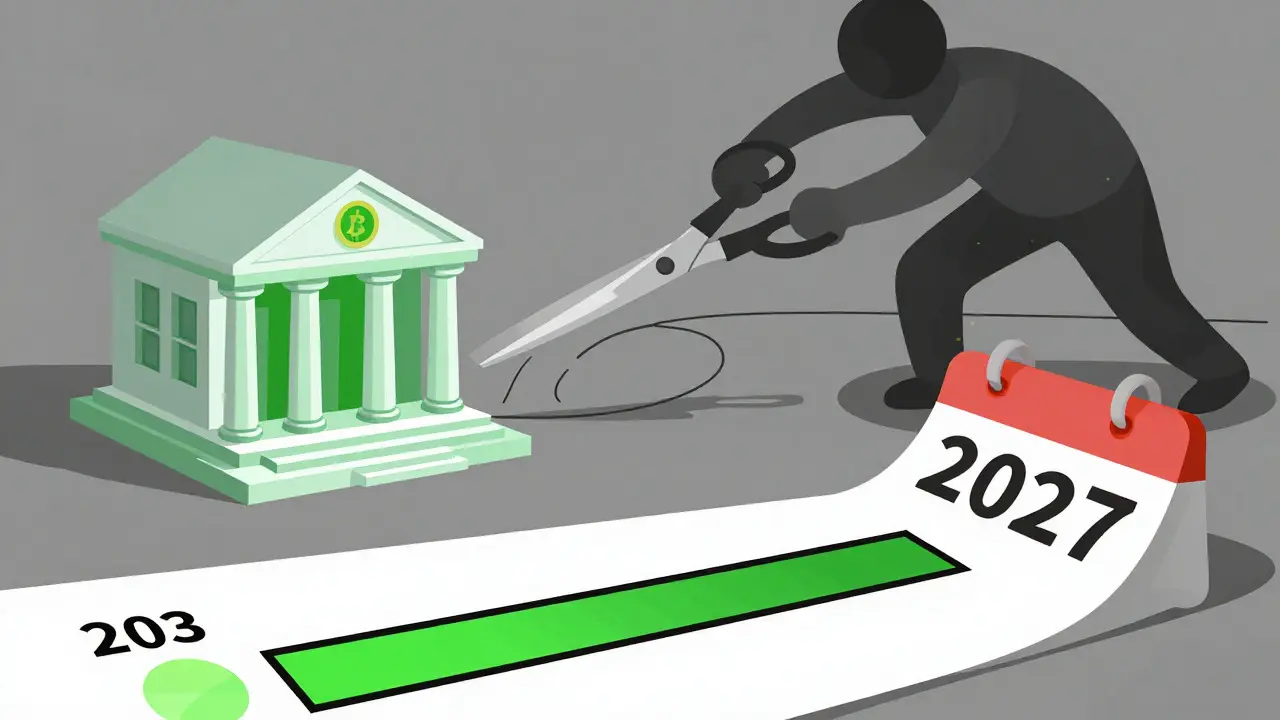
The trend is tightening, not loosening. By 2027, analysts predict 95% of crypto transactions in Cyprus will occur through registered CASPs, up from 78% in early 2025. The National Sanctions Unit, established recently, will centralize enforcement, meaning fewer gray areas. The CBC is also pushing for instant payment services in euros by 2027, which will integrate crypto flows more tightly into the SEPA network. Expect faster payments, but also stricter monitoring.
For individuals, the advice is simple: stay transparent. Use regulated exchanges. Keep records of every wallet address. For businesses, engage with the CySEC Innovation Hub early. It’s not just a PR move; it provides direct guidance on navigating these complex rules.
Is crypto legal tender in Cyprus?
No. The Central Bank of Cyprus explicitly states that cryptocurrency is not legal tender. It is treated as an asset, not currency. This distinction is crucial because it means banks are not required to accept crypto for debt repayment, giving them leverage in negotiations.
What happens if I transfer less than €1,000?
The Travel Rule requirements technically apply to transfers above €1,000. However, banks may still apply internal risk limits. Frequent small transfers (structuring) can trigger anti-money laundering flags, so consistency is key. Don't assume small amounts are invisible to compliance teams.
Which bank is best for crypto in Cyprus?
There is no single 'best' bank, as policies change frequently. However, larger international banks operating in Cyprus tend to have more robust compliance infrastructure. Smaller local banks may be more flexible but carry higher de-risking risks. Always ask for their specific crypto policy in writing before opening an account.
Does MiCA affect individual holders?
Indirectly, yes. MiCA primarily regulates providers (exchanges, custodians). But because providers must comply with strict AML rules, you will face tighter KYC processes when using their services. Your experience as a user will be slower onboarding but potentially safer holdings.
How long does it take to resolve a frozen crypto transaction?
It varies widely, from a few days to several weeks. If the freeze is due to missing Travel Rule data, providing the documents quickly can resolve it fast. If it’s a sanctions check, it could take longer. Keeping digital copies of all ID and proof-of-source-of-funds documents ready can cut resolution time significantly.
- Poplular Tags
- Cyprus crypto banking
- MiCA compliance
- Travel Rule
- CySEC
- AML Cyprus