


Imagine spending months perfecting a design, only to have it copied by someone else before you can even file the paperwork to protect it. For decades, this has been the nightmare scenario for creators, inventors, and artists. The traditional system of intellectual property (IP) management is slow, expensive, and often opaque. But in 2026, a new model is gaining serious traction: blockchain IP marketplaces. These platforms are not just another crypto trend; they are fundamentally changing how we prove ownership, license work, and get paid.
Unlike traditional registries that rely on centralized databases and bureaucratic processes, these marketplaces use distributed ledger technology to create an unalterable record of creation. This means you can timestamp your work instantly, proving you created it at a specific moment in time. More importantly, these platforms allow you to sell or license your IP directly to buyers worldwide without needing expensive intermediaries like agents or lawyers for every transaction.
How Blockchain IP Marketplaces Actually Work
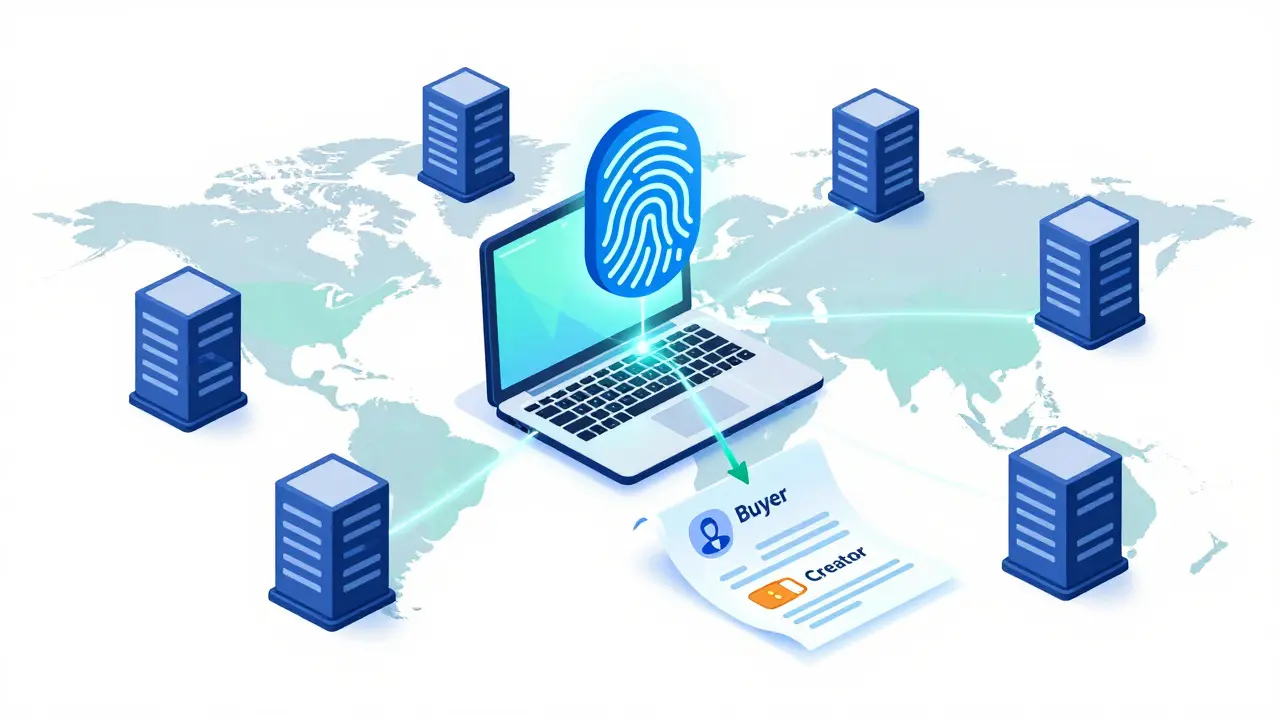
To understand why this matters, you need to look under the hood. At its core, a blockchain IP marketplace functions as a peer-to-peer network. When you upload a piece of intellectual property-whether it’s a patent draft, a musical composition, or a software code snippet-the platform generates a unique digital fingerprint. This fingerprint, combined with an incorruptible timestamp, serves as definitive proof of ownership.
This process relies on several key technical components:
- Distributed Ledger Technology: Instead of one central server holding your records, thousands of independent computers (nodes) across the network store copies of the transaction. If someone tries to alter the record later, the network rejects it because the copies don't match.
- Smart Contracts: These are self-executing codes stored on the blockchain. They automate actions based on predefined conditions. For example, if a buyer licenses your music, the smart contract automatically sends the royalty payment to your wallet the moment the license is activated.
- Immutable Timestamps: Every action on the blockchain is recorded with a precise date and time. This creates a chain of custody that is nearly impossible to forge, which is crucial evidence in legal disputes over who created something first.
The result is a system where the creator retains control. You aren't waiting for a government office to stamp a form weeks later. You are creating a permanent, public record that anyone can verify but no one can change.
Open vs. Closed Marketplaces: Choosing Your Platform
Not all blockchain IP platforms are built the same way. Understanding the difference between open and closed marketplaces is critical for deciding where to list your assets.
Open Marketplaces are general-purpose platforms. They accept various types of intellectual property, from digital art and music to patents and trademarks. Think of them as the Amazon or eBay of IP. They offer broad exposure but may have less specialized support for niche industries. Examples include broader platforms like GoChain, which focuses on enterprise-grade scalability for diverse digital assets.
In contrast, Closed Marketplaces specialize in specific verticals. A platform dedicated solely to pharmaceutical patents will have different compliance requirements and user expectations than one focused on NFT-based digital art. These platforms often provide deeper industry-specific tools, such as automated compliance checks for regulatory bodies. Platforms like DEIP Ledger focus heavily on community governance and content rights, making them popular among media creators who want more control over how their work is used.
You also need to consider whether you are entering a primary or secondary market. Primary marketplaces are where IP is sold for the first time, directly from the creator. Secondary marketplaces allow previously traded IP products to be resold. This distinction affects pricing strategies and liquidity. In 2026, we are seeing a rise in hybrid models that support both, allowing creators to benefit from initial sales while enabling collectors to trade assets later.
| Platform | Primary Focus | Key Feature | Best For |
|---|---|---|---|
| DEIP Ledger | Content Rights & Governance | Community-driven voting on usage policies | Media creators, journalists, and influencers |
| IPwe | Patents & Trademarks | Enterprise-focused IP tokenization | Large corporations and patent holders |
| GoChain | General Enterprise Assets | High-speed, low-cost transactions | Businesses needing scalable infrastructure |
| IPChain | Comprehensive IP Management | Integrated licensing and royalty distribution | Independent artists and small businesses |
Why Traditional IP Systems Are Failing
The shift toward blockchain isn't just about hype; it's a response to real failures in the current system. Traditional IP management is plagued by fragmentation. If you want to protect a trademark in five different countries, you need five different applications, five different fees, and potentially five different lawyers. The process is slow, often taking months or years.
Disputes are equally problematic. Proving ownership in court requires digging through paper trails, email archives, and witness testimonies. It’s expensive and uncertain. With blockchain, the burden of proof shifts. The immutable ledger provides a single source of truth. As legal experts at firms like Emerson Thomson Bennett note, this transparency reduces the likelihood of disputes because the history of the asset is clear and auditable.
Licensing is another bottleneck. Negotiating a deal traditionally involves lengthy back-and-forth emails, manual contract drafting, and delayed payments. Smart contracts eliminate this friction. Once terms are agreed upon, the contract executes automatically. Royalties are distributed instantly and accurately, ensuring creators get paid fairly without chasing invoices.
Getting Started: A Practical Guide for Creators
If you’re ready to explore blockchain IP marketplaces, here is how to approach it safely and effectively.
- Choose the Right Platform: Don’t just pick the first name you see. Research whether the platform supports your specific type of IP. If you’re a musician, look for platforms with strong audio streaming integration. If you’re an inventor, seek out those with robust patent documentation standards.
- Set Up Your Wallet: Most of these platforms operate using cryptocurrency. You’ll need a secure digital wallet to receive payments. Use reputable hardware wallets for large holdings to protect against hacks. Learn how to manage private keys securely-losing them means losing access to your funds.
- Prepare Your Documentation: While the blockchain proves *when* you created something, it doesn’t replace the need for high-quality metadata. Clearly describe your work, define the scope of rights you’re selling (e.g., exclusive vs. non-exclusive), and set clear terms. Ambiguity leads to disputes, even on transparent ledgers.
- Understand Gas Fees: Transactions on blockchains require small fees, known as gas fees, to compensate network validators. These vary by network congestion. Timing your uploads during off-peak hours can save money.
- Start Small: Before listing your most valuable IP, test the process with a lower-stakes asset. Familiarize yourself with the interface, the verification process, and the payout mechanism.
The Role of NFTs in IP Trading
You cannot discuss blockchain IP in 2026 without mentioning Non-Fungible Tokens (NFTs). While the NFT boom of 2021-2022 was marked by speculation, the technology has matured into a practical tool for IP management. An NFT is essentially a certificate of authenticity linked to a digital file. It doesn’t store the image or song itself but points to it and proves who owns the rights.
For creators, NFTs enable fractional ownership. Instead of selling a patent outright for a lump sum, you can tokenize it into shares. Investors buy shares, providing upfront capital, while you retain operational control. This democratizes investment in IP, allowing smaller creators to access funding previously reserved for big tech companies.
Furthermore, NFTs facilitate secondary market royalties. In traditional art sales, if a painting is resold for millions, the original artist sees nothing. With smart contracts embedded in NFTs, you can program a percentage of every future resale to go directly to you. This creates a passive income stream that grows as your work gains value.

Challenges and Risks to Watch
Despite the benefits, blockchain IP marketplaces are not without risks. First, there is the issue of legal recognition. While blockchain provides technical proof of creation, courts in many jurisdictions are still catching up. Ensure that the platform you choose complies with local laws and that its records are admissible in evidence. Some platforms now partner with legal firms to bridge this gap.
Second, cybersecurity remains a concern. While the blockchain itself is secure, the interfaces connecting users to it-wallets, exchanges, and marketplace websites-are vulnerable to phishing and hacks. Always verify URLs, use two-factor authentication, and never share your seed phrase.
Third, environmental impact is still a topic of debate. Older blockchains like Bitcoin use energy-intensive proof-of-work mechanisms. However, many modern IP platforms use proof-of-stake or other eco-friendly consensus algorithms, significantly reducing their carbon footprint. Check the platform’s sustainability report before committing.
Future Outlook: Interoperability and Regulation
Looking ahead, the biggest hurdle is interoperability. Currently, IP registered on one blockchain may not easily transfer to another. The industry is working on cross-chain bridges that will allow seamless movement of assets between networks. This will prevent vendor lock-in and give creators true freedom.
Regulation is also evolving. Governments are beginning to recognize digital tokens as valid forms of property. We expect clearer guidelines on tax treatment for IP royalties earned in cryptocurrency. Staying informed on these changes is crucial for compliance. As the technology matures, blockchain IP marketplaces will likely become the standard for digital asset management, offering speed, transparency, and fairness that traditional systems simply cannot match.
What is a blockchain IP marketplace?
A blockchain IP marketplace is a decentralized platform that uses distributed ledger technology to register, protect, and trade intellectual property. It allows creators to timestamp their work for proof of ownership and use smart contracts to automate licensing and royalty payments without intermediaries.
Are blockchain IP records legally binding?
While blockchain provides strong technical evidence of creation time and ownership history, its legal standing varies by jurisdiction. Many courts accept blockchain records as admissible evidence, but it is best to use platforms that comply with local IP laws and offer legal support for enforcement.
How do smart contracts help with IP licensing?
Smart contracts automate the licensing process. When a buyer purchases a license, the contract automatically transfers the rights and releases the payment to the creator. This eliminates manual invoicing, reduces delays, and ensures accurate royalty distribution according to pre-agreed terms.
What is the difference between open and closed IP marketplaces?
Open marketplaces accept a wide variety of IP types, such as art, music, and patents, offering broad exposure. Closed marketplaces specialize in specific industries, like pharmaceuticals or software, providing tailored tools and compliance features for those sectors.
Do I need to know coding to use these platforms?
No, most modern blockchain IP marketplaces offer user-friendly interfaces that abstract away the complex code. However, you do need basic knowledge of managing a digital wallet, understanding cryptocurrency transactions, and setting up security measures like two-factor authentication.
Can I earn passive income from my IP on these platforms?
Yes. By tokenizing your IP or using NFTs with embedded smart contracts, you can program automatic royalty payments. This means you earn a percentage every time your work is licensed, used, or resold on the secondary market, creating a continuous revenue stream.