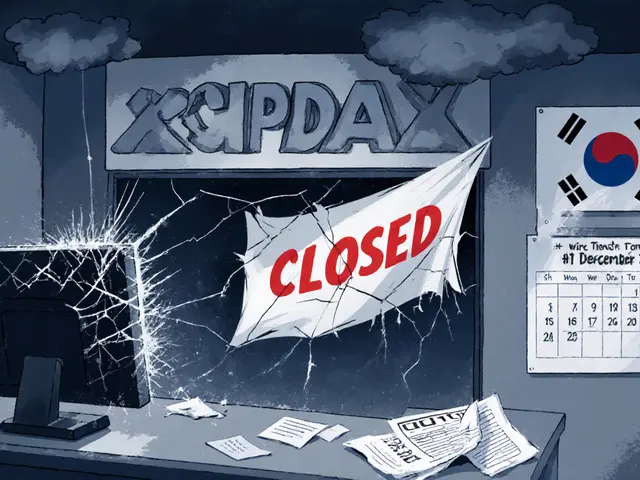


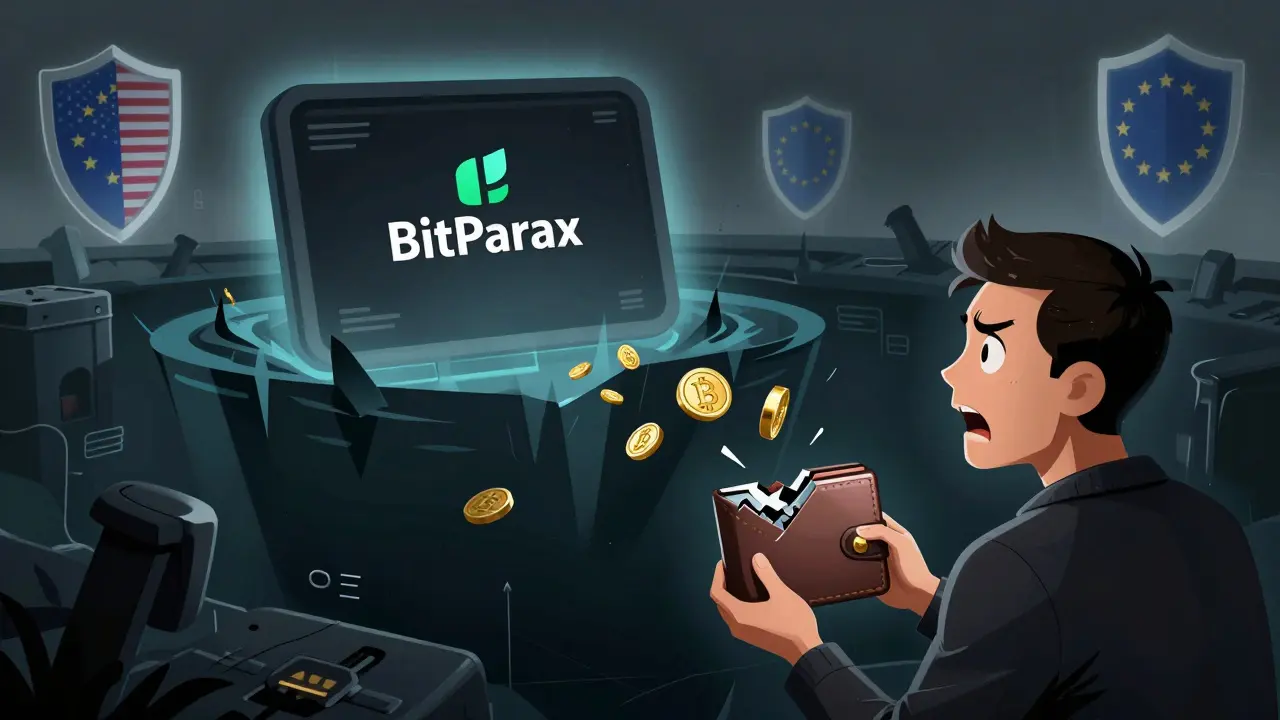
You might have stumbled upon BitParax, a name that once appeared on lists of cryptocurrency exchanges. If you are looking to deposit funds, start trading, or recover old assets, stop right here. The short answer is that BitParax is no longer operational. As of mid-2026, the platform is completely unreachable, and users who had funds there likely face total loss.
This isn't just a bad day for customer support. This is a classic example of what happens when smaller, unregulated exchanges fail without warning. In this review, we will look at what BitParax was, why it disappeared, and most importantly, how you can avoid ending up in the same boat with other platforms.
The Current Status: Dead Air
Let's get the uncomfortable truth out of the way first. BitParax Exchange, which launched back in July 2019, has ceased all operations. There is no active website, no functioning app, and no responsive support team. If you try to visit their domain today, you will likely find a dead link or a parking page.
On tracking sites like CoinMarketCap, BitParax still appears as a listed entity, but with zero trading volume and no market listings. This creates a dangerous illusion of legitimacy. Just because an exchange is listed on a data aggregator doesn't mean it is safe or even open for business. Unlike major players such as Binance or Coinbase, which publish regular proof-of-reserves and maintain active social media channels, BitParax went silent without a formal announcement.
For anyone holding assets on the platform, the situation is grim. User reports from community forums indicate that the platform became "completely unreachable." In the world of centralized finance (CeFi), if you cannot access your wallet and the exchange ignores you, your funds are effectively gone. There is no FDIC insurance for crypto, and without regulatory oversight, there is no government agency stepping in to reimburse victims.
What Was BitParax?
To understand the risk, we need to look at what BitParax promised during its brief window of operation. Registered in Chișinău, Moldova, at Business Center Le Roi, BitParax positioned itself as a trading platform for both individual traders and merchants. It launched in 2019, a time when the crypto market was booming and new exchanges were popping up daily.
However, BitParax never achieved significant market recognition. While giants like Binance supported over 600 cryptocurrencies and handled billions in daily volume, BitParax remained obscure. There is little public documentation regarding its specific trading pairs, fee structures, or technical security audits. This lack of transparency is often a red flag. Established exchanges compete on low fees, high liquidity, and robust security features. BitParax competed on... nothing visible. It operated in the shadows of the industry, outside major regulatory jurisdictions.
The Regulatory Gap: Why Location Matters
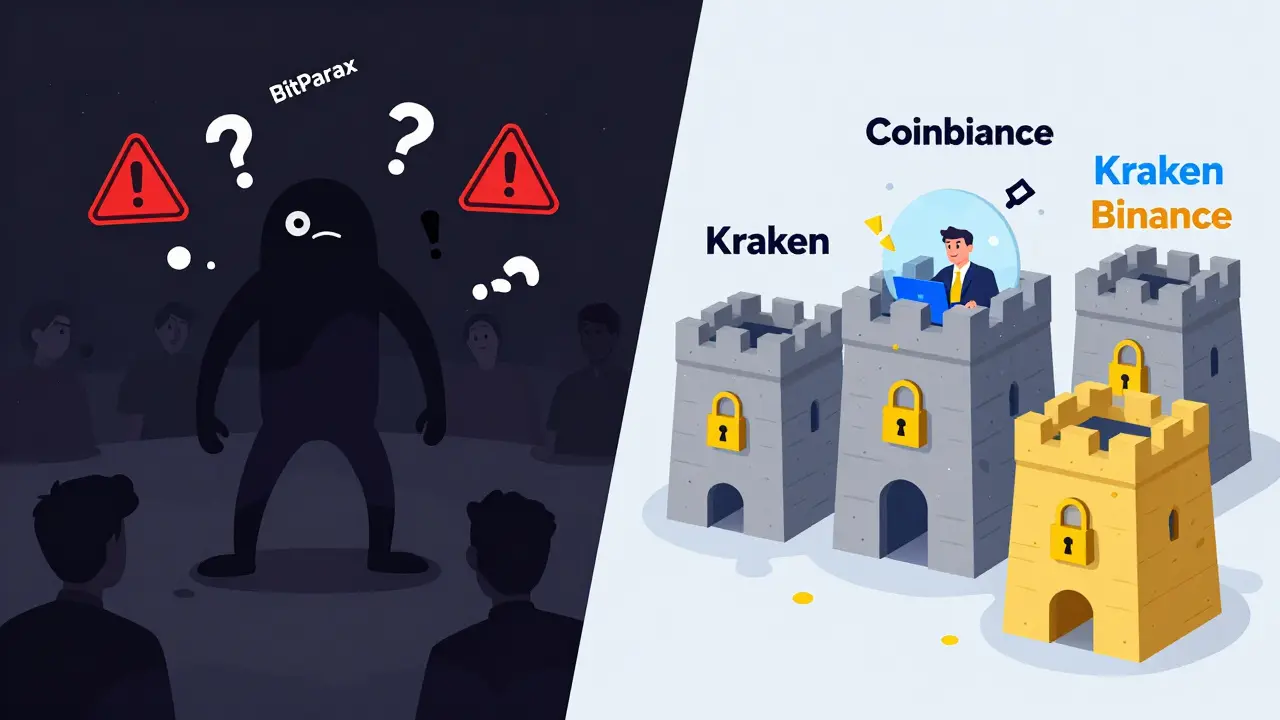
One of the biggest issues with BitParax was its jurisdiction. Being based in Moldova placed it outside the strict regulatory frameworks of the United States, European Union, or Singapore. Compare this to Coinbase, which operates under rigorous U.S. financial regulations and maintains insurance against certain types of breaches. Or look at Kraken, which is known for its compliance-heavy approach and transparent reporting.
When an exchange operates in a region with limited oversight, users lose legal recourse. If the platform shuts down, disappears, or engages in fraudulent activity, local laws may not protect foreign investors. The global crypto landscape has tightened significantly since 2019. Today, regulators worldwide are demanding licenses, KYC (Know Your Customer) compliance, and anti-money laundering (AML) protocols. BitParax’s disappearance highlights the dangers of ignoring these evolving standards.
Security Risks: What Happened to the Funds?
We don't know exactly why BitParax closed. Did they run out of money? Was there a hack? Did the founders simply vanish? Without official communication, we can only speculate. However, the outcome for users is the same: loss of access.
Established exchanges invest heavily in security. They use cold storage (keeping the majority of funds offline) to prevent hacks. They implement two-factor authentication (2FA) and withdrawal whitelists. When Bitfinex suffered a massive hack in 2016, losing $72 million in Bitcoin, the company stayed open, communicated with users, and eventually compensated them through equity tokens. That level of accountability is rare among small, unregulated platforms.
BitParax offers no such safety net. The complete unreachability suggests a potential "rug pull" scenario or insolvency. In either case, the funds are trapped. For traders, this underscores a critical rule: not your keys, not your coins. Leaving large amounts of crypto on any centralized exchange carries inherent risk. The more obscure the exchange, the higher the risk.
How to Spot Unsafe Exchanges
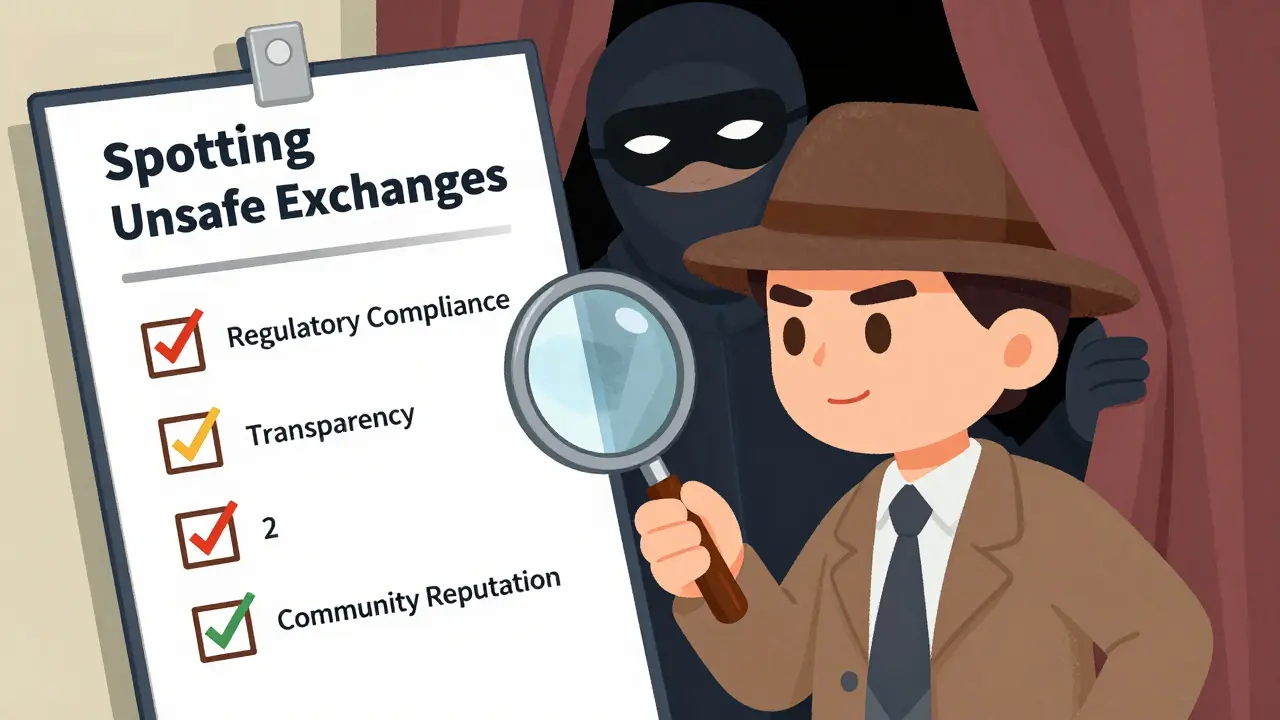
The BitParax case serves as a cautionary tale. Here is how you can protect yourself from similar platforms in the future:
- Check Regulatory Compliance: Does the exchange hold licenses in reputable jurisdictions? Look for clear information about their legal entity and regulatory status.
- Verify Transparency: Do they publish proof-of-reserves? Are their leadership teams publicly identifiable? Anonymous teams are a major red flag.
- Assess Community Reputation: Search for user reviews on independent platforms like Revain or Reddit. Beware of fake positive reviews; look for consistent complaints about withdrawals or support.
- Evaluate Liquidity: Can you actually trade without massive slippage? Low volume makes it hard to exit positions quickly.
- Test Support Responsiveness: Before depositing significant funds, contact customer support. If they take days to reply or give generic answers, walk away.
Better Alternatives for Traders in 2026
If you are looking for a safe place to trade, stick with established platforms that have survived multiple market cycles. Here is a comparison of reliable alternatives:
| Exchange | Status | Regulation | Key Feature |
|---|---|---|---|
| BitParax | Inactive / Unreachable | Moldova (Unverified) | High Risk / No Support |
| Coinbase | Active | USA (Strict) | Publicly traded, insured |
| Kraken | Active | Global (Compliant) | Strong security, low fees |
| Binance | Active | Varies by Region | Highest volume, wide asset selection |
These platforms offer tools like spot trading, futures, staking, and institutional-grade security. They also provide clear channels for dispute resolution. While no exchange is immune to risk, these companies have the resources and incentive to maintain trust.
What Should You Do If You Had Funds on BitParax?
If you lost money on BitParax, the chances of recovery are slim. However, you can take a few steps:
- Gather Evidence: Save all transaction records, emails, and screenshots of your account balance before it went dark.
- Report the Fraud: File a report with your local financial crime unit or cybercrime division. In some cases, if enough victims come forward, law enforcement may investigate.
- Warn Others: Share your experience on crypto forums and review sites to help others avoid the same trap.
- Move Forward Safely: Use this experience to adopt better security habits. Consider using self-custody wallets like Ledger or Trezor for long-term holdings.
Don't fall for scams promising to "recover" your funds. Hackers often target victims of failed exchanges with fake recovery services. Legitimate authorities do not ask for upfront fees to retrieve crypto.
The Bigger Picture: Trust in Crypto
The failure of BitParax reminds us that cryptocurrency is still a wild west in many areas. While blockchain technology itself is decentralized and secure, the centralized intermediaries (exchanges) are vulnerable points of failure. The industry is maturing, with stricter regulations and better consumer protections emerging globally. But until then, due diligence is your best defense.
Always prioritize exchanges with a proven track record, transparent operations, and strong regulatory compliance. Don't be lured by promises of high yields or exotic coins on unknown platforms. In crypto, survival matters more than speculation.
Is BitParax Exchange still operating in 2026?
No, BitParax Exchange is no longer operational. The platform has been unreachable since late 2025, with no active services, website, or customer support available.
Can I recover my funds from BitParax?
Recovery is highly unlikely. Since the exchange is unregulated and unresponsive, there is no mechanism for refunding users. You should gather evidence and report the incident to local authorities, but expect total loss.
Why did BitParax shut down?
The exact reason is unknown as the company provided no official statement. Possible causes include insolvency, hacking, or a deliberate rug pull. Its lack of regulatory oversight made it vulnerable to such outcomes.
Is it safe to use crypto exchanges registered in Moldova?
Exchanges registered in jurisdictions with weak regulatory frameworks carry higher risk. Always verify if the exchange holds additional licenses in major markets like the US, EU, or UK. Lack of regulation means less protection for your funds.
What are the safest crypto exchanges in 2026?
Established platforms like Coinbase, Kraken, and Binance are considered safer due to their size, regulatory compliance, and security measures. Always research current reviews and regulatory status before choosing an exchange.
How can I tell if a crypto exchange is a scam?
Red flags include anonymous teams, lack of regulatory info, poor website quality, unrealistic promises, and negative user reviews about withdrawals. Always check independent sources and test support responsiveness before depositing funds.


![What is Sheesha Finance [ERC20] (SHEESHA) crypto coin? Token details, risks, and real-world performance](/uploads/2025/11/thumbnail-what-is-sheesha-finance-erc20-sheesha-crypto-coin-token-details-risks-and-real-world-performance.webp)