


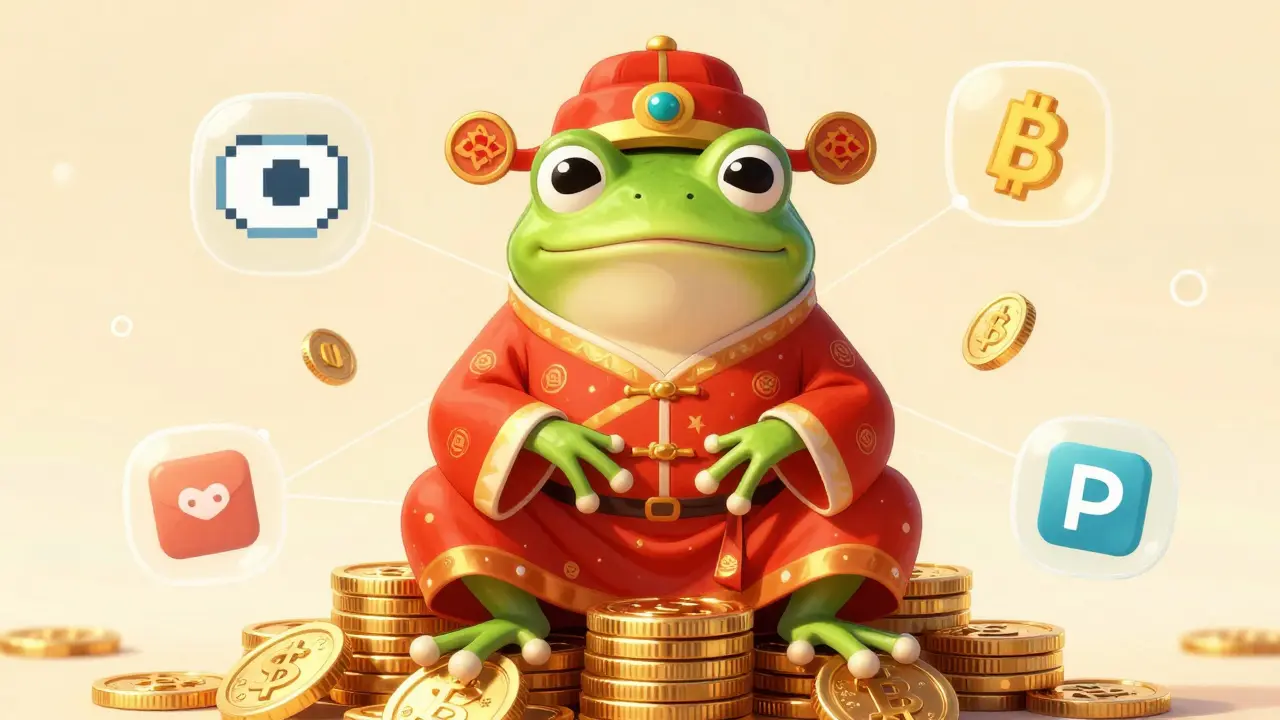
Have you ever seen a frog that looks like it’s wearing traditional Asian clothing and wondered what it has to do with your wallet? That’s PeiPei, an Ethereum-based meme token that blends Western internet culture with Asian aesthetics. If you’re scrolling through crypto charts and spotting PEIPEI, you might be asking: Is this just another joke coin, or is there something real behind the hype?
The short answer is that PeiPei is exactly what it claims to be-a community-driven meme token with no hidden utility, no complex roadmap, and no promises of technological revolution. It relies entirely on social momentum, cultural resonance, and the chaotic energy of the meme coin market. But before you buy in, let’s break down what makes PEIPEI tick, how it works on the blockchain, and why its price swings so wildly.
What Exactly Is PeiPei (PEIPEI)?
PeiPei is a digital asset built on the Ethereum blockchain, specifically following the ERC-20 standard. This means it behaves like most other tokens you’ve likely heard of-such as Shiba Inu or Pepe-allowing for easy transfers between wallets and trading on decentralized exchanges. The token launched in June 2024, positioning itself as a bridge between two distinct cultural worlds: the viral, absurdist humor of Western meme culture and the prosperity-focused symbolism of Chinese art.
Visually, PeiPei features a gold-and-red frog design. In many Asian cultures, red symbolizes luck and prosperity, while gold represents wealth. By combining these elements with the globally recognized Pepe the Frog character, the creators aimed to tap into a broader audience than typical meme coins. However, unlike projects that promise future developments, PeiPei explicitly states it has no intended utility beyond being a community experiment. There are no plans for a metaverse, no NFT marketplace integration, and no staking rewards. It’s pure speculation driven by social media engagement.
Tokenomics: Supply, Taxes, and Holder Distribution
When evaluating any cryptocurrency, understanding its supply structure is crucial. For PeiPei, the numbers can be confusing because different sources report conflicting data. Here is the most consistent picture based on current market aggregators:
- Maximum Supply: Approximately 420.69 trillion tokens. This number isn’t random; it references "420" and "69," common numerology memes in internet culture.
- Circulating Supply: Roughly 420.68 trillion tokens are currently in circulation.
- Total Supply Discrepancy: Some early reports mentioned a total supply of 1 billion tokens, but this appears to refer to a different metric or an error in initial listing data. The dominant figure across major trackers is the 420+ trillion range.
One of the key selling points at launch was transparency. The project started with no presale, no team allocation, and initially no buy/sell taxes. This "fair launch" approach aims to prevent insiders from dumping tokens on retail investors. However, recent data suggests a 2% tax may now apply to both buys and sells, funding marketing and development efforts. Always check the latest contract details before trading, as these terms can change.
In terms of distribution, the top 10 holders control about 20.7% of the supply. While this isn’t overly concentrated compared to some meme coins, it does mean a small group could influence price movements significantly if they decide to sell simultaneously.
| Metric | Value / Status |
|---|---|
| Blockchain | Ethereum (Layer 1) |
| Standard | ERC-20 |
| Max Supply | ~420.69 Trillion |
| Buy/Sell Tax | Initially 0%, potentially 2% (verify current contract) |
| Top 10 Holders | ~20.7% |
| Utility | None (Meme-only) |

Market Performance and Price Volatility
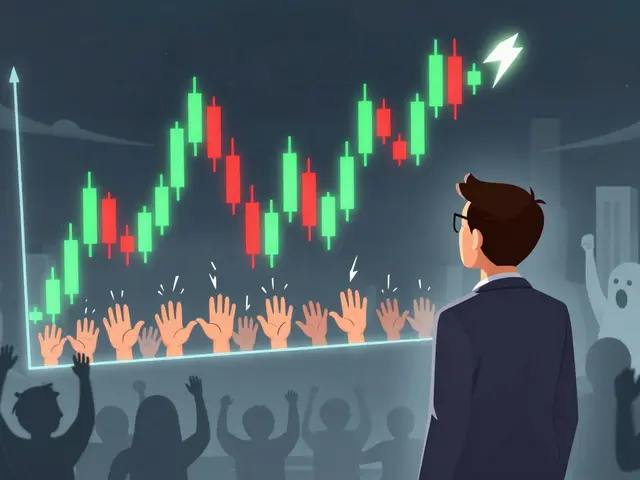
If you’re looking for stability, PeiPei is not your coin. Like all meme assets, its value is driven almost entirely by sentiment and trading volume rather than intrinsic economic factors. As of May 2026, the price hovers around $0.0000000076 USD. This might look insignificant, but remember the massive supply-small price changes can still result in significant percentage gains or losses.
Historically, PeiPei has experienced extreme volatility. It reached an all-time high of approximately $0.00006394, which represented a market capitalization exceeding $100 million. Since then, it has declined by roughly 98% from that peak. Conversely, it sits about 25% above its all-time low. These swings are typical for "degenerate meme trading" tokens, where prices can multiply by 10x or drop by 90% within days based on social media trends.
Trading activity remains moderate. The 24-hour trading volume is around $332,000, representing about 10% of its current market cap of $3.27 million. This ratio indicates active interest but also highlights the risk of liquidity drying up during sudden sell-offs. With over 62,500 holders, the community is substantial, but retention rates in meme coins are notoriously low.
Where Can You Trade PeiPei?
Since PeiPei is an ERC-20 token, you won’t find it on major centralized exchanges like Coinbase or Binance in the traditional sense. Instead, it trades primarily on Decentralized Exchanges (DEXs) such as Uniswap v2. To trade PEIPEI, you need:
- An Ethereum-compatible wallet (like MetaMask or Ledger).
- Ether (ETH) to pay for gas fees.
- A connection to a DEX interface.
While some sources mention compatibility with Solana-based platforms like Raydium or Jupiter, PeiPei’s core identity is tied to Ethereum. Be cautious of fake tokens on other chains; always verify the contract address on official channels like Etherscan. The project emphasizes anti-scam measures by keeping its deployment simple and avoiding multi-chain expansions that often lead to fraudulent copies.
Risks and Considerations Before Buying
Investing in PeiPei carries significant risks that every potential buyer should understand clearly:
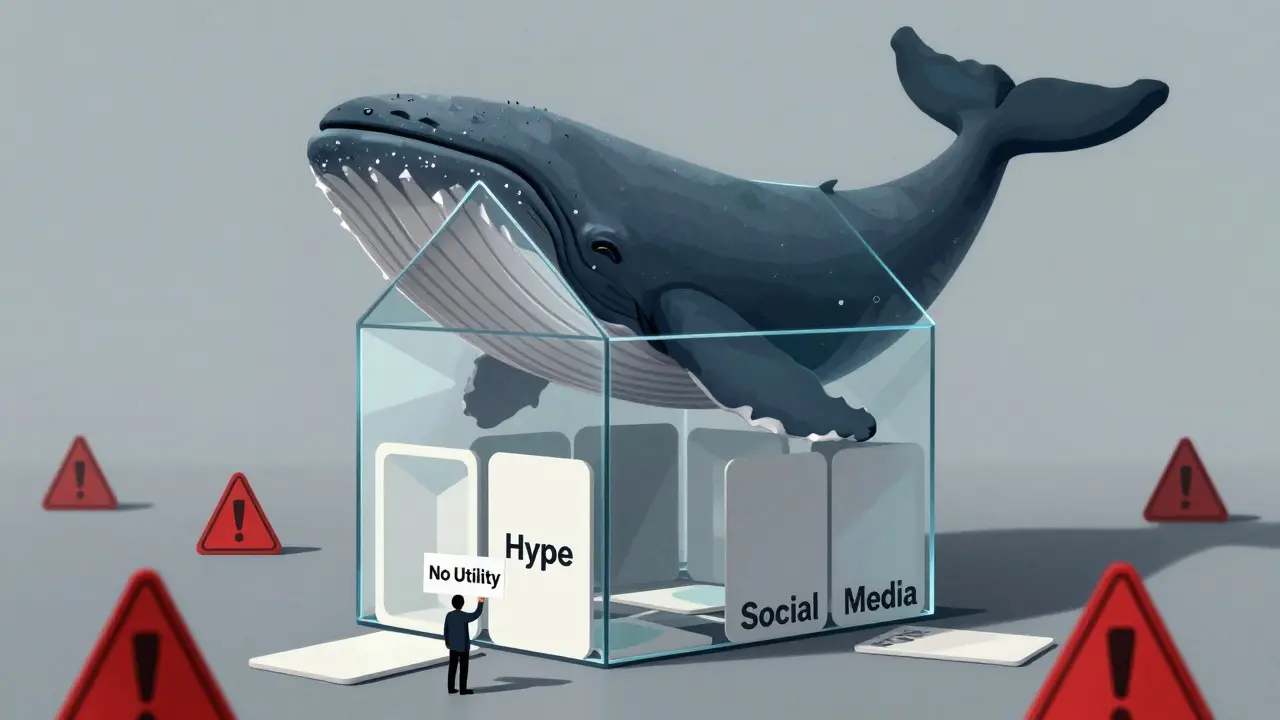
- No Fundamental Value: There is no revenue model, no product, and no service backing the token. Its value exists only because people believe others will buy it later.
- Extreme Volatility: Prices can crash overnight due to negative social media sentiment or whale sales.
- Liquidity Risks: During market downturns, exit liquidity may disappear, making it difficult to sell your holdings without slippage.
- Regulatory Uncertainty: Meme coins often face stricter scrutiny from regulators due to their speculative nature.
Industry experts note that PeiPei’s strategy of rejecting traditional crypto promises-roadmaps, utilities, team transparency-is deliberate. It appeals to traders seeking quick flips rather than long-term holds. If you’re not comfortable losing 100% of your investment, this token is likely not suitable for your portfolio.
Community and Cultural Appeal
What keeps PeiPei alive isn’t technology-it’s community. The token thrives on X (formerly Twitter), Reddit, and Telegram groups where users share memes, track price action, and celebrate cultural fusion. The blend of Western absurdity with Eastern prosperity symbols creates a unique narrative that resonates with global audiences.
This cultural bridge is its strongest asset. While thousands of meme coins exist, few successfully merge distinct cultural identities without feeling forced. PeiPei’s visual branding stands out, driving organic engagement. However, maintaining this momentum requires constant content creation and community management, which remains entirely volunteer-driven.
Is PeiPei (PEIPEI) a scam?
PeiPei is not inherently a scam, but it is a highly speculative asset with no intrinsic value. The project launched with transparent practices, including no presale and verified contracts. However, the meme coin space is rife with fraud, so always verify the official contract address on Etherscan before buying. Never invest more than you can afford to lose.
How do I buy PeiPei tokens?
To buy PEIPEI, you need an Ethereum wallet like MetaMask. Fund it with ETH, connect to Uniswap v2, paste the official PEIPEI contract address, and swap ETH for PEIPEI. Be aware of gas fees and potential slippage. Always double-check the contract address to avoid counterfeit tokens.
What is the maximum supply of PeiPei?
The maximum supply of PeiPei is approximately 420.69 trillion tokens. This number is chosen for its meme significance, referencing popular internet numerology. The circulating supply is nearly identical, indicating most tokens are already in the market.
Does PeiPei have any utility or roadmap?
No. PeiPei explicitly states it has no utility, no roadmap, and no functional purpose beyond being a community-driven meme token. It does not offer staking, governance, or access to services. Its value is derived solely from social sentiment and trading demand.
Why is the price of PeiPei so volatile?
PeiPei’s price volatility stems from its lack of fundamental value and reliance on speculative trading. Meme coins are driven by social media trends, influencer endorsements, and herd behavior. Without underlying revenue or utility, prices react sharply to news, sentiment shifts, and large holder movements.
Can I store PeiPei in a hardware wallet?
Yes. Since PeiPei is an ERC-20 token on Ethereum, it can be stored in any Ethereum-compatible hardware wallet, such as Ledger or Trezor. You’ll need to add the custom token using its contract address within the wallet’s interface for secure offline storage.
What happens if PeiPei loses popularity?
If PeiPei loses cultural relevance, its trading volume will likely dry up, leading to severe price declines. Unlike utility tokens with ongoing use cases, meme coins depend entirely on sustained attention. Once the hype fades, liquidity evaporates, and recovery becomes unlikely.
Is PeiPei listed on Coinbase or Binance?
As of mid-2026, PeiPei is not listed on major centralized exchanges like Coinbase or Binance. It trades exclusively on decentralized platforms like Uniswap. Listings on larger exchanges require rigorous compliance checks, which meme coins rarely meet due to their speculative nature.



People Comments
Look, I get the appeal of a frog in hanfu. It’s cute. But let’s be real for a second. This is just another vehicle for degens to gamble their rent money on vibes. The fact that it has no utility isn’t a bug, it’s the whole feature. People don’t buy PEIPEI because they believe in a roadmap; they buy it because they saw a tweet and felt FOMO. It’s a casino with better graphics than your average slot machine. And honestly? That’s fine. As long as you know you’re playing with house money.
i mean its not like we havent seen this before lol
You people are literally blind to the mechanics at play here. The liquidity pool is thin enough to swim across but deep enough to drown you if you panic sell. The 2% tax is a death spiral waiting to happen during a dump. When the whales decide to exit, which they always do, there won't be anyone left to catch the bag. You're not investing, you're donating to someone's Lambo fund. Wake up.
I actually think the lack of utility is refreshing. Everyone tries to add NFTs or staking to everything now and it gets so boring. Just a pure meme coin? That feels almost honest in a twisted way. Also the red and gold aesthetic is genuinely nice looking compared to the usual green frogs. Maybe it will stick around longer than expected because it just looks cool.
It is quite fascinating how individuals continue to engage with assets that possess zero fundamental backing one might argue that the entire premise is flawed yet here we are discussing supply numbers as if they hold any intrinsic meaning beyond speculative fiction the volatility is merely a symptom of the underlying emptiness
teh supply is 420 trillion for god sake. why do ppl still fall for this shit. its obvious pump and dump. smart money is already out. u r all bags holders waiting to get rekt. typical retail behavior lol
This is exactly why crypto needs regulation. These tokens are predatory by design. They target vulnerable individuals who don't understand blockchain technology and lure them in with cultural symbols. It's unethical to profit from such ignorance. The community should be ashamed of promoting this garbage instead of focusing on legitimate projects that solve actual problems.
it’s kind of poetic really. a frog representing prosperity in a market that destroys wealth daily. i guess that’s the joke. we laugh while we bleed. anyway im watching the charts and if it dips ill probably buy some just to feel something
Hey everyone! I think it’s important to remember that meme coins are about community first. If you enjoy the art and the memes, then go ahead and have fun with small amounts. Don’t let the haters stop you from enjoying internet culture. Just make sure you’re comfortable with the risk!
another boring analysis post. yawn. i bought $peipei yesterday and made 5%. take that haterz. ur posts r so dry bro. need more spice less text wall
Oh wow, look at us, reading a Wikipedia article about a frog. Truly groundbreaking content. I’ve been holding since launch and I’m down 98% but hey, at least I got the story rights to my financial ruin. Thanks for nothing, devs. Typical meme coin drama.
Actually, if you look at the holder distribution, the top 10 only hold 20%. That’s pretty decent for a meme coin! Many others have insiders holding 50%+. So structurally, it’s safer than most. Plus, the Ethereum ecosystem is robust. Just use a hardware wallet and you’ll be fine! 🐸💰
The notion that 'community' drives value is a quaint misunderstanding of market dynamics. Value is derived from scarcity and utility. Neither exists here. This token is a testament to the collective delusion of the masses. I prefer to keep my capital in assets with tangible cash flows, not digital frogs.
I don't care what you say, I'm buying more. My gut says it's going to moon. You guys are all too analytical. Let me tell you about my portfolio... actually never mind, you wouldn't understand the vision. Just watch me win.
Let’s break this down! First, check the contract address. Second, set your slippage tolerance. Third, don’t invest more than you can lose. It’s that simple! Why do people complicate it? Just follow the steps and stay safe out there! ;)
I’ve traded every meme coin since Doge. Here’s the truth: PEIPEI has better branding than 90% of the competition. The Asian fusion angle is unique. If they can maintain social momentum for another month, we could see a retest of previous highs. Keep an eye on volume spikes.
It is crucial to approach these investments with caution. While the cultural aspect is interesting, the financial risks are significant. Please ensure you fully understand the implications of trading on decentralized exchanges before proceeding. Your financial security should always be the priority.
Love the energy here! Remember to breathe and not stress over the charts. If it goes up, great. If it goes down, learn from it. Stay positive!
How utterly pedestrian. To discuss such a trivial asset with such gravity is amusing. I suppose for those lacking sophisticated investment strategies, a frog must suffice. Do try to elevate your discourse next time.
yo listen up fam. this is the future of finance. well maybe not but its fun right? dont let the bears get you down. we gonna pump it together. trust the process. also pls spell check u r messing up da vibe lol
Bloody hell, look at this thread! Everyone’s so serious. It’s just a game, innit? I reckon the frog’s got spirit. Might throw a quid in just to see what happens. Cheers to the chaos!
I understand the excitement but please be careful. I have seen many friends lose money on similar tokens. It is important to verify the contract yourself and not trust random links. Take your time and think twice before spending money you cannot afford to lose