


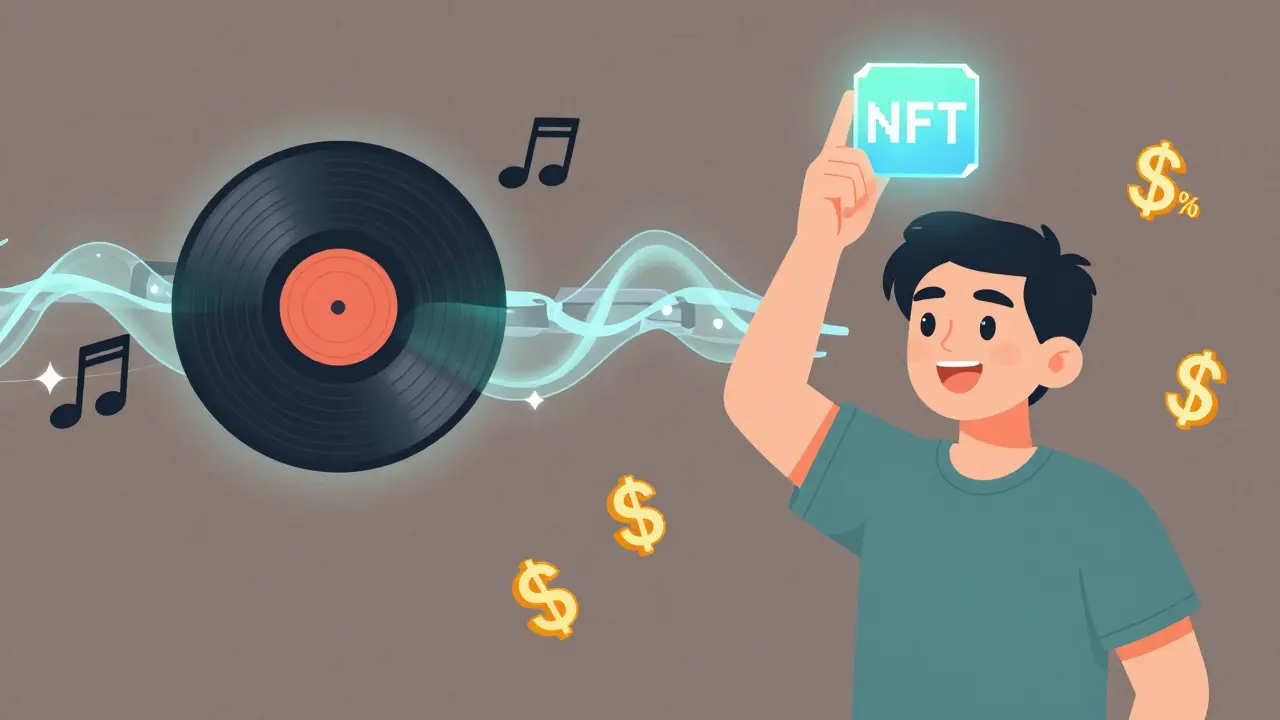
Music NFT Royalty Calculator
How This Works
Traditional streaming pays $0.003-$0.005 per play. Music NFTs allow artists to set their own royalty rates and earn from resales. This calculator shows the difference between earning from streaming versus NFT royalties.
Streaming Revenue
$0.00 from 0 streams
NFT Royalties
$0.00 from 0 streams
Think about the last time you bought a song. You paid a dollar or two, streamed it a few times, and that was it. The artist got maybe a fraction of a cent. Now imagine owning that song-not just playing it, but actually owning it like you own a rare vinyl or a signed poster. That’s what music NFTs are: digital ownership of music, locked in on a blockchain.
What Exactly Is a Music NFT?
A music NFT is a unique digital token on a blockchain that represents ownership of a piece of music. It could be a single track, an album, a remix, or even a live performance recording. Unlike streaming, where you’re renting access, a music NFT gives you verifiable proof that you own a specific version of that music. It’s like owning the original painting, while everyone else can still see a photo of it online. These tokens are stored on blockchains like Ethereum, Solana, or Polygon. Each one has a unique ID and contract address that can’t be copied or changed. Even if someone downloads the audio file, they don’t own the NFT-and the NFT proves who does. Some music NFTs are just audio files. Others include bonus content: behind-the-scenes videos, exclusive merch, concert tickets, or even voting rights on future releases. A few are even algorithmically generated-computers create one-of-a-kind songs based on rules set by the artist, and each NFT is a different version.Why Do Music NFTs Matter for Artists?
Traditional music industry models leave most artists struggling. Streaming services pay between $0.003 and $0.005 per play. To make $10,000, an artist needs 2-3 million streams. Most don’t get close. Music NFTs cut out the middlemen. No record labels. No distributors taking 70% of the cut. Artists sell directly to fans. And they can earn from every resale. If you buy a music NFT for $50 and later sell it for $500, the original artist can get 10%, 20%, or even 50% of that profit-automatically, through smart contracts. Platforms like Opulous and Royal let fans buy NFTs that give them a share of future streaming royalties. That means if your favorite artist’s song goes viral, you get paid too. It turns fans into investors, not just listeners. This isn’t just about money. It’s about connection. Owning a music NFT feels like being part of something. You’re not just supporting an artist-you’re helping them survive, grow, and keep making music.How Is This Different From Streaming or Buying Tracks?
When you buy a song on iTunes or stream it on Spotify, you’re buying a license to listen. You don’t own it. The company still controls the file. They can remove it. Change the price. Take it offline. You have no say. With a music NFT, you own the token. Even if the artist deletes the audio file from their server, the NFT still exists. The ownership record is on the blockchain-permanent, public, and uncensorable. The music might be hosted on decentralized storage like Arweave or IPFS, so it’s not going anywhere. It’s the difference between renting a car and owning it. Streaming is a monthly subscription. Music NFTs are a one-time purchase with long-term value.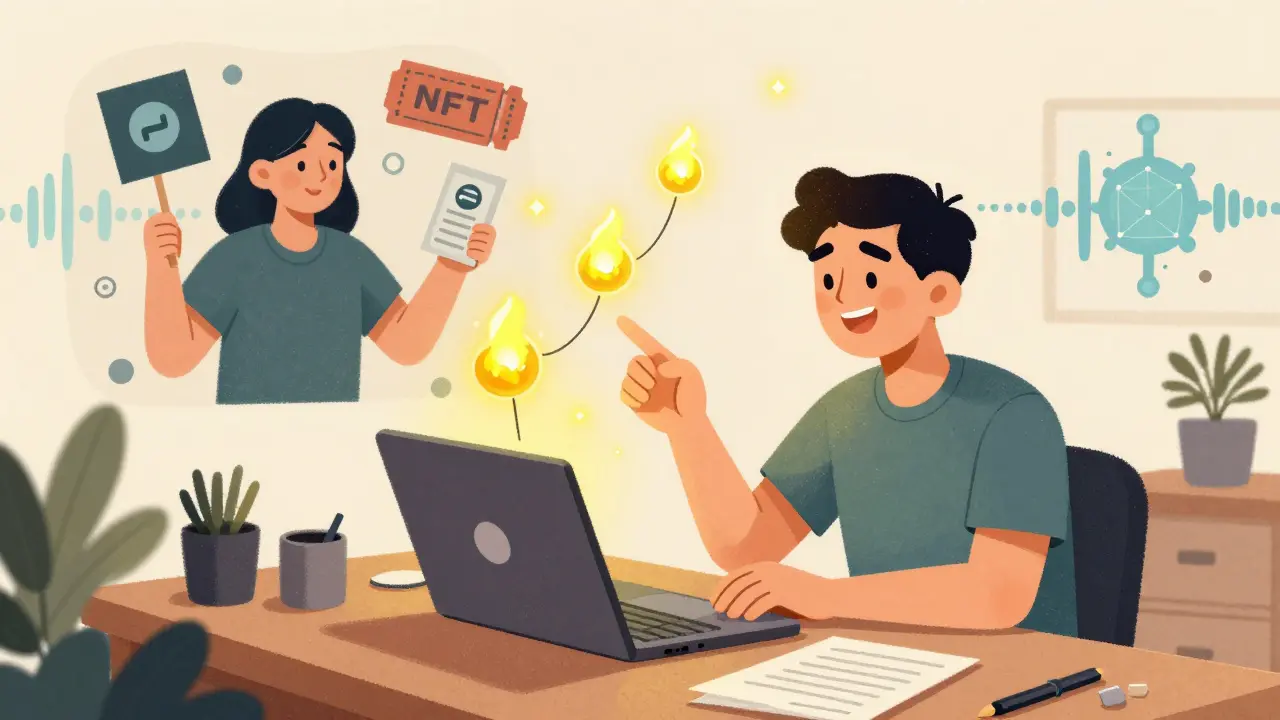
What Can You Actually Do With a Music NFT?
Owning a music NFT isn’t just about bragging rights. Depending on how the artist sets it up, you might get:- Exclusive access to unreleased tracks or demos
- Invitations to private live streams or virtual concerts
- Physical merch tied to your NFT, like limited-edition vinyl or posters
- Royalty shares from future plays or sales
- Voting power on the artist’s next project-choose the album cover, pick the next single
Who’s Buying Music NFTs?
Early adopters are mostly crypto-savvy fans, collectors, and investors. But it’s growing. Artists like 3LAU, Grimes, and Steve Aoki have sold music NFTs for millions. Even indie artists on platforms like Sound.xyz and Catalog are making enough to quit their day jobs. It’s not just about big names. A small electronic producer in Wellington sold 50 music NFTs of their debut album for $20 each. They made $1,000 upfront-and still earn 15% every time one resells. That’s more than they’d make in a year from Spotify. Collectors buy them for the same reason people buy rare vinyl or signed guitars: they believe in the artist, they love the music, and they think it’ll be worth more later.Is It Just a Speculative Bubble?
Let’s be honest-some music NFTs are overhyped. People bought them hoping to flip them for quick cash. That’s speculation. And speculation can crash. But the core idea isn’t a bubble. It’s a solution to a real problem: artists aren’t getting paid fairly. Music NFTs fix that by giving artists control, transparency, and direct revenue. The difference? The ones that last are built on community, not hype. Artists who treat NFTs as a way to connect with fans-not just sell digital junk-are the ones seeing real, lasting results.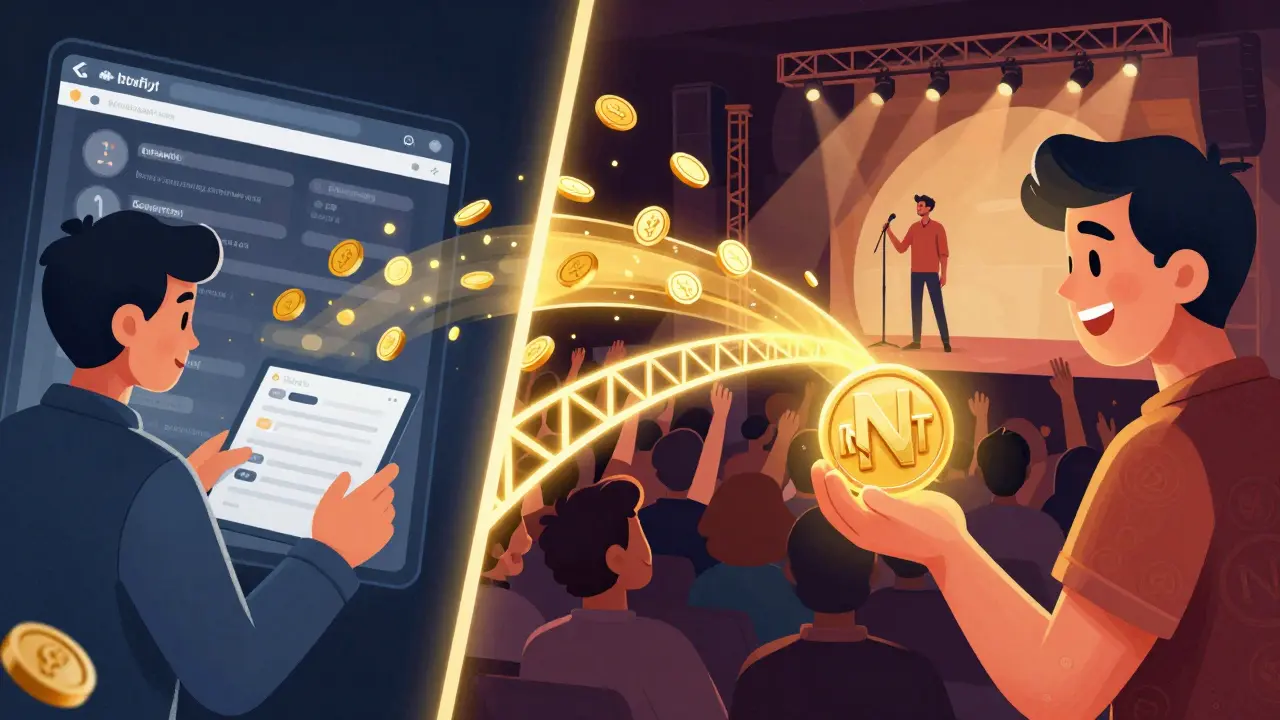
How Do You Buy a Music NFT?
It’s not as hard as it sounds, but you need a few things:- A crypto wallet (like MetaMask or Phantom)
- SOME cryptocurrency (usually ETH, SOL, or MATIC)
- An account on a music NFT platform (like Sound.xyz, Catalog, or Royal)

People Comments
This is actually kind of beautiful. I never thought about music ownership like this before. It’s not just about the sound-it’s about being part of the story. I bought a track from an indie artist last month, and now I get updates when they’re in the studio. Feels like I’m in the room with them. That’s worth more than any playlist ever could.
Also, the royalty thing? Mind blown. I’m not rich, but I’d rather spend $20 on a song that keeps giving back than stream the same 50 tracks on Spotify for a year.
I love how this turns fans into partners. 🌱 I’ve been supporting a small electronic artist for years, and when she launched her NFT album, I jumped in. Not because I thought I’d make money-but because I wanted her to keep making music. She sent me a handwritten thank-you note and a demo I couldn’t find anywhere else. That’s the kind of connection streaming will never give you.
Oh great. Another crypto scam dressed up as ‘art.’ You’re not owning music, you’re owning a JPEG of a song. And if the artist deletes the file? Congrats, you own a digital ghost. This is just Wall Street’s new playground, and you’re the sucker paying for the tickets.
While the concept of decentralized music ownership is theoretically compelling, one must critically examine the underlying infrastructural dependencies. The blockchain’s immutability is often overstated; metadata can be altered, and decentralized storage is not universally resilient. Moreover, the energy consumption of proof-of-work blockchains remains ethically untenable. One wonders whether the symbolic value of ownership outweighs the ecological cost of maintaining the ledger.
Additionally, the legal framework surrounding intellectual property in NFTs remains ambiguously defined across jurisdictions. Is the NFT holder granted reproduction rights? Performance rights? Derivative rights? These questions are rarely addressed in marketing materials, raising concerns about informed consent.
Let’s be real-this is just crypto bros trying to monetize FOMO. You don’t ‘own’ a song if you can’t even play it without a wallet. And the royalties? Ha. Most NFTs are bought by bots. The artist gets $50, then 1000 people flip it in 48 hours, and the artist sees $0.50. It’s a Ponzi with autotune.
Also, why do people think ‘voting on album covers’ is empowerment? You’re not a curator, you’re a guy who bought a JPEG. Stop pretending you’re an A&R.
It’s not about ownership. It’s about transcendence. The blockchain is the new cathedral. Each NFT is a prayer to the digital muse. We’re not buying songs-we’re anchoring our souls to the frequency of the artist’s spirit. When you hold a music NFT, you’re holding a fragment of cosmic resonance.
But most people don’t get it. They’re still stuck in the material plane, thinking in terms of dollars and cents. They’ve forgotten that art is sacred. The blockchain doesn’t just record ownership-it records intention. And intention is everything.
I’ve been listening to music since cassette tapes. I remember buying albums because I loved them-not because I thought they’d be worth more in five years. NFTs aren’t bad, but they’re missing the point. Music is about feeling, not flipping. I bought an NFT from a local jazz musician just because he plays at the corner café. I didn’t care about royalties. I just wanted him to eat.
That’s the real magic here. Not the tech. Not the blockchain. Just someone making something beautiful, and you being there to say ‘thank you.’
It’s wild how this changes the relationship between artist and listener. 🎵 I used to feel guilty about streaming-like I was stealing from the artist. Now, when I buy an NFT, I feel like I’m giving back. I even got a voice note from the artist saying thanks. That’s not just ownership. That’s connection. And that’s rare.
Also, the idea that I can resell it and still help the artist? That’s the kind of system I want to support. Not just consumption-participation.
The premise of this article is fundamentally flawed. Ownership of a digital token does not equate to ownership of intellectual property. The underlying audio file may be hosted on IPFS, but the rights associated with it remain governed by the terms of the smart contract, which are often non-negotiable and legally ambiguous. Furthermore, the assertion that NFTs ‘fix’ artist compensation ignores the fact that the majority of NFT buyers are speculators, not fans. The median resale value of music NFTs is less than $12. The artist rarely sees a meaningful portion of that. This is not a revolution. It is a redistribution of speculative risk onto the fanbase.
Okay, I need to scream into the void about this. I bought a music NFT from this tiny artist in Portland. She was working two jobs. She made $1,800 from the drop. She quit her job. Two months later, she released a new album-*and she sent every NFT holder a handwritten letter and a 10-minute voice memo about each track*. I cried. I actually cried.
People say it’s a bubble. Maybe. But what if the bubble is the only thing keeping art alive? What if the ‘speculation’ is just the price of survival? I don’t care if it’s ‘crypto’ or ‘blockchain’-I care that a human being who makes music I love can breathe again. That’s not a trend. That’s a lifeline.
And if you think this is just about money, you’ve never been in love with a song that saved your life.
I’m not buying NFTs to get rich. I’m buying them so someone else doesn’t have to give up on their dream.
My cousin in Colombia just sold 30 NFTs of his folk songs. He bought a new guitar. Paid his mom’s medical bill. That’s it. No hype. No influencers. Just music and people who care. I used to think NFTs were all about rich guys buying ape pics. Turns out, they’re also about a guy in Medellín finally sleeping at night.
It’s not perfect. But it’s real. And sometimes, that’s enough.
There’s something deeply human about this. I don’t care if it’s blockchain or vinyl or a cassette taped to a tree. What matters is that the artist gets to decide how their art is shared-and who gets to be part of it. I’ve bought NFTs from artists in Nigeria, Japan, and rural Ohio. Each one came with a story. That’s not tech. That’s culture. And culture doesn’t need a VC to survive.
Also, the remix rights? My favorite NFT lets me submit a remix. One got picked and released as a bonus track. I didn’t make money. But I made music with someone I admire. That’s the real win.
Ugh. I tried one. It was so… corporate. Like, ‘Buy this NFT and get 10% off merch!’ No thanks. I just want to hear the music. Not be marketed to by a blockchain. Also, why do I need a wallet? I can’t even remember my Gmail password. 😅
in india we dont have much crypto access but i heard from a friend who bought a nft from a bengali folk singer and he got a live call from her and she sang him a song just for him. that was beautiful. no wallet needed for that part. just heart