

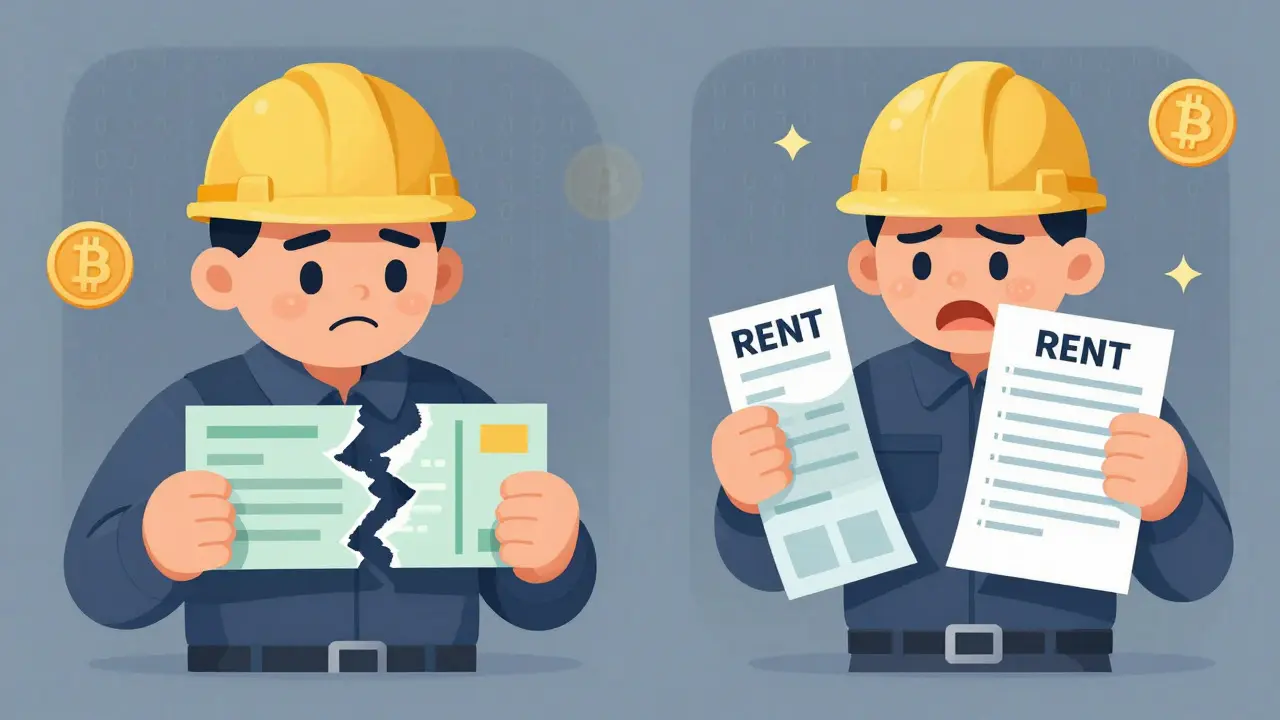
Imagine waking up one morning to find your paycheck cut in half. Your rent hasn't changed. Your electricity bill is the same. Suddenly, you have a choice: tighten your belt and hope things get better, or pack up and leave. This is exactly what happens to Bitcoin miners are individuals or companies that use specialized hardware to secure the Bitcoin network and earn rewards. after every four-year halving event. The term "miner capitulation is the process where inefficient or undercapitalized mining operations shut down due to unprofitability following a reward reduction." sounds dramatic, but it’s just market mechanics at work. When the block reward drops by 50%, the weak links break. The strong ones survive.
The Sudden Shock of the Halving
To understand why some miners fail while others thrive, we need to look at the math. Bitcoin was designed by Satoshi Nakamoto is the pseudonymous creator of Bitcoin who introduced the concept of digital scarcity through code. with a built-in deflationary mechanism. Every 210,000 blocks-roughly every four years-the reward for validating transactions is cut in half. In April 2024, this happened again. The reward dropped from 6.25 BTC to 3.125 BTC per block. For context, as of mid-2026, about 94% of all Bitcoin has already been mined. Only 1.35 million coins remain. The competition for those last crumbs is fierce.
The problem isn’t just less Bitcoin; it’s that costs don’t drop overnight. A miner earning $0.055 per day per terahash (TH) of computing power suddenly sees that income slashed to $0.0275. If their electricity costs more than that margin allows, they are losing money on every single block they try to mine. This immediate revenue shock forces a brutal triage across the industry.
Who Gets Left Behind?
Not all miners are created equal. The difference between survival and shutdown often comes down to three factors: hardware efficiency, electricity costs, and cash reserves. Let’s break down who typically capitulates.
- The Outdated Hardware Owners: Miners using older generation ASICs (Application-Specific Integrated Circuits) burn more power for less computational work. If your machine uses 3000 watts to produce 100 TH/s, you’re bleeding cash compared to someone getting 300 TH/s for the same power draw.
- The High-Electricity Users: Energy is the biggest variable cost. Miners paying retail rates above $0.08 per kWh were already struggling before the 2024 halving. Post-halving, many needed Bitcoin prices above $54,000 just to break even. Those locked into expensive contracts had no way out.
- The Under-Capitalized Operators: Small-scale miners without savings cannot wait for Bitcoin’s price to recover. They need cash flow today. When revenue halves, they run out of runway in weeks, not months.
In contrast, major public mining companies like Bitdeer is a publicly traded Bitcoin mining company known for its large-scale operations and efficient infrastructure., Marathon Digital is a leading digital asset technology company focused on blockchain development and cryptocurrency mining., and Riot Platforms is a blockchain mining and technology firm that operates large-scale mining facilities in North America. saw production dips but didn’t collapse. Why? They had cheaper energy deals, newer machines, and deep pockets. Bitdeer, for example, saw a 31% drop in production in May 2024 compared to April, but they could absorb the hit. Smaller operators couldn’t.
| Feature | Survivor (Industrial) | Capitulator (Small Scale) |
|---|---|---|
| Electricity Cost | Below $0.05/kWh | Above $0.08/kWh |
| Hardware Efficiency | >30 TH/s per 3000W | <15 TH/s per 3000W |
| Cash Reserves | 6-12 months of expenses | Less than 1 month |
| Energy Source | Renewables/Hydro | Retail Grid Power |
The Network Cleansing Effect
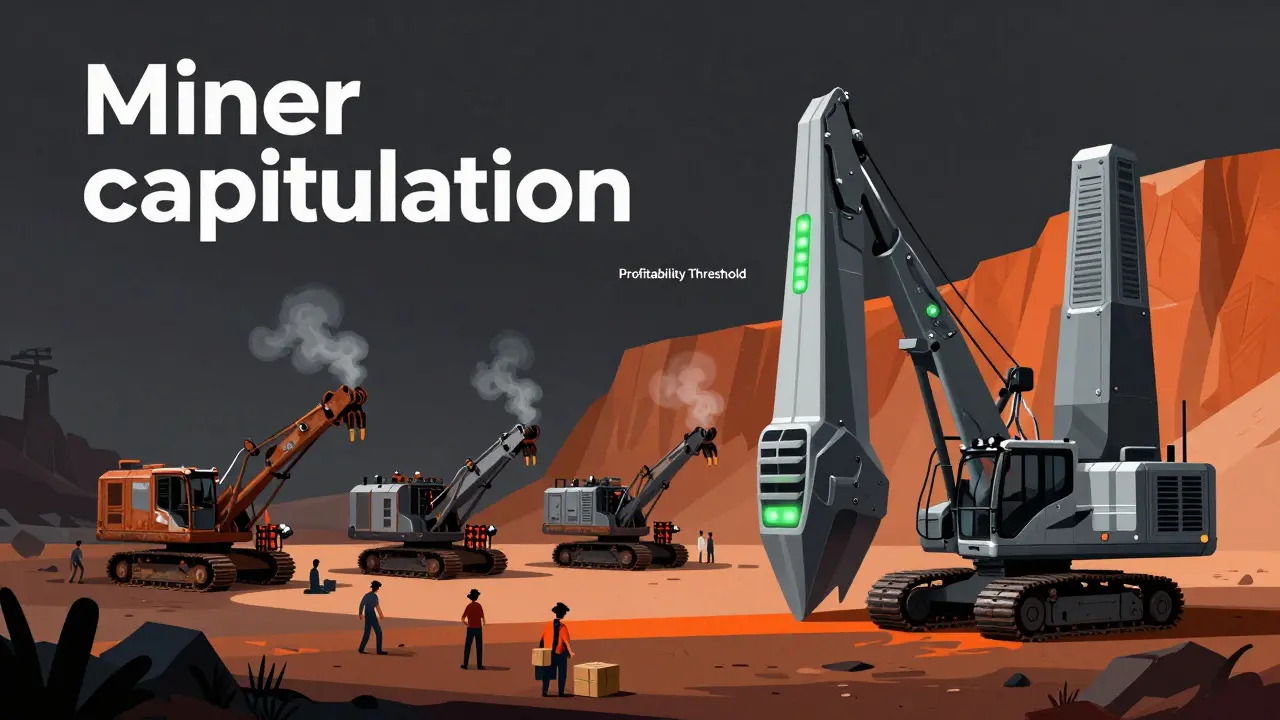
It might seem bad that miners go out of business, but for the Bitcoin network, this is actually healthy. Think of it as natural selection. When inefficient miners quit, the total hash rate is the total computing power dedicated to securing the Bitcoin network, measured in hashes per second. drops. This triggers a difficulty adjustment every 2,016 blocks (about two weeks). The network becomes easier to mine, which helps the remaining miners become profitable again.
Analysts from EY Switzerland is a professional services firm providing insights into cryptocurrency markets and blockchain technology. note that this "cleansing" strengthens the network’s security in the long run. It removes vulnerable nodes and consolidates power among those who can afford to keep the lights on. While the transition period lasts 3-6 months, during which time 10-20% of global hash rate may disappear, the end result is a more robust system.
Community sentiment reflects this too. On Reddit and Twitter, experienced miners often describe capitulation as necessary pain. It clears out the amateurs and leaves room for serious players. However, for the individual running a few rigs in their garage, it’s devastating. Forums from May-June 2024 were filled with stories of forced shutdowns and negative cash flows.
Strategies for Survival
If you’re in the mining game, how do you avoid being part of the capitulation stats? You need a plan before the halving hits. Reacting afterward is usually too late.
- Upgrade Your Hardware: To maintain pre-halving profitability, you need a 15-25% improvement in efficiency. This means buying the latest ASIC models. Look for machines that offer high terahash-per-watt ratios. Older equipment becomes electronic waste quickly.
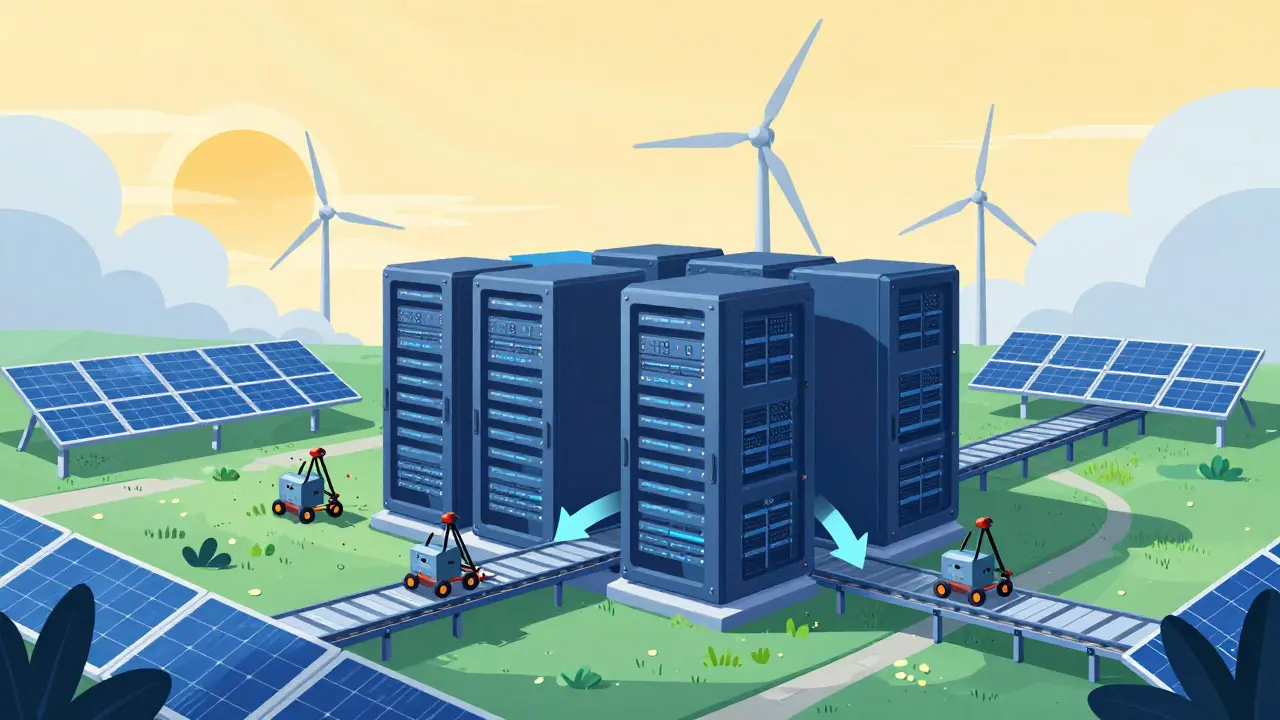
- Hunt for Cheap Energy: This is the most critical factor. Negotiate direct power purchase agreements (PPAs) with renewable providers. Move to jurisdictions with subsidized industrial rates. Use stranded energy sources-power that would otherwise be wasted. If you can’t get below $0.04/kWh, you’re in danger.
- Build Cash Reserves: Keep 6-12 months of operating expenses in liquid cash. This buffer allows you to stay online while Bitcoin’s price adjusts. Without savings, you’ll be forced to sell your Bitcoin holdings at a loss just to pay the electric bill.
- Diversify Revenue: Don’t rely solely on block rewards. Explore transaction fee optimization and layer-2 protocol participation. These emerging streams can supplement income when block subsidies shrink.
Industry Consolidation and Future Outlook
The post-halving landscape is defined by consolidation. Big fish eat small fish. Following the 2024 halving, we saw increased mergers and acquisitions. Large firms bought distressed assets-mining rigs, land, and energy contracts-at discounted prices. This trend will likely accelerate toward the next halving in 2028.
With only 1.35 million Bitcoin left to mine, the margins will get thinner. Analysts predict that only operations with electricity costs below $0.03/kWh and cutting-edge hardware will survive future cycles. We are moving toward an oligopolistic mining landscape dominated by industrial-scale operations with access to massive renewable energy infrastructure.
However, there’s a silver lining. The approval of Bitcoin Spot ETFs in 2024 brought institutional demand that helped stabilize prices faster than in previous cycles. This external pressure supports miners by keeping Bitcoin’s value higher, offsetting some of the reward reduction. But don’t count on it forever. The fundamental rule remains: if your costs exceed your revenue, you capitulate.
What This Means for Investors
If you hold Bitcoin but don’t mine it, miner capitulation is still relevant to you. Historically, halvings have preceded bull runs. Why? Because supply shock meets steady or growing demand. When miners sell fewer coins because they’re busy trying to stay alive, selling pressure decreases. Eventually, the difficulty adjustment kicks in, and profitability returns, signaling a healthier market.
Keep an eye on the hash rate. A temporary drop is normal. A prolonged decline indicates severe stress. Once the hash rate stabilizes and starts climbing again, it’s a sign that the capitulation phase is over. That’s often a good indicator that the worst is behind us.
What is miner capitulation?
Miner capitulation is the phenomenon where less efficient or under-capitalized Bitcoin mining operations cease activities because they can no longer cover their operational costs after the block reward is halved. It results in a temporary drop in the network's total hash rate.
How long does miner capitulation last?
The capitulation phase typically lasts 3 to 6 months after a halving event. During this time, inefficient miners exit the market, causing the hash rate to drop until the network difficulty adjusts downward, restoring profitability for remaining miners.
What electricity cost makes mining viable post-halving?
To remain profitable immediately after a halving, miners generally need access to electricity costs below $0.05 per kWh. Long-term survival for future halvings may require costs below $0.03 per kWh combined with state-of-the-art hardware efficiency.
Does miner capitulation affect Bitcoin's price?
Yes, indirectly. When miners capitulate, they stop selling new Bitcoin to cover costs, reducing supply pressure. Additionally, the eventual difficulty adjustment signals network health, which often coincides with price appreciation as the market absorbs the reduced issuance rate.
Can small miners survive the halving?
Small miners can survive if they have significant cash reserves (6-12 months of expenses), access to very cheap renewable energy, and the latest efficient ASIC hardware. Without these advantages, most small-scale operations face inevitable shutdown.