


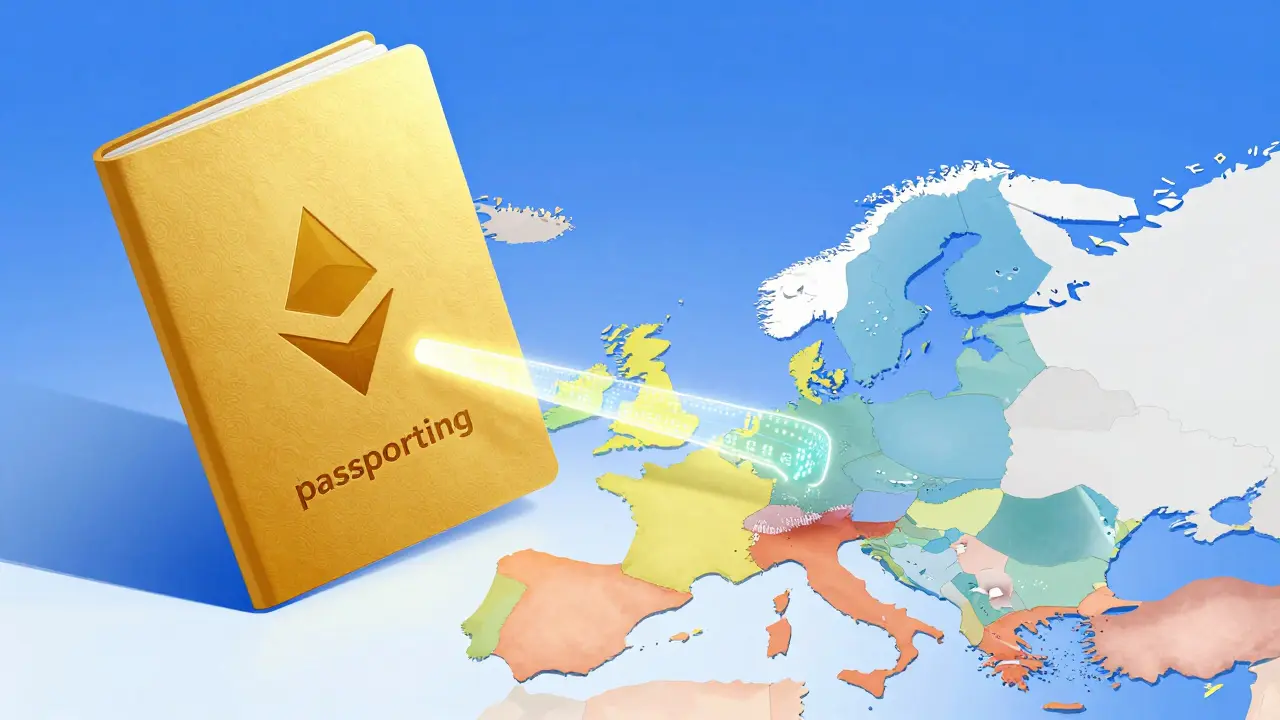
For years, crypto companies trying to expand across Europe faced a nightmare of 27 different sets of rules. You couldn't just launch in France and expect your license to work in Germany or Spain. It was a fragmented mess that killed growth and drove up legal bills. That changed with the MiCA is the Markets in Crypto-Assets Regulation, a comprehensive EU framework designed to harmonize crypto-asset rules across all member states.
If you're running a crypto business, the big win here is the "passporting" system. Instead of fighting 27 different regulatory battles, you get authorized in one EU country and can essentially "passport" those services into every other member state. It's a game-changer for scaling, but it comes with a strict set of rules. If you don't play by the book, you're looking at heavy fines or being blocked from the market entirely.
The Secret Sauce: How the EU Passport System Works
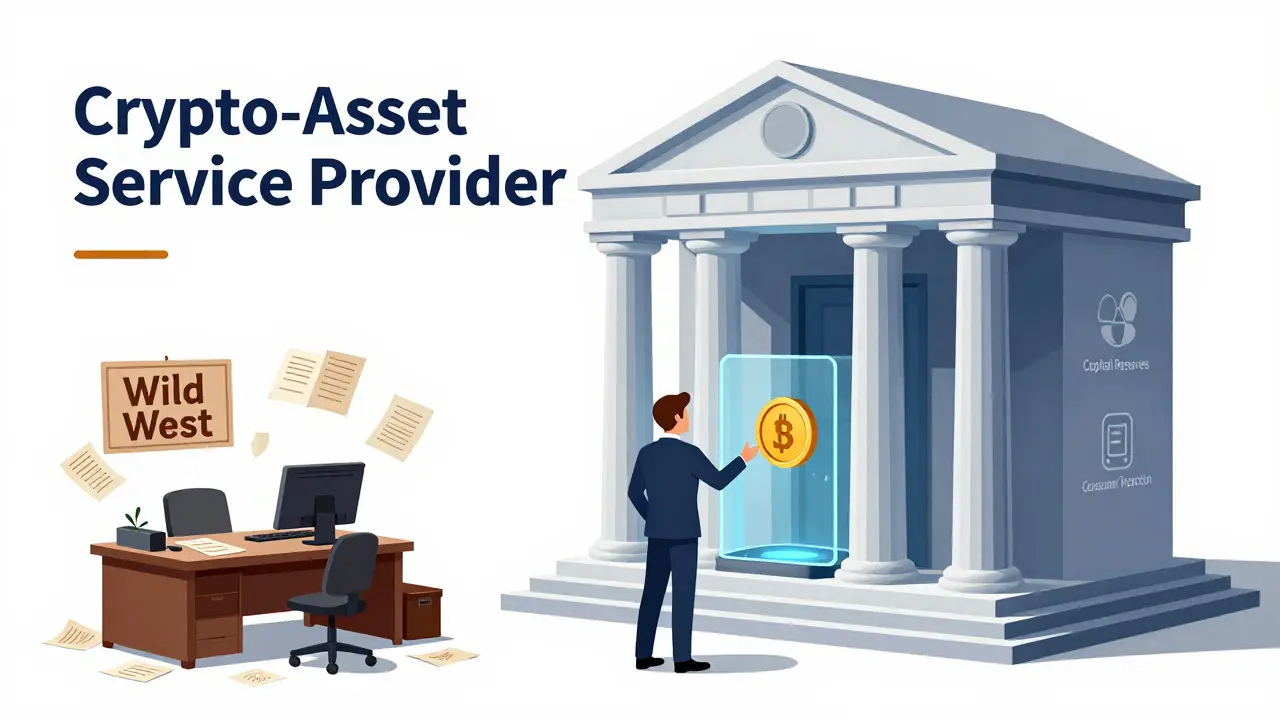
The core of MiCA is the creation of the CASP, or Crypto-Asset Service Provider. This is the legal designation for any business providing services like exchanging crypto for fiat, offering custodial wallets, or managing portfolios.
Here is how the process actually works for a company wanting to go cross-border:
- Home State Authorization: You apply for a license from the regulator (the competent authority) in the EU country where you have your main office. This is your "Home Member State."
- Notification: Once you have that license, you don't just start advertising in other countries. You must notify your home regulator that you intend to provide services in other EU states.
- The Wait: Your home regulator informs the regulators in the target countries. There's a short window for them to check the paperwork.
- Go Live: Once the notification period passes, you can legally offer your services across the entire union under that single license.
This removes the need for separate local licenses, which used to cost companies millions in redundant legal fees and operational overhead. Now, if you're compliant in Lithuania or Ireland, you're theoretically compliant in Italy and Poland.
Playing by the Rules: Requirements for Authorized CASPs
You don't get a passport for free. The EU expects CASPs to act more like traditional banks than the "wild west" startups of 2017. There are heavy requirements regarding how you handle money and how you treat your customers.
First, there's the money side. You must maintain specific "own funds" (capital reserves) and have professional insurance policies in place. This ensures that if the company hits a rough patch, the users aren't the ones losing everything. For those handling client assets, safekeeping is non-negotiable. You can't just mingle user funds with company operating cash; they must be segregated and protected.
Then there's the behavior side. You are required to follow strict conduct rules. This means being honest, fair, and professional. If you're running an exchange, you need systems to detect market abuse. Think of it like the stock market: you can't have insiders manipulating prices or creating fake volume to lure in retail traders. If your system doesn't have a way to spot this, you're in breach of MiCA.
For the giants in the room, there is a special category. If you serve more than 15 million active users annually in the EU, you are labeled a "significant" provider. These firms get extra attention (and extra paperwork) from the ESMA (European Securities and Markets Authority), which keeps a closer eye on their systemic risk to the financial market.
| Entity Type | Core Requirement | Supervisory Body | Key Focus |
|---|---|---|---|
| Standard CASP | Home State License | National Authority | Consumer Protection & Capital |
| Significant CASP | Enhanced Reporting | ESMA | Systemic Financial Risk |
| Token Issuer | White Paper Publication | National Authority | Transparency & Disclosure |
| Stablecoin Issuer | Reserve Management | National / ESMA | Liquidity & Redemption Rights |
The Hard Truth for Non-EU Companies
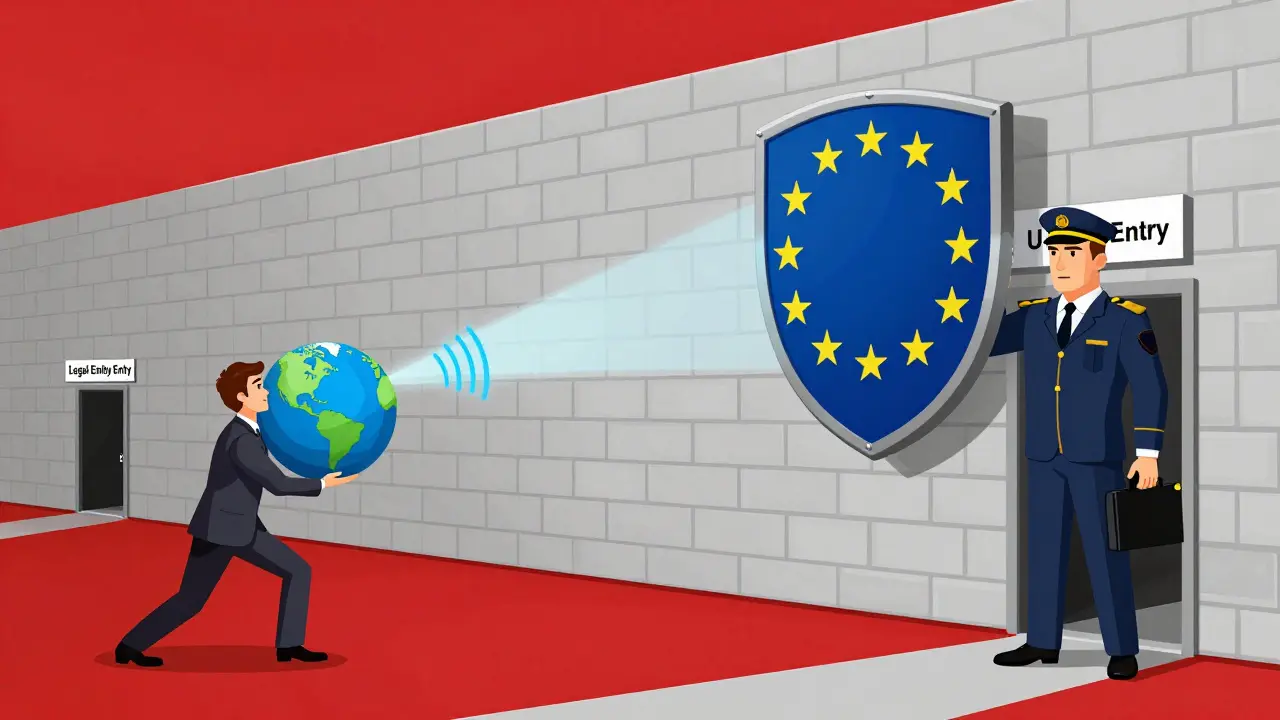
If you are based in the US, Singapore, or the UAE, the news is less welcoming. You cannot simply "beam" your services into the EU from across the ocean. To actively market, solicit, or promote your services to EU residents, you must establish a legal entity within the EU and get a full CASP authorization.
You might have heard of "Reverse Solicitation." This is the legal loophole where an EU citizen finds your service on their own and asks to use it without you ever advertising to them. In theory, this is allowed. In reality? It's a tiny sliver of a loophole. ESMA has made it very clear that if you have a website translated into German or a social media ad targeting Parisians, you are not doing reverse solicitation-you are actively soliciting. If you get caught, national authorities can shut you down or fine you heavily.
Because of this, we're seeing a massive trend: international exchanges are opening subsidiaries in EU-friendly jurisdictions (like France or Ireland) just to get that MiCA license and keep their European user base.
Beyond the License: AML and Financial Crime
A MiCA license isn't a get-out-of-jail-free card for anti-money laundering. The regulation works hand-in-hand with the AMLD (Anti-Money Laundering Directive). This means your KYC (Know Your Customer) process has to be airtight.
CASPs are required to implement customer due diligence and report any suspicious transactions immediately. The goal is to create a cohesive wall against terrorist financing and money laundering. Because MiCA is activity-based, it doesn't matter if you're a pure crypto exchange or a fintech app that just added a "buy Bitcoin" button-if you provide the service, you follow the AML rules.
The Implementation Patchwork
While the goal is harmony, the rollout has been a bit bumpy. MiCA was implemented in two phases. The first dealt with stablecoins (ARTs and EMTs) in June 2024, and the second covered CASPs in December 2024. However, not every country moved at the same speed.
Some EU member states decided to offer shorter transitional periods for companies already operating locally. This means that while the overall law is the same, the exact date a company had to be "fully compliant" might differ depending on whether they were in Italy or Estonia. As of early 2025, about 15 countries opted for these shorter windows, creating a temporary head-scratching experience for compliance officers.

Common Pitfalls to Avoid
If you're planning your EU expansion, don't make these mistakes:
- Relying on Reverse Solicitation: As mentioned, this is a dangerous strategy. If you have any digital footprint in the EU, assume you need a license.
- Ignoring the White Paper: If you're issuing a token, the white paper isn't just a marketing doc. Under MiCA, it's a legal disclosure. Get it wrong, and your token could be deemed an illegal offering.
- Underestimating Capital Requirements: You can't run a CASP on a shoestring budget. The "own funds" requirements are strict. Ensure your treasury is ready before applying.
- Forgetting the Notification Step: Getting the license is only half the battle. If you forget to notify your home regulator before entering a new member state, you are operating illegally.
Can a US-based exchange serve EU clients under MiCA?
Generally, no-not if they are actively marketing to EU citizens. To legally operate and promote services in the EU, a non-EU company must set up a legal entity within the European Union and obtain a full CASP authorization. The only exception is "reverse solicitation," where the client reaches out entirely on their own, but this is interpreted very narrowly by regulators.
What is the difference between an ART and an EMT?
ARTs (Asset-Referenced Tokens) are stablecoins backed by several assets or currencies to maintain value. EMTs (E-Money Tokens) are designed as digital substitutes for coins and are pegged to a single fiat currency. Under MiCA, both face strict reserve and liquidity requirements to prevent the kind of collapses seen in previous years.
How many users make a CASP "significant"?
A CASP is classified as significant if it serves at least 15 million active users annually within the EU. These providers face tighter supervision and must report directly to the European Securities and Markets Authority (ESMA).
Do I need a separate license for each EU country?
No. Thanks to the passporting system, you only need one authorization from your "Home Member State." After notifying the regulator of your intent to operate cross-border, you can offer your services in all 27 EU member states.
What happens if I provide services without MiCA authorization?
Operating without authorization is a serious offense. National competent authorities have the power to issue cease-and-desist orders, impose heavy financial penalties, and block your website or services from being accessed within their jurisdiction.
Next Steps for Your Business
If you are already operating in the EU, your first step is a gap analysis. Compare your current operations against the CASP conduct rules and capital requirements. If you're missing the "own funds" mark, you need to raise capital or restructure before your transitional period ends.
For those outside the EU, the play is simple: pick a strategic entry point. Choose a member state with a clear, efficient regulator (like Ireland, France, or Lithuania) to be your home base. Set up your legal entity there, apply for the license, and then use the passporting system to scale across the continent. Don't try to "wing it" with reverse solicitation; the risk of a regulatory crackdown is far higher than the cost of compliance.
- Poplular Tags
- MiCA
- CASP
- crypto passporting
- EU crypto regulation
- cross-border crypto



People Comments
This sounds like a huge relief for scaling.
The passporting system is essentially the gold standard for regulatory efficiency in Europe. It mirrors how the MiFID II framework operated for traditional financial instruments, ensuring a single point of entry while maintaining a high baseline of consumer protection across the bloc.
Oh my god, the absolute chaos of trying to navigate 27 different legal systems is just a tragedy! It's like trying to dance in a room full of broken glass. We are finally seeing the dawn of a unified digital empire where the barriers of the past are crumbling under the weight of common sense!
Typical EU bureaucracy trying to "save" us with more rules 🙄. As if a few capital reserves actually stop the greed of these founders. Good luck to anyone actually trying to innovate while filling out a thousand forms 💅.
The sheer audacity of believing that a mere 'passport' can cleanse the inherent filth of the crypto-asset industry is laughable. This regulatory theater is a grotesque masquerade, providing a veneer of legitimacy to what is essentially a digital casino for the intellectually bankrupt. One can only scoff at the notion that a 'Home State' authorization will stop the inevitable descent into systemic insolvency. Truly, a pedestrian attempt at order in a realm of absolute anarchy.
The distinction between the home state authorization and the notification process is quite clear. It is prudent for any entity to maintain a rigorous compliance schedule to avoid the penalties mentioned.
The movement toward harmonization often masks the underlying tension between national sovereignty and supranational governance. MiCA is a fascinating case study in how a region attempts to quantify trust through capital requirements.
Love seeing the structure here! 🚀 Just a heads up to all the founders-don't sleep on those capital reserves! It's way better to be safe than sorry when the regulators come knocking! You've got this! 💪✨
It's helpful to see the breakdown of ARTs and EMTs. The clarity on reserve management is quite useful for anyone starting out.
Exactly!!! The notification step is where most people mess up... seriously!!! You can't just assume the license is a blanket permission without that formal step!!!
The reverse solicitashun loophole is basically dead in the water. If you're runnin' a high-freq LOB or some complex DeFi primitives, the regulators are gonna see your IP traffic and flag it as active marktin' anyway. Totally a regulatory honey-trap for non-EU ops.
Yo this is crazy!! My buddy tried to run a shop from the States and almost got wrecked by the EU regs. The KYC stuff is a total nightmare, like total overkill on the AML side. I'm just saying, the overhead for a small shop to get that CASP license is absolutely insane!!
This is a really great overview of the current landscape!
Let's look at the bright side-this actually protects the retail traders who just want to get into crypto without losing their life savings to a bankrupt exchange. It's a win for the little guy in the long run!
Big win for scaling 📈
One must consider that the actual efficacy of these rules depends entirely on the diligence of the Home State regulator. If Lithuania is lenient, the passporting system merely exports that leniency to the rest of the union, creating a race to the bottom.
The author failed to mention that the transitional periods vary specifically because of existing national regimes. It is intellectually dishonest to call it a "patchwork" without explaining that it is a deliberate phased integration to prevent market shocks.
Honestly, the way this is presented makes it sound like a fairy tale, but anyone with a brain knows that the "significant" provider threshold of 15 million users is just a way for ESMA to bully the big players while the small ones drown in compliance costs 🙄. It's just another layer of European red tape that pretends to be innovation but is actually just a slow-motion train wreck for anyone who actually knows how to analyze a balance sheet 🙄🙄.
It's so heartwarming to see a path toward stability in such a volatile space! 🌟 I truly believe that by embracing these guidelines, we aren't just following laws, but we are crafting a new social contract for the digital age where safety and innovation can finally hold hands and walk together toward a brighter, more inclusive future for everyone regardless of where they call home 🌈💖✨.
I agree with the point about the white papers. Many projects treat them as mere ads, but under MiCA, they are essentially legal prospectuses. Accuracy is paramount here.
So if I just make a website in English and don't translate it, is that considered reverse solicitation?