

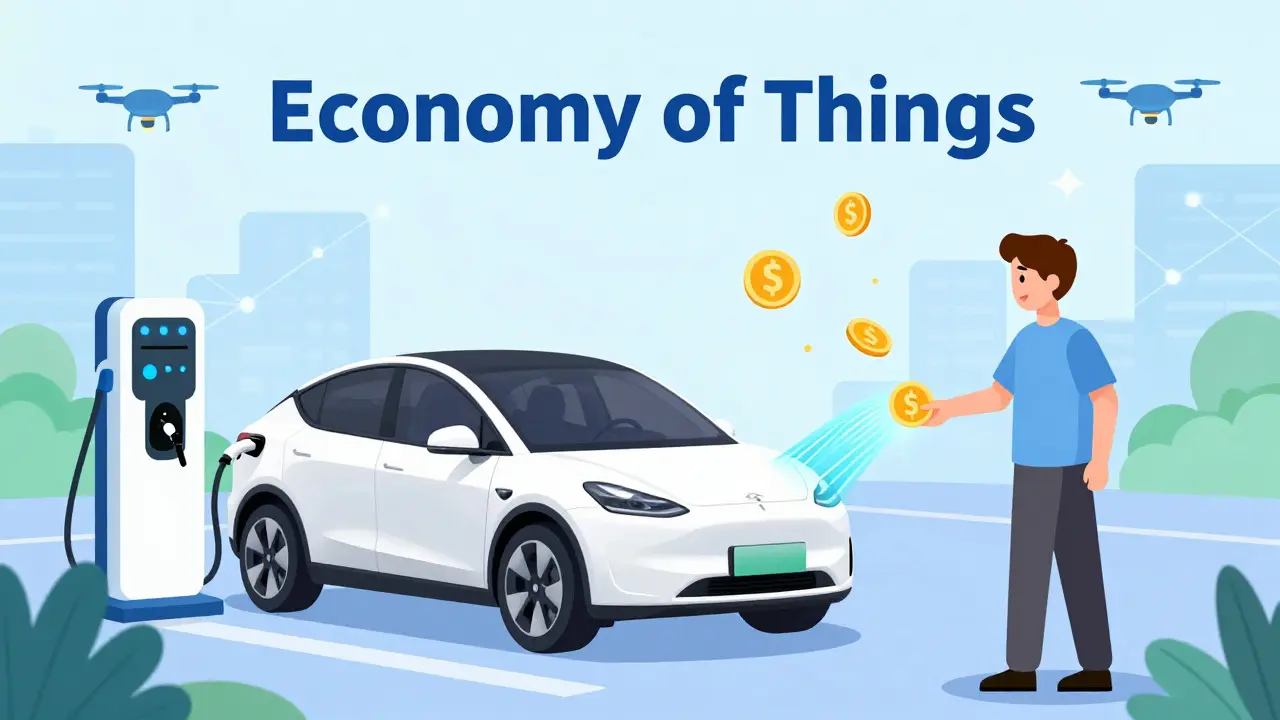
Imagine a world where your electric car pays for its own charging session without you touching your wallet. Or a smart factory that automatically orders spare parts when sensors detect wear and tear. This isn't science fiction anymore-it’s the core promise of peaq, a specialized Layer-1 blockchain designed for the "Economy of Things" (EoT).
If you’ve been watching the crypto space lately, you might have noticed terms like DePIN and Real World Assets popping up everywhere. But what exactly is peaq, and why are investors and developers paying attention to it? Unlike general-purpose blockchains built primarily for financial transactions or NFTs, peaq is engineered from the ground up to let machines, robots, and physical infrastructure interact autonomously.
The Core Concept: Bridging Physical and Digital Worlds
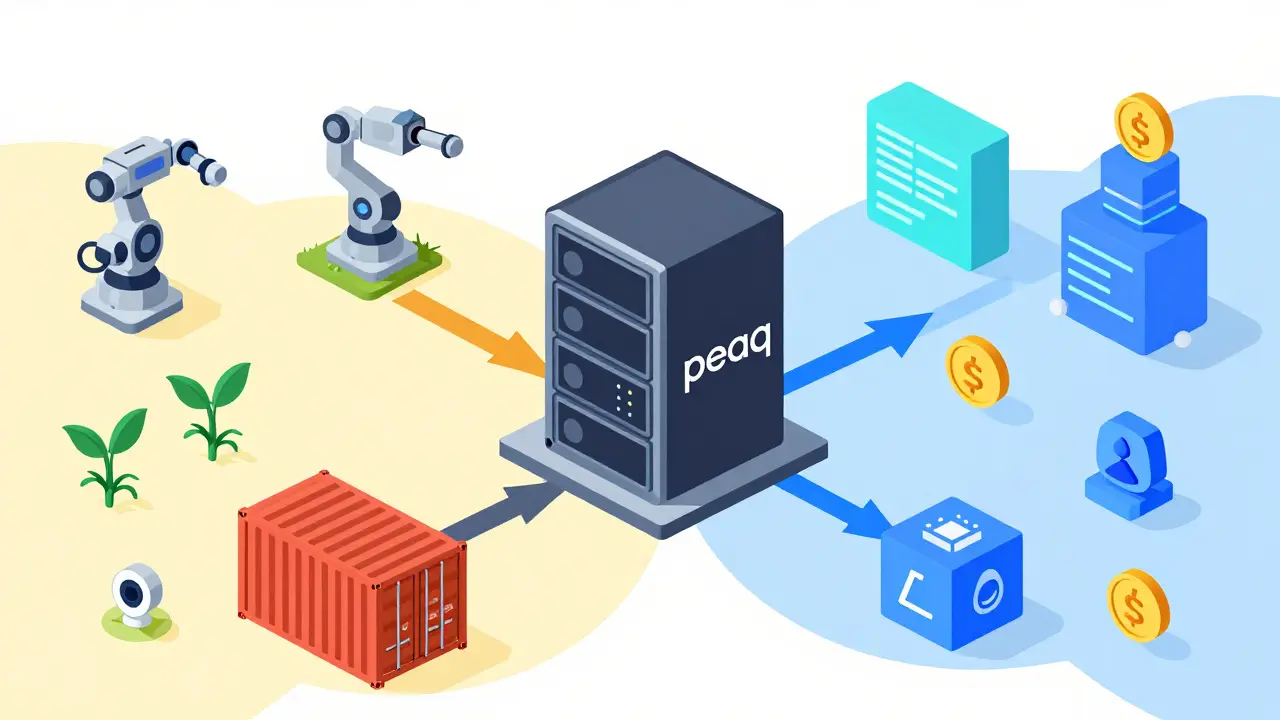
At its heart, peaq is a blockchain infrastructure specifically created for Decentralized Physical Infrastructure Networks (DePINs) and Real World Assets (RWAs). Traditional blockchains struggle with high fees and slow speeds, making them useless for small, frequent transactions between devices. If a sensor needs to send data every second, paying $5 in gas fees per transaction is impossible.
Peaq solves this by providing ultra-low transaction costs and high throughput. It allows machines to become economic agents. Think of it as giving every IoT device its own bank account and digital identity. This enables scenarios like autonomous vehicles negotiating toll payments, drones sharing bandwidth, or energy grids balancing supply and demand in real-time.
- Machine IDs: Unique digital identities for physical assets.
- Data Verification: Proof that data came from a trusted source.
- Autonomous Transactions: Smart contracts that execute without human input.
How Peaq Works: Technology and Architecture
To understand why peaq stands out, you need to look under the hood. The network is built on Substrate, the same framework used by Polkadot. This gives peaq interoperability within the Polkadot ecosystem while allowing it to maintain specialized functions for the machine economy.
One of the biggest hurdles for developers has always been compatibility. Peaq addresses this by offering full EVM (Ethereum Virtual Machine) compatibility. This means if you know how to code in Solidity for Ethereum, you can build on peaq with minimal friction. You get the best of both worlds: the robust tooling of Ethereum and the specialized features of a DePIN-focused chain.
The consensus mechanism is Delegated Proof of Stake (DPoS). Unlike Bitcoin’s energy-intensive mining, DPoS relies on validators elected by token holders. This makes the network faster, cheaper, and more environmentally friendly-critical factors when you’re processing millions of tiny transactions from global infrastructure networks.
| Feature | General L1 (e.g., Ethereum) | peaq Network |
|---|---|---|
| Primary Focus | Finance, DeFi, NFTs | DePIN, IoT, Machine Economy |
| Transaction Cost | Variable, often high | Ultra-low, predictable |
| Developer Tools | Solidity, Web3.js | EVM compatible + Native JS SDK |
| Consensus | Proof of Stake (varies) | Delegated Proof of Stake (DPoS) |
| Machine Integration | Limited/Complex | Built-in Modular Functions |
The PEAQ Token: Utility and Economics
The native currency of the network is the PEAQ token. But unlike meme coins or pure store-of-value assets, PEAQ has immediate utility. It serves as fuel for the network, paying for transaction fees, staking rewards, and governance votes.
Here’s how the tokenomics work:
- Disinflationary Model: Issuance starts at 3.5% annual inflation but drops by 10% each year until it hits a 1% floor. This encourages early adoption while ensuring long-term scarcity.
- No Mining: You can’t mine PEAQ with GPUs. Instead, you stake it to secure the network and earn rewards.
- Governance: Holders vote on protocol upgrades and ecosystem grants.
For users, holding PEAQ isn’t just about speculation; it’s about participating in the security and growth of the machine economy. Validators and nominators play key roles in keeping the network decentralized and secure.
Adoption and Ecosystem Growth
A blockchain is only as good as its users. Since its official launch in November 2024, peaq has seen rapid adoption. The network hosts over 850,000 connected machines, including robots, vehicles, and industrial sensors. These aren’t just testnet numbers; they represent live projects across more than 20 industries.
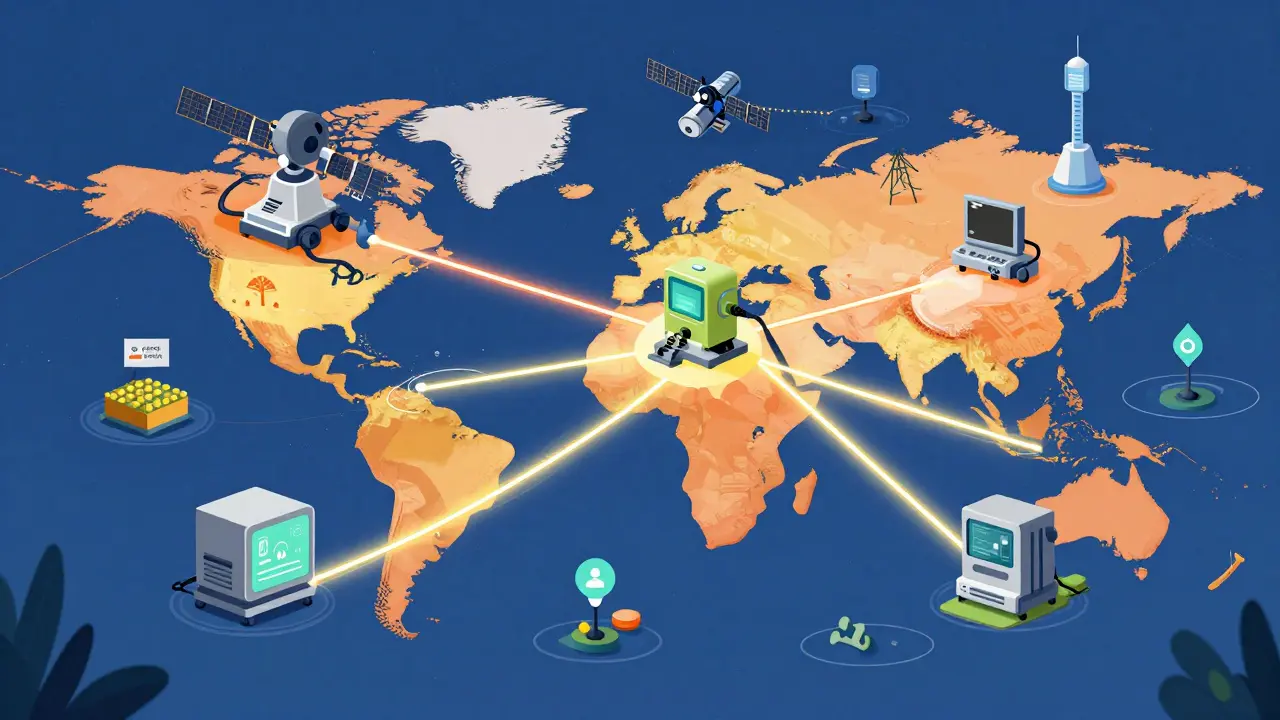
The ecosystem spans land, sea, sky, and even space-based applications. From smart agriculture sensors monitoring soil health to logistics platforms tracking shipping containers, peaq is becoming the backbone for various DePIN projects. With over 5 million people and machines onboarded, the network is proving that the "Economy of Things" is viable.
Institutional support has also been strong. In March 2024, the project raised $15 million from investors like Animoca Brands and Borderless Capital. Later that year, another $20 million was raised via a CoinList token launch. This backing signals confidence in peaq’s long-term vision and technical execution.
Market Performance and Trading
As of May 2026, the PEAQ token trades around $0.12, showing resilience and growth compared to broader market trends. Over a recent seven-day period, it outperformed the global crypto market with a 35% increase, driven by increased trading volume on major exchanges like Bitget, Gate.io, and Bithumb.
The primary trading pair is PEAQ/USDT, which accounts for nearly 70% of total volume. This liquidity makes it accessible for both retail traders and institutional players. However, remember that crypto markets are volatile. While the fundamentals are strong, price action can be influenced by macroeconomic factors and sector-wide sentiment.
Why Peaq Matters for the Future
We are moving toward an era where AI and IoT converge. Billions of devices will generate data and require micro-transactions daily. General-purpose blockchains weren’t built for this scale. Peaq fills that gap by providing a dedicated layer for machine-to-machine interactions.
Whether you’re a developer building the next big DePIN app, an investor looking for exposure to real-world asset tokenization, or a curious observer, peaq represents a shift from speculative crypto to utility-driven infrastructure. It’s not just another coin; it’s the operating system for the physical internet.
Can I mine PEAQ tokens?
No, PEAQ cannot be mined using traditional hardware like GPUs or ASICs. The network uses Delegated Proof of Stake (DPoS). To earn rewards, you must stake your existing PEAQ tokens with validators or run a validator node yourself.
Is peaq part of the Polkadot ecosystem?
Yes, peaq is built on Substrate, the same framework as Polkadot. This allows it to benefit from Polkadot’s interoperability features while maintaining its own specialized focus on DePIN and the machine economy.
What is DePIN?
DePIN stands for Decentralized Physical Infrastructure Networks. It refers to projects that use blockchain incentives to build and operate real-world physical infrastructure, such as wireless networks, storage facilities, or sensor grids.
How does peaq differ from Ethereum?
While Ethereum is a general-purpose blockchain focused on finance and smart contracts, peaq is optimized for low-cost, high-frequency transactions between physical devices. Peaq offers modular DePIN functions and EVM compatibility, making it easier for IoT developers to build scalable applications.
Who founded peaq?
peaq was founded in 2017 by Till Wendler, Leonard Dorlöchter, and Max Thake. The project was incubated by EoT Labs, focusing on open-source solutions for the Web3 Machine Economy before launching its mainnet in late 2024.
- Poplular Tags
- peaq crypto
- PEAQ token
- DePIN blockchain
- machine economy
- RWAs