

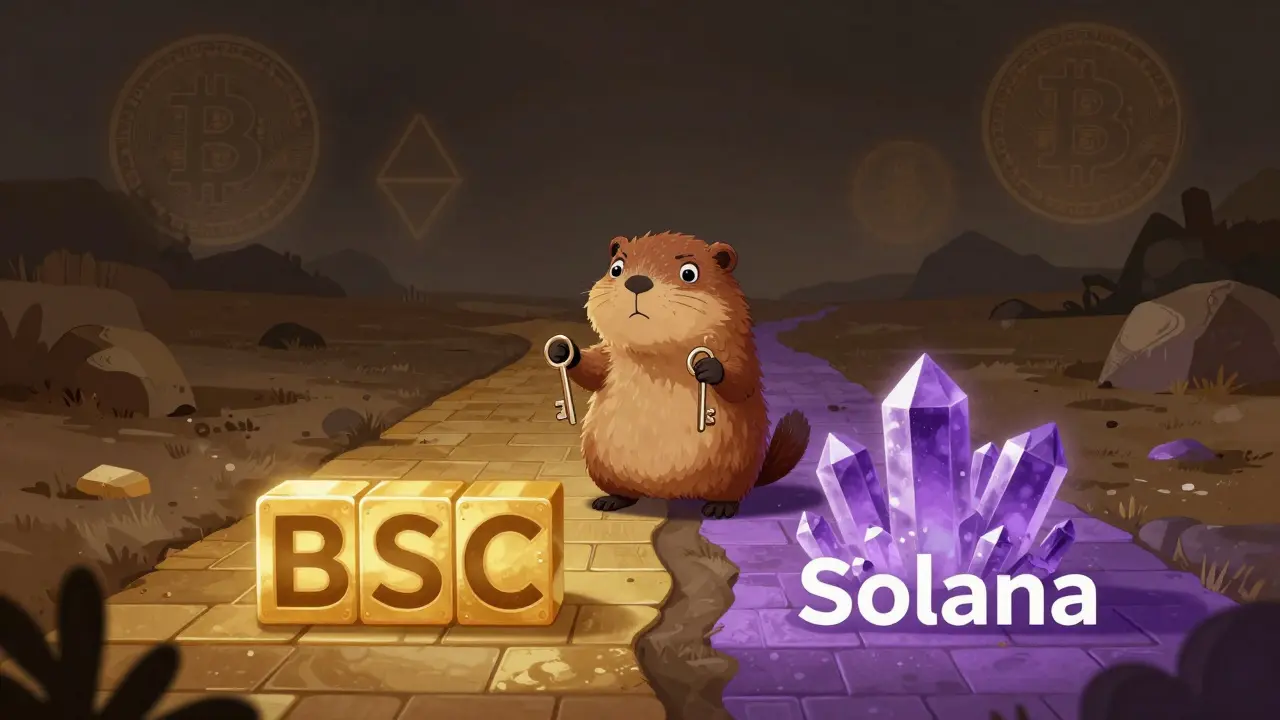
You’ve likely heard of Bitcoin, Ethereum, or even the viral sensation that was Dogecoin. But have you ever stumbled upon a token called Marmot and wondered what on earth it is? It’s not a utility project. It’s not a decentralized finance protocol with complex algorithms. In fact, if you dig into the data, you’ll find something much stranger: a digital asset that exists almost in the shadows of the crypto market.
Marmot (MARMOT) is a dual-chain meme cryptocurrency operating on both the Binance Smart Chain (BSC) and the Solana blockchain networks. Unlike major coins that dominate headlines, Marmot sits firmly in the category of "micro-cap" assets-tokens with such low market value that they are often overlooked by mainstream investors. As of late 2025, its market capitalization hovers between $18,000 and $75,000 depending on which chain you look at. That is less than the price of a single luxury car.
The Dual-Chain Mystery: Why Two Blockchains?
One of the most unusual aspects of Marmot is its presence on two entirely different blockchains. Most meme coins launch on one network to build community focus. Marmot, however, splits its existence between Binance Smart Chain (BSC) and Solana.
On the BSC side, Marmot operates as a BEP-20 token. This means if you use MetaMask or Trust Wallet, you can interact with it using the contract address 0xa105E870605c2c40f7A17325E84EC99019D29066. On the Solana side, it functions as an SPL token, accessible via wallets like Phantom. This dual-chain strategy is rare for a project with such minimal resources. While it might seem like a way to reach more users, it often leads to fragmented liquidity. Instead of having a strong trading pool on one platform, the volume is split thin across two.
This fragmentation creates a unique challenge for traders. You cannot simply swap Marmot on any exchange; you must know exactly which version you are buying. The BSC version has shown a maximum supply of 210 billion tokens, with over 177 billion already in circulation. The Solana version, while tracking separately, shows similar micro-market characteristics but with distinct price movements due to isolated liquidity pools.
Market Reality: The Numbers Behind the Name
Let’s look at the hard data, because this is where the reality of Marmot becomes clear. We are talking about extreme volatility and negligible volume. Here is how Marmot compares to typical market metrics:
| Metric | BSC Version | Solana Version |
|---|---|---|
| Market Cap (Approx.) | $18,500 - $42,000 | $42,000 - $75,000 |
| 24-Hour Volume | $66.95 | $362.73 |
| All-Time High Price | $0.000000063572 | N/A (Tracked Separately) |
| Global Rank | #24,553+ | Unranked / Micro |
| Liquidity Status | Extremely Low | Extremely Low |
Notice the trading volume? Less than $400 in a full day. For context, Bitcoin trades billions every hour. When a token has such low volume, even a small buy order can spike the price artificially, and a small sell can crash it. This is known as high slippage risk. If you try to sell $100 worth of Marmot, you might only get $80 back because there aren’t enough buyers waiting on the other side.
The price itself is virtually zero. We are talking about fractions of a fraction of a cent. The all-time high recorded in February 2025 was roughly $0.00000006. To put that in perspective, you would need millions of tokens just to equal one US dollar. This places Marmot firmly in the "penny crypto" category, appealing only to speculative traders looking for lottery-ticket style gains.
The Community Void: Is Anyone Actually Using It?
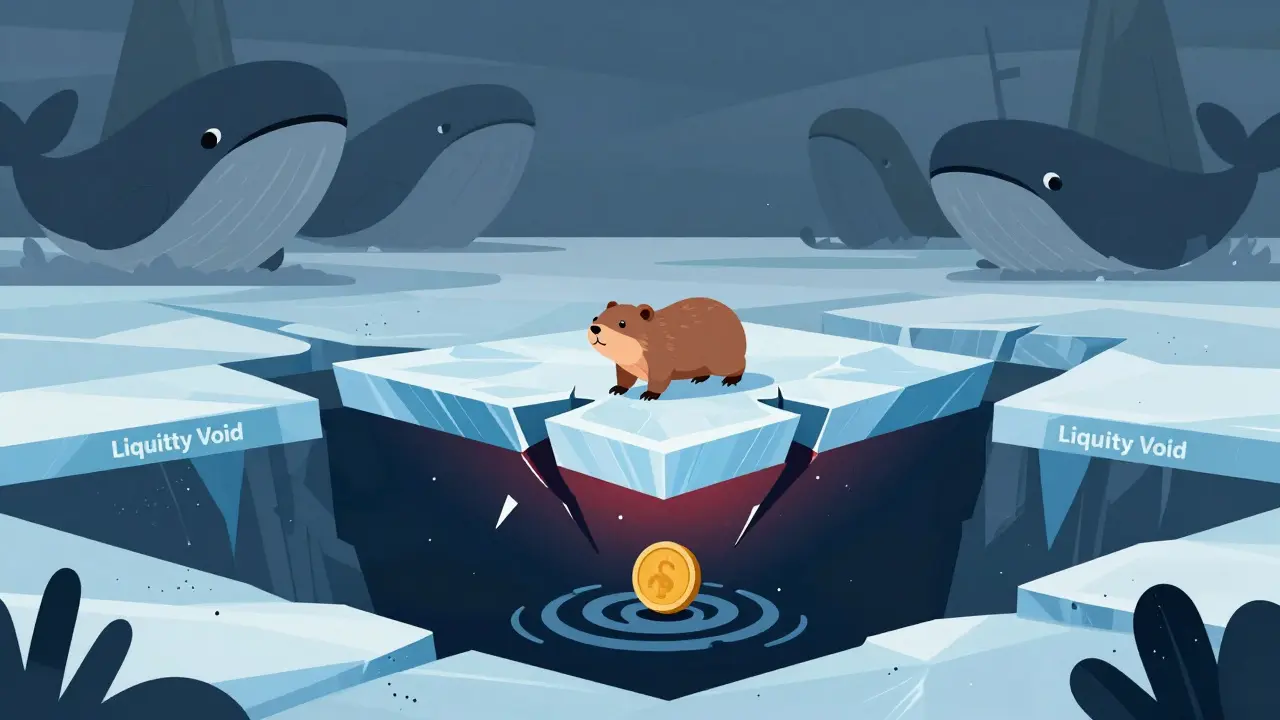
In the world of cryptocurrency, community is king. Projects like Dogecoin or Shiba Inu survived early crashes because they had massive online followings. Marmot? There is almost no trace of a community.
I searched through Reddit, Twitter, and dedicated crypto forums. The results were sparse. No active discussion threads. No developer updates. No roadmap announcements. According to tracking platforms like CoinCodex and Binance, user engagement metrics are effectively non-existent. This silence is a significant red flag.
Without a community, there is no support system. If the smart contract has a bug, who fixes it? If the liquidity dries up completely, who steps in to stabilize the price? The absence of a whitepaper or official website further suggests that this may be an abandoned project, often referred to in the industry as a "zombie token." These are tokens that still exist on the blockchain but have no economic activity behind them.
Risks You Cannot Ignore
If you are considering buying Marmot, you need to understand the specific risks associated with micro-cap, dual-chain meme coins. These are not minor inconveniences; they are existential threats to your capital.
- Liquidity Trap: With daily volumes under $400, getting out of a position is difficult. You might see a paper profit on your screen, but when you try to sell, the price drops drastically due to lack of buyers.
- Fragmentation Risk: Because Marmot exists on BSC and Solana, you could accidentally buy the wrong version. They do not automatically convert. If you buy the BSC version and expect it to rise based on Solana news, you will be disappointed.
- Manipulation Vulnerability: Tokens with market caps below $50,000 are easy targets for "whales" (large holders). One person holding 10% of the supply can crash the price instantly. There is no regulatory protection here.
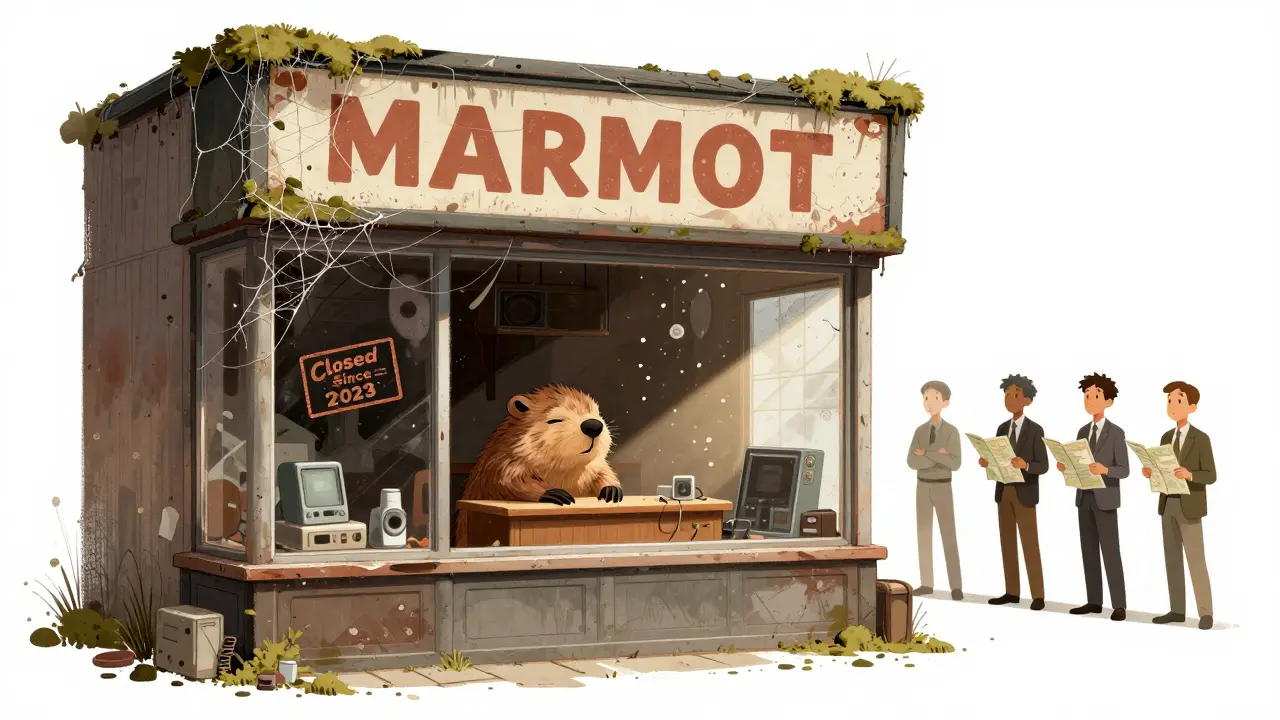
- Abandonment Probability: The lack of development updates since 2023 suggests the creators may have moved on. Without active maintenance, the token remains static, offering no technological improvement or utility growth.
Regulatory bodies like the SEC have increasingly targeted low-liquidity tokens with questionable fundamentals. While Marmot is too small to be a primary target right now, it falls into the gray area of unregistered securities in many jurisdictions. This adds another layer of legal uncertainty for holders.
Price Predictions: Hope vs. Data
Every crypto investor loves a prediction. So, what do the experts say about Marmot? The outlook is cautious, to say the least. Digital Coin Price, one of the few platforms tracking this token, offers projections that highlight the stagnation of the asset.
For 2027, forecasts suggest a maximum price of $0.000000233. By 2032, the predicted range is between $0.000000754 and $0.000000811. While these numbers show technical "growth," remember the starting point is so low that even a tenfold increase results in a value that is still negligible. The sentiment index from CoinCodex sits at 32, indicating "Fear" among the tiny number of holders. Neutral sentiment dominates trading platforms, reflecting apathy rather than excitement.
These predictions assume the token survives. Given the current dormancy, survival is not guaranteed. Many similar tokens have vanished from tracking charts entirely when exchanges delist them due to lack of interest.
How to Trade Marmot (If You Insist)
If you decide to proceed despite the risks, you need to know the practical steps. There is no simple "Buy" button on Coinbase or Binance for Marmot. You must navigate decentralized exchanges (DEXs).
- Choose Your Chain: Decide if you want the BSC or Solana version. This decision dictates your wallet choice.
- Set Up a Wallet: For BSC, install MetaMask or Trust Wallet. For Solana, use Phantom Wallet.
- Acquire Base Currency: Buy BNB for the BSC version or SOL for the Solana version on a centralized exchange.
- Bridge or Transfer: Send your BNB or SOL to your respective wallet.
- Connect to a DEX: Use PancakeSwap for BSC or Raydium/Jupiter for Solana.
- Add the Token Contract: Paste the exact contract address (e.g.,
0xa105E870605c2c40f7A17325E84EC99019D29066for BSC) into the swap interface. Never trust links from social media; verify addresses on CoinGecko or CoinMarketCap. - Execute Swap: Set your slippage tolerance higher (e.g., 5-10%) due to low liquidity, then confirm the transaction.
Be aware that gas fees on these transactions may cost more than the value of the Marmot tokens you receive. Always calculate the total cost including network fees before confirming.
Is Marmot (MARMOT) a scam?
While there is no definitive proof of malicious intent like a "rug pull" code in the contract, Marmot exhibits many characteristics of abandoned projects. The lack of community, zero development updates, and extremely low liquidity make it highly risky. It is not necessarily a "scam" in the legal sense, but it is likely an investment with near-zero chance of meaningful return.
Can I buy Marmot on Binance or Coinbase?
No. Marmot is not listed on major centralized exchanges like Binance, Coinbase, or Kraken. It is only available through decentralized exchanges (DEXs) on the Binance Smart Chain or Solana networks. This means you must handle your own security and private keys.
Why does Marmot exist on two blockchains?
The dual-chain presence on BSC and Solana is likely an attempt to capture users from both ecosystems. However, this strategy often fails for micro-cap tokens because it splits liquidity and community attention. It makes trading more complex and increases the risk of buying the wrong token version.
What is the total supply of Marmot tokens?
The BSC version of Marmot has a maximum supply of 210 billion tokens, with approximately 177.58 billion currently in circulation. The Solana version tracks separately, and exact supply figures may vary due to the independent nature of the deployments.
Is it safe to hold Marmot long-term?
Holding Marmot long-term carries extreme risk. With no active development, no community support, and negligible trading volume, the token is vulnerable to becoming worthless. Market analysts classify tokens with such low activity as "zombie tokens," meaning they have little to no future utility or value appreciation potential.