Hero Arena (HERA) Airdrop Details, Token Info & Gaming Overview
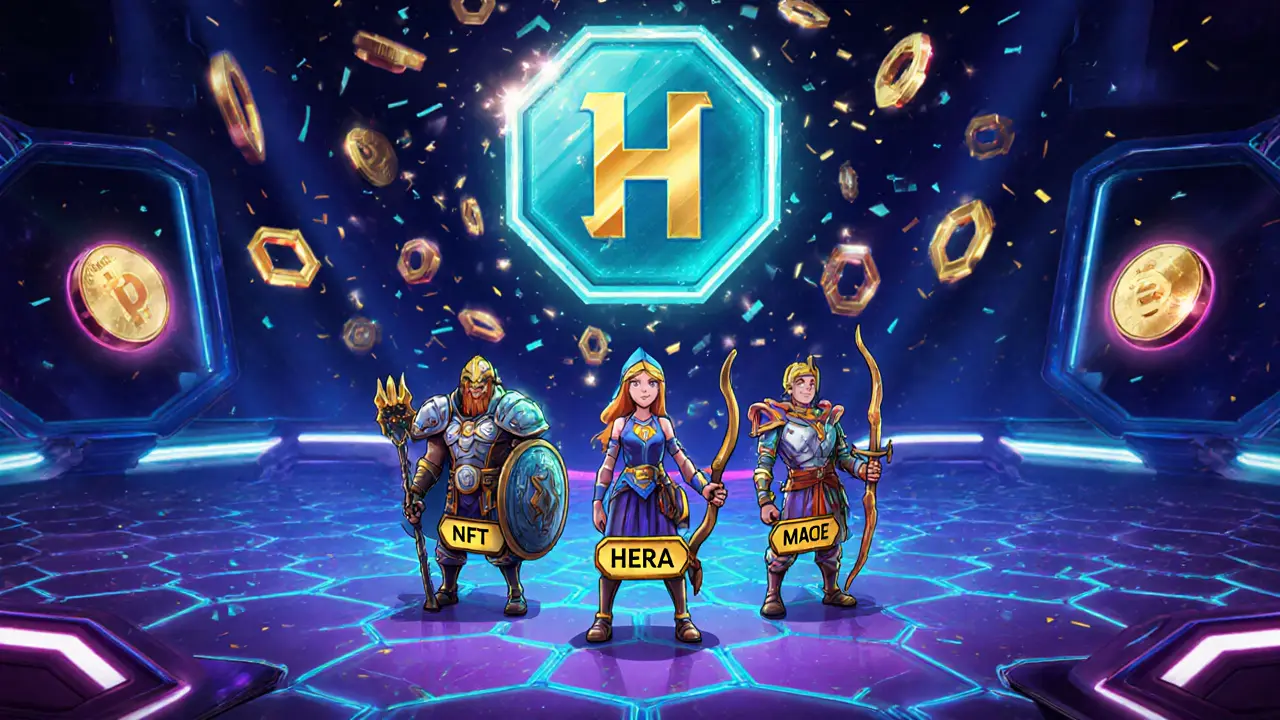
A detailed look at Hero Arena's airdrop history, HERA token economics, gameplay mechanics, and future prospects for investors and gamers.
When working with HERA token, a blockchain‑based utility token that powers the HERA ecosystem. Also known as HERA, it enables governance, staking, and cross‑chain interactions. Alongside it, the HERA airdrop, a free distribution event that rewards early adopters and expands the community fuels initial adoption. In the broader picture, DeFi, decentralized finance platforms that let users lend, borrow, and trade without intermediaries relies on tokens like HERA to provide liquidity and governance power. Finally, cryptocurrency exchanges, online venues where tokens are listed, bought, and sold give HERA real market visibility. Together these entities form a loop: the token needs a blockchain, the blockchain enables airdrops, airdrops boost DeFi participation, and exchanges bring the whole cycle to traders. This semantic chain sets the stage for the details you’ll find below.
The core of the HERA token lies in its tokenomics. Each token represents a share of the HERA network’s voting power, allowing holders to propose upgrades, adjust fee structures, and allocate treasury assets. Staking contracts lock up HERA for a set period, rewarding participants with additional tokens and reducing circulating supply. Supply caps are enforced on‑chain, and inflation rates drop gradually as more tokens are staked, mirroring models seen in other utility tokens. Governance proposals often tie directly to DeFi features—like adding new lending pools or integrating with cross‑chain bridges—so the token’s value is tightly linked to real‑world platform activity. Because the token is built on an EVM‑compatible chain, developers can write smart contracts in Solidity, making it easy to launch new DeFi products that accept HERA as collateral or reward.
From a trading perspective, HERA appears on a handful of reputable exchanges that meet security and compliance standards. Listings on platforms such as Binance, KuCoin, and smaller niche venues bring liquidity, price discovery, and order‑book depth. Exchange reviews often focus on fee structures, withdrawal limits, and KYC requirements—key factors for anyone moving HERA between wallets or using it for arbitrage. Cross‑chain bridges further expand where HERA can be used, allowing it to appear on networks like Binance Smart Chain or Polygon, which in turn fuels DeFi integrations on those chains. This multi‑chain presence aligns with the broader trend of “CEX vs DEX” dynamics, where users choose between centralized hubs for speed and decentralized protocols for permissionless access.
Finally, the HERA airdrop strategy illustrates how community incentives drive growth. Eligibility typically hinges on holding a minimum balance before a snapshot date, participating in governance votes, or providing liquidity on partner DeFi platforms. Claim processes use a simple web portal that verifies wallet addresses via signed messages, reducing phishing risk. Successful airdrop participants often see a surge in token utility as they lock their newly received HERA into staking pools or use it as collateral for loans. Looking ahead, the HERA team plans periodic airdrops tied to major network upgrades, ensuring that token distribution stays aligned with ecosystem health. Below you’ll find a curated selection of articles that dive deeper into HERA’s tokenomics, airdrop mechanics, exchange reviews, and its role across DeFi projects.
A detailed look at Hero Arena's airdrop history, HERA token economics, gameplay mechanics, and future prospects for investors and gamers.